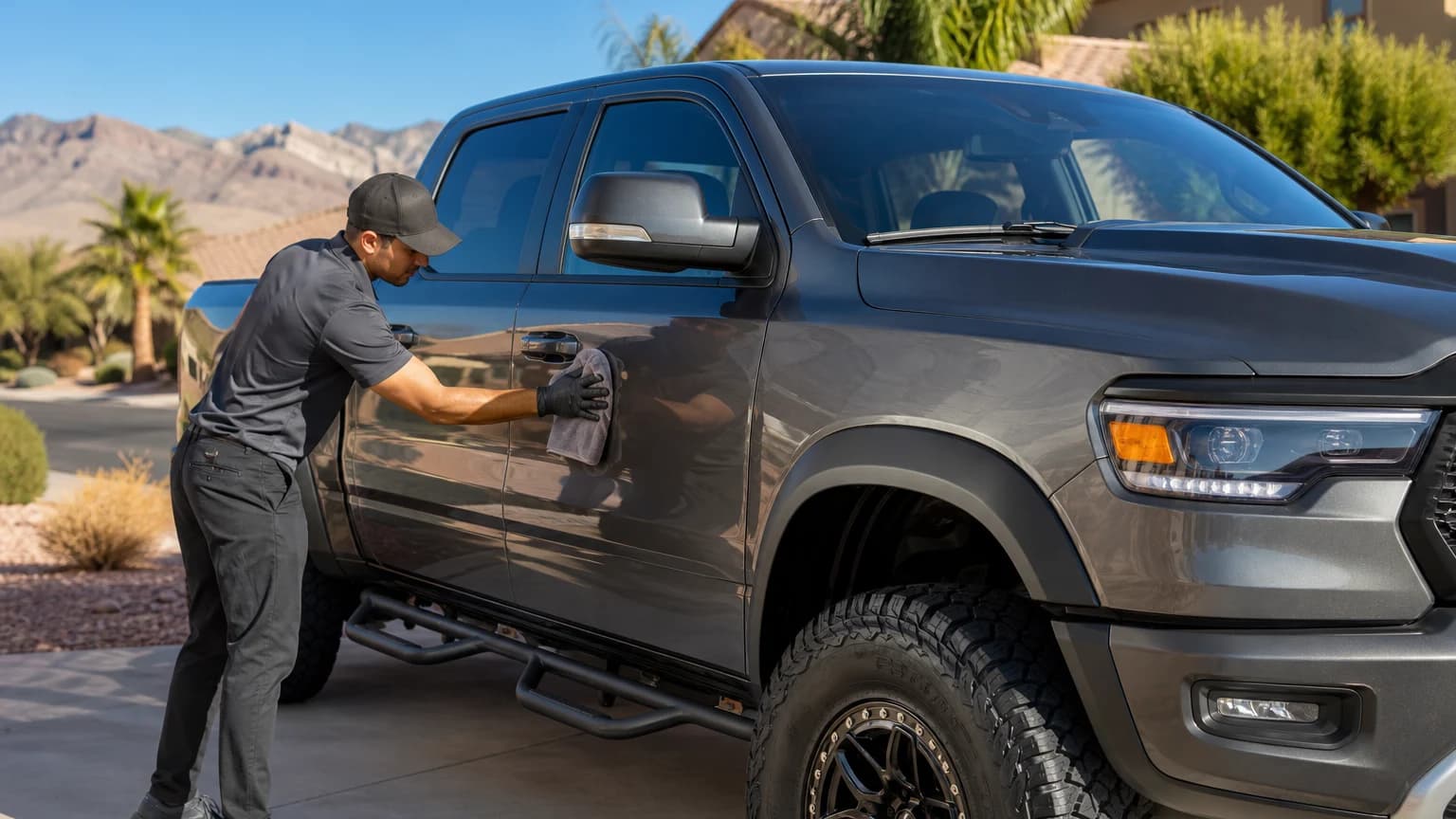
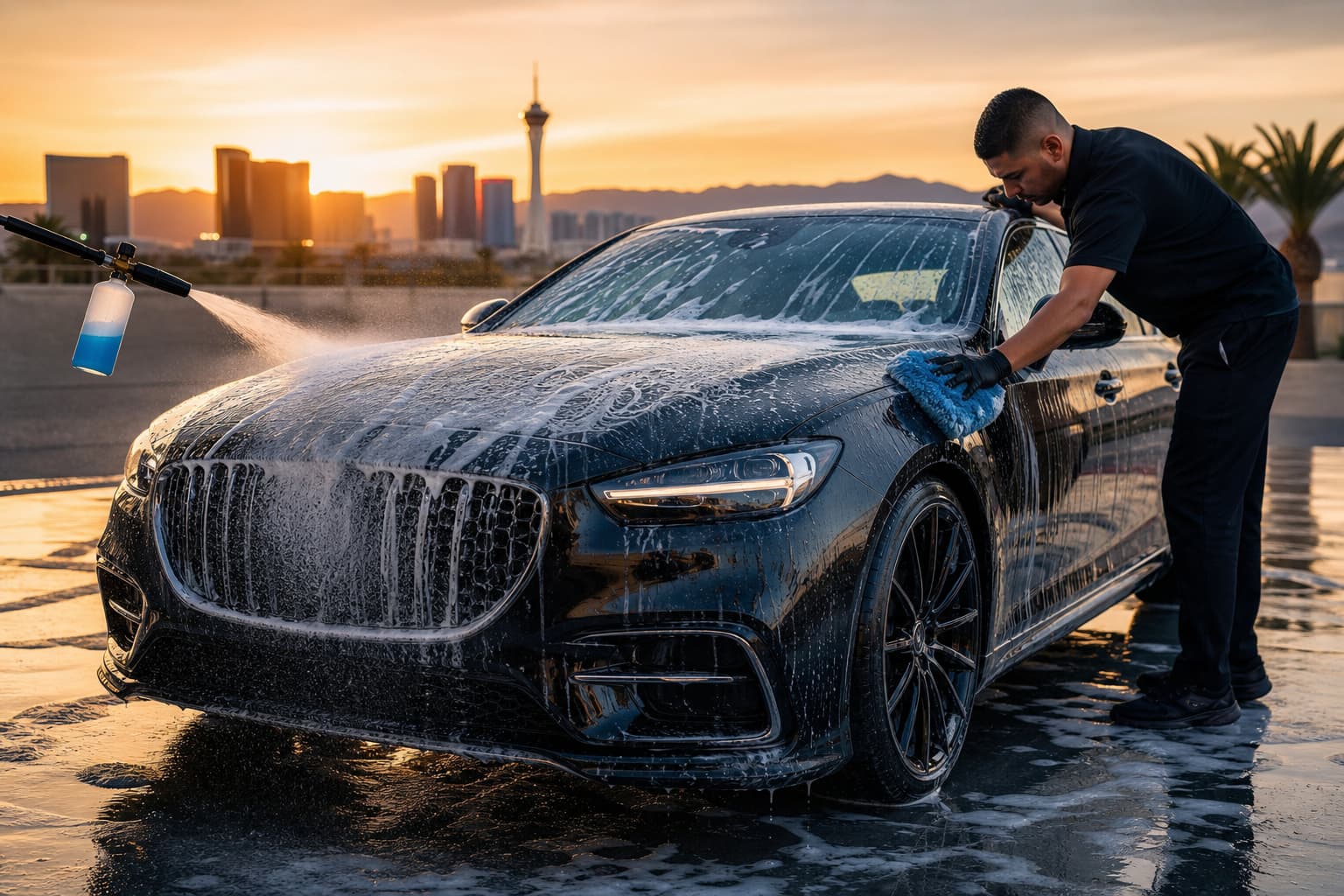
Off-road vehicle detailing is a different job than a routine wash for anyone who takes a Jeep, truck, or UTV out to the trails around Las Vegas. A weekend at Nellis Dunes, Logandale Trails, or the washes near Bootleg Canyon leaves a rig coated in fine silica dust, packed wheel wells, and rock chips that a regular car wash never touches. Kevin at AOA Detailing has spent years bringing mobile detailing to Las Vegas Valley driveways, and off-road rigs consistently need the most aggressive cleanup of any vehicle type he services. This guide covers what off-road vehicle detailing actually involves, where Las Vegas trail damage comes from, and how to protect a rig between runs.
Quick Summary: Off-road vehicle detailing in Las Vegas has to address problems a standard wash skips entirely — packed silica dust in wheel wells and door jambs, sand ground into carpet and seats, and rock chips that expose bare metal to the desert’s mineral-heavy environment. A proper post-trail detail combines a thorough exterior detailing decontamination, a full interior extraction, targeted paint correction on chipped panels, and a ceramic coating that makes the next wash-down dramatically easier. Call AOA Detailing at (775) 244-5315 to book a post-trail detail.
Table of Contents
- What Makes Off-Road Vehicle Detailing Different in Las Vegas
- Where Las Vegas Off-Roaders Do the Most Damage
- Exterior: Undercarriage, Wheel Wells, and Trail Grime
- Interior: Sand, Dust, and Gear Bag Buildup
- Paint Correction for Rock Chips and Trail Pinstriping
- Ceramic Coating Between Trail Runs
- How Often to Detail an Off-Road Rig
- Frequently Asked Questions
What Makes Off-Road Vehicle Detailing Different in Las Vegas
A daily driver picks up dust from parking lots and light debris from surface streets. An off-road vehicle that has spent a weekend at Nellis Dunes or on the trails near Lake Mead comes home with a completely different problem set. Fine Mojave silica works its way into every seam, hinge, and vent. Sand packs behind wheel liners and inside brake components. Cactus needles and sharp gravel embed in tire sidewalls and mud flaps. None of that comes off with a five-minute rinse at a self-serve bay, and leaving it in place accelerates corrosion on exposed metal and wears down rubber seals faster than normal street driving ever would.
Off-road vehicle detailing also has to account for the aftermarket parts many Las Vegas trail rigs carry — rock sliders, skid plates, roof racks, and light bars all trap grit in places a factory vehicle never had to deal with. A detailer who only knows how to clean a stock daily driver will miss half of where the damage is actually hiding.
Where Las Vegas Off-Roaders Do the Most Damage
The Las Vegas Valley sits within a short drive of some of the most popular off-road terrain in the Southwest, and each spot punishes a vehicle differently. Nellis Dunes Recreation Area coats everything in fine, powder-like sand that gets into places a person would not expect — door speakers, seat tracks, glove box seams. Logandale Trails State Park, about an hour northeast of the valley, mixes hard-packed clay with sharp volcanic rock that is brutal on tires, rocker panels, and lower door skins. Closer to town, the washes and staging areas around Boulder City see heavy traffic from both off-roaders and mountain bikers, and the red clay dust there stains lighter paint colors if it sits too long in the heat.
Las Vegas also hosts the Mint 400, one of the most well-known off-road races in the country, which means a large local community of trail-driven trucks and UTVs get regular use throughout the year — not just on race weekends. That kind of consistent trail time is exactly why a specialized detailing approach matters more here than in a city without easy desert access.
Exterior: Undercarriage, Wheel Wells, and Trail Grime
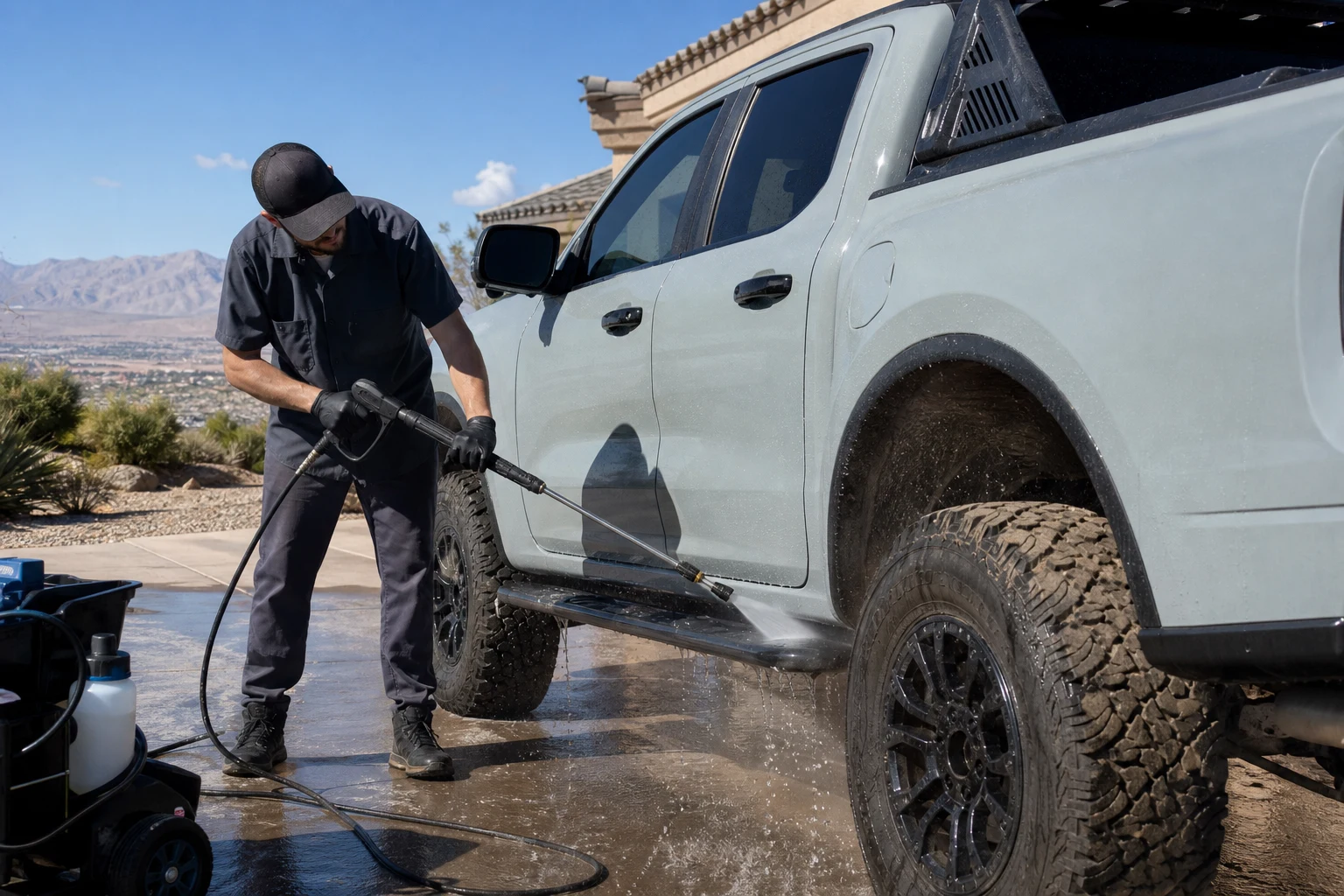
The exterior work on an off-road vehicle starts underneath, not on top. A proper exterior detailing appointment for a trail rig includes:
- Undercarriage rinse and inspection. Packed sand and clay trap moisture against metal components, which speeds up rust on frames, skid plates, and exhaust hangers. Flushing this out is the single most important step for long-term vehicle health.
- Wheel well and liner decontamination. Wheel wells hold more trapped debris than any other exterior area on a trail vehicle. A thorough clean here also lets Kevin spot cracked liners or loose hardware before they become bigger problems.
- Hand wash and clay treatment. Bonded dust and mineral deposits that survive a pressure rinse need a two-bucket hand wash followed by a clay bar pass to lift what is still stuck to the clear coat.
- Tire, sidewall, and rock slider cleaning. Embedded gravel and cactus debris in tire sidewalls and aftermarket rock sliders needs to be worked out by hand — it will not come loose with a standard wash mitt.
Interior: Sand, Dust, and Gear Bag Buildup
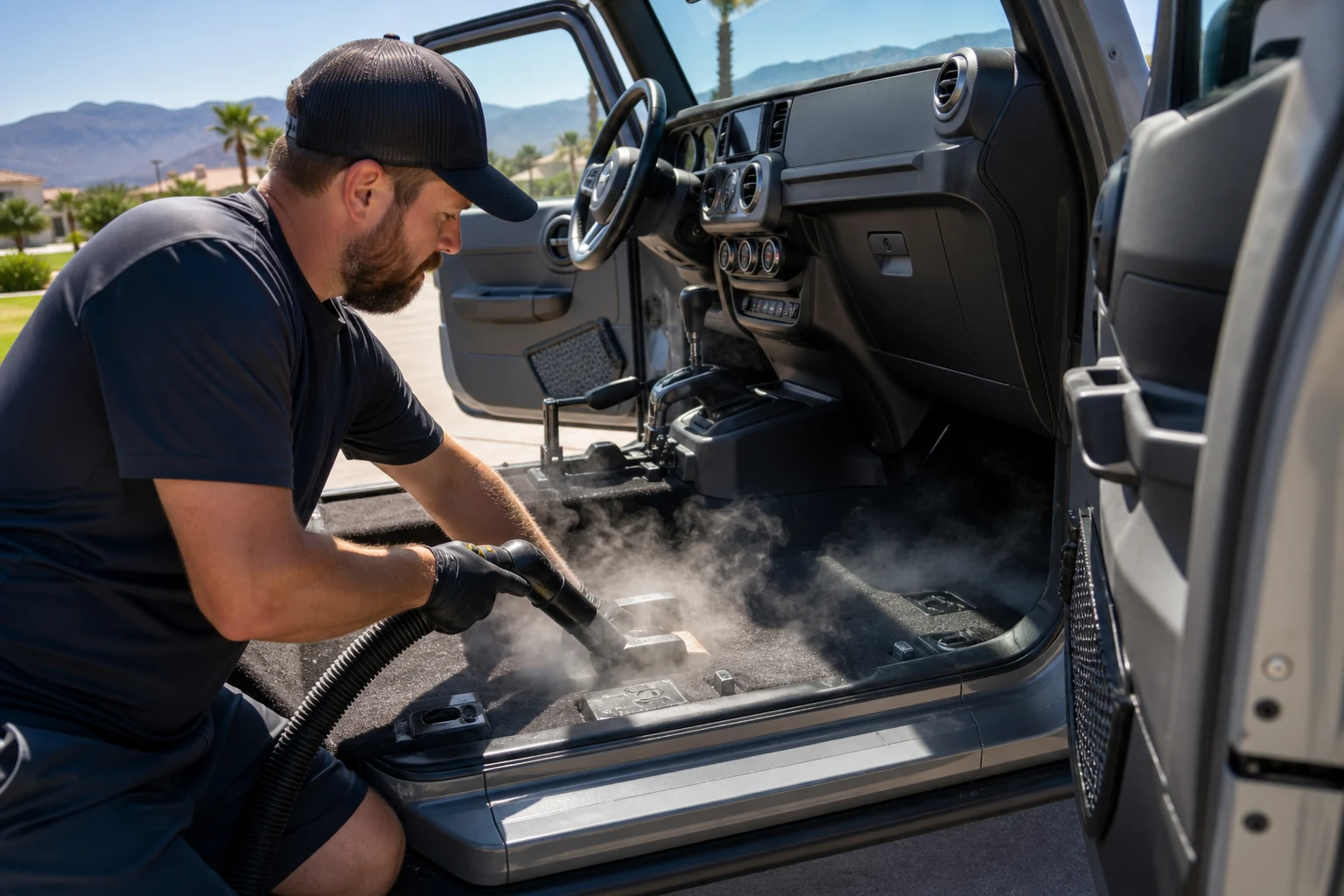
The cabin of an off-road vehicle takes on almost as much punishment as the exterior, especially with the doors and windows open during a hot trail day. Interior detailing for a trail rig focuses on:
- Full carpet and seat extraction. Sand works its way deep into carpet fibers and seat foam. Standard vacuuming barely scratches the surface — a hot-water extraction is the only way to actually pull it out.
- Vent and dash detailing. Fine dust settles into HVAC vents and dash seams and gets recirculated every time the AC runs. A deep clean here noticeably improves cabin air quality on the next trip.
- Door jamb and seal cleaning. Grit that collects in door jambs and rubber seals accelerates wear on weatherstripping, which is a common and avoidable source of dust intrusion on older trail vehicles.
- Cargo area and gear compartment cleanup. Recovery gear, tow straps, and dirty boots leave behind grime that regular interior cleaning does not reach. This area gets specific attention on every trail-rig appointment.
Paint Correction for Rock Chips and Trail Pinstriping
Trail driving produces a specific kind of paint damage — rock chips along the lower body and hood, and “pinstriping” scratches down the sides from brush and narrow canyon walls. Left alone, chipped paint exposes bare metal to Las Vegas’s mineral-heavy environment, and that combination leads to rust starting far sooner than most owners expect. A targeted paint correction appointment addresses the chips and scratches that are already there, while touch-up work on deeper chips prevents them from spreading. For a closer look at how this kind of damage develops and gets corrected, see our guide on rock chips and paint scratches in Las Vegas.
Correction work on a trail vehicle is not about achieving a show-car finish — it is about stopping active damage before the next trip makes it worse.
Ceramic Coating Between Trail Runs
For anyone who runs the trails regularly, a ceramic coating is one of the most practical upgrades available. A cured coating creates a slick, hydrophobic surface that keeps sand, mud, and mineral dust from bonding as aggressively to the clear coat, which makes the post-trip wash-down faster and less abrasive. It also adds a layer of UV and chemical resistance that helps the paint hold up against the same 300-plus days of intense Las Vegas sun that bakes untreated vehicles.
A coating will not stop a rock chip on impact, but it meaningfully reduces how much fine scratching accumulates from routine desert grime over a season of regular trail use — which is exactly the kind of slow, cumulative damage that dulls paint on off-road vehicles faster than daily drivers.
How Often to Detail an Off-Road Rig
For a vehicle that hits the trails most weekends, a full exterior and undercarriage detail after every major outing is the ideal cadence, even if that means more frequent visits than a typical daily driver needs. For more occasional off-roaders — a handful of trips a season — a thorough detail after each trip plus a lighter maintenance wash in between covers most of the risk. The key factor is time, not mileage: sand and clay left packed in wheel wells and door seals for weeks does more damage than the trail itself.
Ready to get the trail grime out before it causes lasting damage? Call Kevin and the AOA Detailing team at (775) 244-5315, reach out through the contact page, or book online. We come to your home or staging spot anywhere within 25 miles of Las Vegas.
Frequently Asked Questions
1. Can regular car wash equipment handle off-road vehicle detailing?
Not effectively. Standard wash bays and touchless washes are not designed to flush packed sand out of wheel wells, door jambs, or undercarriage components, and aggressive brushes can grind trapped grit deeper into the clear coat. Off-road vehicles need a manual, decontamination-focused process.
2. Will a ceramic coating protect against rock chips?
No. Ceramic coating adds hardness and UV resistance to the clear coat but will not prevent a direct rock impact from chipping paint. It does help reduce the fine scratching and staining that accumulates from routine trail dust and mineral buildup.
3. How much does off-road vehicle detailing cost in Las Vegas?
Pricing depends on how much trail time the vehicle has seen and whether paint correction is needed. A full exterior and interior detail typically falls in the same range as AOA’s standard full detailing packages, with paint correction quoted separately based on chip and scratch severity.
4. Do you detail UTVs and side-by-sides, or only trucks and Jeeps?
Yes. The same decontamination approach applies to UTVs and side-by-sides — sand and mud packed into seat pans, roll cages, and undercarriage components need the same attention as a full-size truck or Jeep.
5. How soon after a trail trip should I get the vehicle detailed?
As soon as reasonably possible. Sand and mineral dust left sitting in wheel wells, seals, and carpet continue to trap moisture and cause wear the longer they sit, so booking within a few days of a trip prevents avoidable damage.
Kevin is the founder and owner-operator of AOA Detailing, personally completing every appointment across the Las Vegas Valley with hands-on experience handling everything from daily drivers to trail-worn trucks and UTVs. He provides mobile interior, exterior, paint-correction, and ceramic-coating services within a 25-mile service area. Call (775) 244-5315, contact AOA Detailing, or book online to schedule.