Why SUVs and Trucks Take a Bigger Hit in Las Vegas
Las Vegas is hard on every vehicle, but if you drive an SUV or pickup truck, the punishment is measurably worse. More surface area means more paint exposed to UV radiation. Higher ground clearance means more undercarriage exposure to desert road debris, caliche dust, and gravel. And darker-colored trucks and SUVs — which are enormously popular in Nevada — absorb more heat per square foot than any other vehicle type.
Kevin, Founder of AOA Detailing, has applied ceramic coatings across the Las Vegas Valley for years, and trucks and full-size SUVs consistently make up a large portion of that work. “The math is simple,” he says. “Bigger vehicle means more paint to protect, more horizontal surfaces baking in direct sun, and more time spent off the pavement where dust and debris do real damage. Ceramic coating makes more sense on a truck than almost anything else.”
In this guide, Kevin breaks down exactly why ceramic coating is especially valuable for SUV and truck owners in Las Vegas, what the coating process involves for larger vehicles, and what to expect in terms of longevity and maintenance.
What Las Vegas Does to Truck and SUV Paint
UV Radiation at Elevation and Latitude
Las Vegas sits at approximately 2,000 feet elevation and receives over 300 sunny days per year. At that elevation and latitude, UV index regularly hits 10–11 during summer months — classified as “extreme.” UV radiation is the primary driver of clear coat oxidation, color fading, and the chalky, dull appearance that makes unprotected vehicles look years older than they are.
For SUVs and trucks, the horizontal surfaces — hood, roof, and truck bed (for pickups) — are the most exposed. A full-size pickup truck bed alone represents several square feet of horizontal paint that receives direct overhead UV exposure every hour the vehicle sits outside. Without protection, that paint begins breaking down within months of purchase.
Desert Contamination and Road Debris
Nevada’s desert environment creates a unique contamination profile that doesn’t exist in more temperate climates. Caliche — the calcium carbonate mineral compound that makes up much of the Mojave Desert floor — is constantly airborne in Las Vegas, especially during the summer wind events that precede monsoon storms. This ultra-fine alkaline dust settles into every surface pore and acts as a mild acid on unprotected clear coat over time.
Trucks that spend any time off-road or on unpaved surfaces — common in Henderson, Boulder City, and the outer valley — pick up additional silica, mineral fallout, and gravel impacts that create rock chip damage and paint contamination at a higher rate than street-only vehicles.
Temperature Cycling
Las Vegas summer temperatures routinely exceed 110°F. Vehicle surface temperatures in direct sun can reach 180–190°F on dark metallic paint. This extreme heat cycling — hot by midday, cooling through the night — causes constant thermal expansion and contraction of paint layers. Over time, this cycling creates micro-cracking in clear coat that accelerates contamination adhesion and makes the paint increasingly difficult to clean.
Ceramic coating’s 9H hardness creates a thermally stable protective layer that reduces heat absorption and maintains its integrity through this expansion-contraction cycle far better than traditional wax or sealant products.
Why Ceramic Coating Is Particularly Valuable for Larger Vehicles
More Paint to Protect = More to Lose Without It
A full-size pickup truck has roughly 30–40% more paintable surface area than a midsize sedan. Every additional square foot of exposed clear coat is another area that can fade, oxidize, water spot, and attract embedded contaminants. The cost-benefit math on ceramic coating shifts significantly when you’re protecting a $55,000 truck versus a $22,000 compact car.
Roof and Hood Size: The UV Exposure Multiplier
The roof of a large SUV — a Chevy Suburban, Ford Expedition, or Toyota Sequoia — is a massive horizontal surface that receives near-perpendicular UV exposure during Las Vegas peak sun hours. Without a ceramic coating, that roof will show oxidation and fading before any other panel on the vehicle. Kevin’s team specifically notes the roof and hood as priority areas during SUV ceramic coating applications.
Truck Beds: Unique Protection Challenges
For pickup truck owners, the bed is a particular challenge. Factory bed liner materials vary widely in UV and chemical resistance. Even with a spray-in bed liner, the upper rail, tailgate exterior, and lower quarter panels adjacent to the bed receive heavy exposure and debris impact. A ceramic coating applied to these areas extends the factory finish significantly and reduces the constant cleaning required to maintain appearance.
Resale Value Protection
Full-size trucks and SUVs hold strong resale values in Nevada — particularly diesel pickups, which are popular for towing in the Las Vegas and Henderson markets. A truck with protected, unfaded paint and a documented detailing history commands $2,000–$5,000 more at sale than an equivalent vehicle with oxidized or swirl-damaged paint. The ceramic coating investment typically pays for itself in resale value preservation alone over a 3–5 year ownership period.
What to Expect During the Ceramic Coating Process for a Large Vehicle
Paint Decontamination First
Before any ceramic coating application, the vehicle surface must be decontaminated completely. For trucks and SUVs with significant road use in Las Vegas, this typically involves:
- Pre-wash and foam cannon decontamination — removes loose surface contamination
- Clay bar treatment — extracts embedded iron fallout, caliche, and mineral deposits from paint pores
- Iron decontamination spray — chemically neutralizes ferrous particles that clay bar cannot remove mechanically
On trucks that have been driven regularly in Las Vegas desert conditions, this decontamination stage often reveals significant embedded contamination that owners weren’t aware of. Skipping this step and applying ceramic coating over a contaminated surface locks those particles under the coating permanently — this is why Kevin’s team at AOA Detailing doesn’t cut corners on prep.
Paint Correction (If Needed)
If the paint shows swirl marks, water spot etching, or oxidation before coating, a paint correction service is recommended prior to ceramic application. Ceramic coating seals in whatever condition the paint is in when applied — it doesn’t hide imperfections. For trucks that have accumulated scratches and swirls from improper washing or trail use, a single-stage or multi-stage correction transforms the result dramatically.
Kevin will assess the paint condition during the initial inspection and recommend the appropriate correction level before proceeding to coating.
Application and Cure Time
The ceramic coating itself is applied panel by panel in a controlled environment. For a full-size SUV or truck, the process typically takes longer than for a sedan due to the increased surface area — especially the hood, roof, and truck bed areas. AOA Detailing’s team applies the coating in thin, even layers, working it into the surface before buffing the flash residue.
After application, the coating requires a cure period before the vehicle should be exposed to rain, car washes, or contaminants. Kevin’s team provides detailed aftercare instructions with every coating application.
What’s Protected
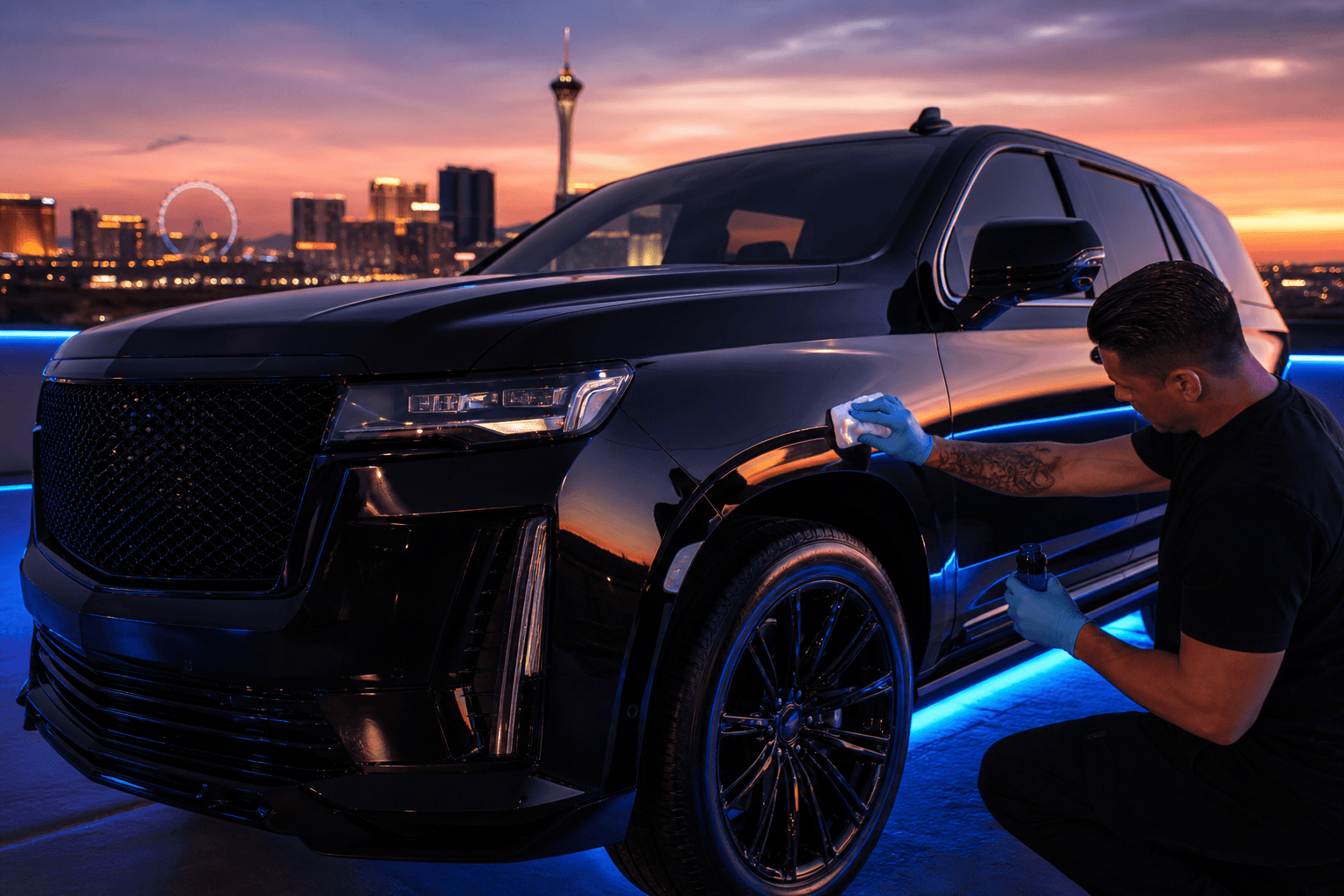
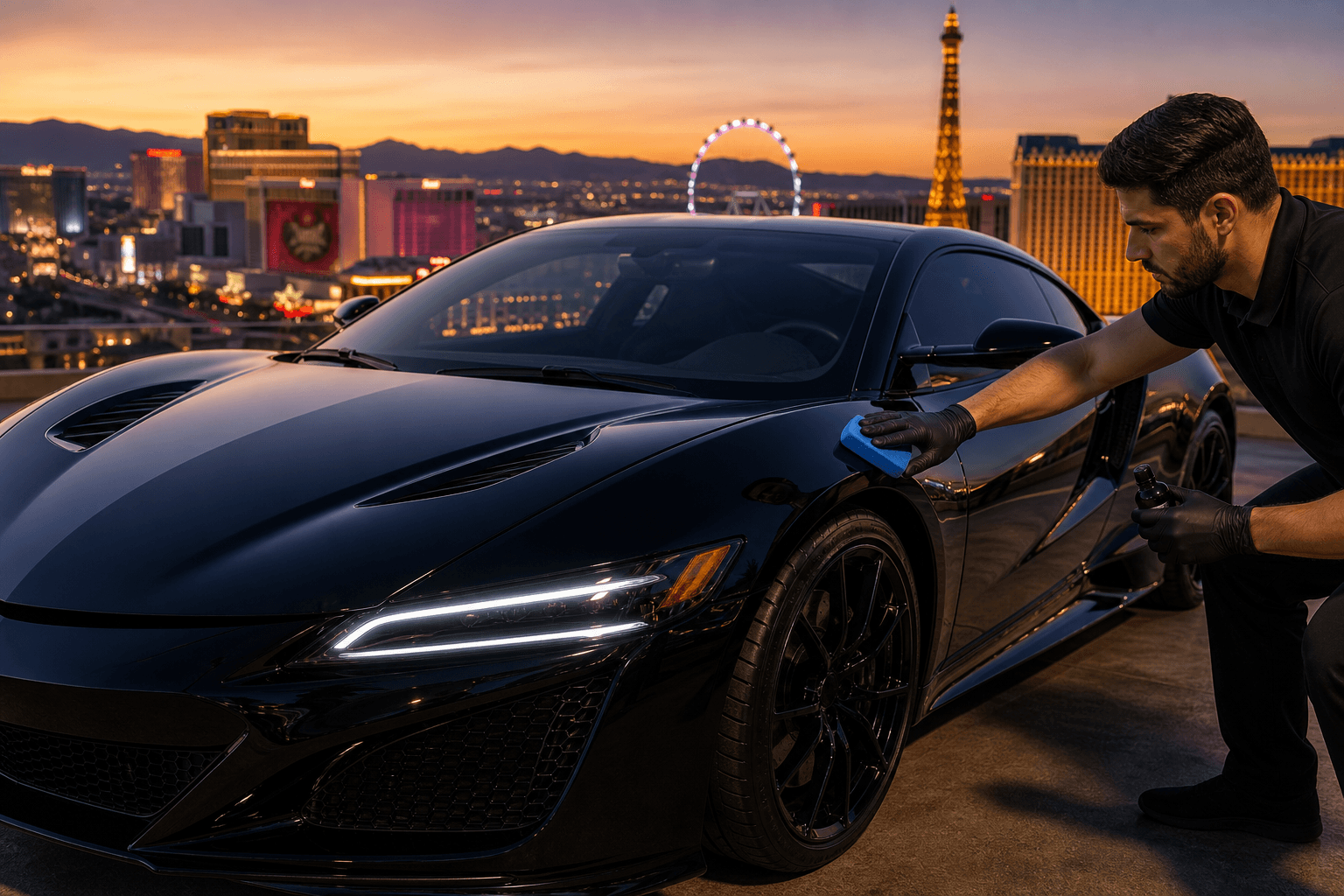
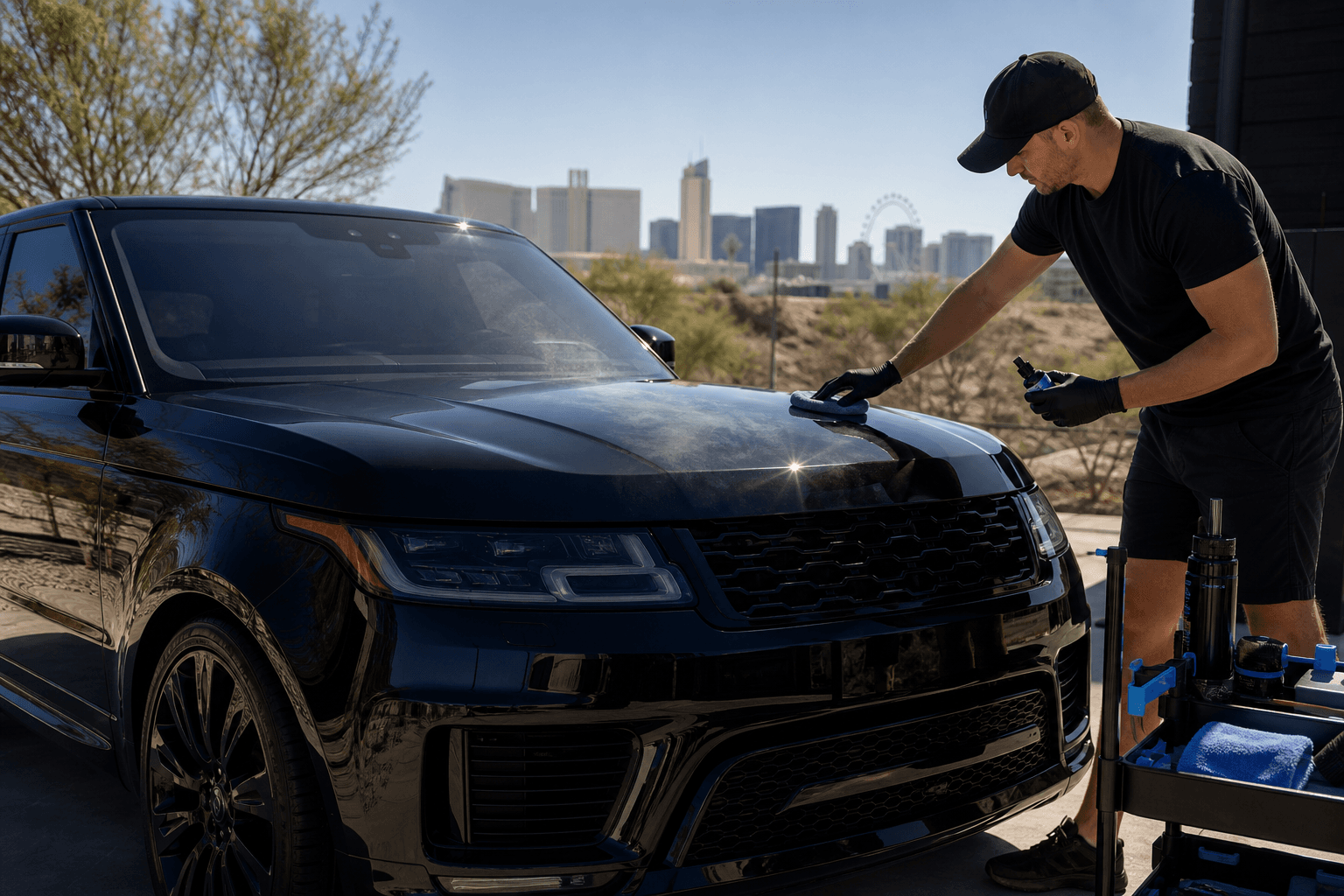
A full ceramic coating package from AOA Detailing covers all painted exterior surfaces: doors, fenders, hood, roof, trunk or tailgate, bumpers, and mirrors. Kevin can also coat:
- Plastic trim and running boards (prevents UV graying and chalking, particularly visible on large trucks with factory black trim)
- Wheels (Las Vegas brake dust and road grime bonds aggressively to uncoated alloy wheels)
- Glass (creates hydrophobic water sheeting that dramatically improves visibility during monsoon rain events)
How Long Does Ceramic Coating Last on a Truck or SUV?
With proper maintenance, a professionally applied ceramic coating from AOA Detailing typically lasts 3–5 years on daily-driven vehicles in the Las Vegas climate. Several factors influence longevity:
- Wash frequency and method: Ceramic-coated vehicles should be hand washed or touchless washed only. Automatic brushless car washes are acceptable; brush car washes will degrade the coating prematurely.
- UV intensity: Las Vegas’s extreme UV does challenge all coatings more aggressively than mild climates. The coating’s performance is still dramatically superior to uncoated paint, but longevity is toward the 3-year end of the range for vehicles parked outside daily.
- Off-road use: Trucks that regularly take unpaved roads accumulate more abrasive contamination, which reduces coating longevity compared to street-only vehicles.
- Maintenance coating: An annual application of a ceramic-compatible topping spray (which AOA Detailing recommends and carries) extends the base coating’s effective life significantly.
Ceramic Coating Pricing for SUVs and Trucks
AOA Detailing’s ceramic coating service starts at $1,000 for standard vehicles. Pricing for SUVs and trucks reflects the increased surface area and preparation time required. Kevin provides exact quotes during the initial vehicle inspection — there’s no guessing or surprise charges.
For context: a professionally ceramic-coated truck that maintains its paint over a 3-year ownership period is a significantly better financial decision than an uncoated truck requiring paint correction or repainting. Kevin’s team at AOA Detailing can walk you through the cost-benefit breakdown specific to your vehicle and usage profile.
Where AOA Detailing Serves Truck and SUV Owners
AOA Detailing provides fully mobile ceramic coating service throughout the Las Vegas Valley — we come to your driveway, parking garage, or any covered space within 25 miles of Las Vegas. No need to drop your truck off at a shop or arrange transportation. Service areas include Las Vegas, Henderson, Summerlin, North Las Vegas, Spring Valley, and Boulder City.
Book Your SUV or Truck Ceramic Coating
If you drive a full-size truck or SUV in Las Vegas and haven’t protected the paint with a ceramic coating, you’re watching your investment degrade in real time. The combination of extreme UV, desert contamination, and temperature cycling makes Las Vegas one of the most demanding automotive environments in the country — and ceramic coating is the most effective long-term answer.
Call Kevin at AOA Detailing: (775) 244-5315
Or book your appointment online — AOA Detailing serves customers throughout the Las Vegas Valley, including Henderson, Summerlin, North Las Vegas, Spring Valley, and Boulder City, within 25 miles of Las Vegas.