How to Remove Sticker Residue From Car Paint Safely
Share
How to remove sticker residue from car paint comes down to one rule: start with the gentlest method and move up only when it fails. Sources agree on the order: warm the adhesive, lift with plastic, then use a remover made for paint. Skip metal blades and harsh solvents. If a mark will not budge, exterior detailing may be the safer next step.
Quick Summary
Wash the spot first. Grit under a tool or cloth can scratch clear coat before the adhesive is even touched.
Warm the sticker or decal gently, then peel slowly at a low angle. Sources differ on how much heat to use, so follow the directions for your vehicle or product, start low, keep the heat moving and stop if you are unsure.
Use a plastic razor blade or a soft plastic card, not metal.
For leftover glue, use a remover made for automotive paint on a microfiber cloth, not directly on the paint. Follow that product's directions, test it on a hidden spot first and stop if you are unsure.
Avoid acetone and paint thinner on paint. Chemical Guys, a car care brand, warns they can eat through the paint's protective layers.
Wash the area afterward and re-protect it. Clearing adhesive often takes the wax or sealant off that spot.
Sticker residue is not one problem. The right first move depends on what the adhesive came from, and the sources describe a few different cases.
A fresh sticker or label. Warm it, lift a corner and peel. Most of the glue usually comes off with the paper or vinyl.
A vinyl decal or bumper sticker. The vinyl face comes off first, then the glue is a separate job. Decals.com, a custom decal seller, says the adhesive on older dealership and fleet decals ages and hardens, so old graphics are harder to clean off.
A parking permit or ID sticker. Turtle Wax, a car care brand, says these are made to last, with a strong sticky adhesive. Expect more glue left behind.
A ghost outline. Decals.com says a faded outline can appear where a decal shielded the paint from UV light. That is a paint problem, not a glue problem, and it is covered below.
Look at the spot in daylight before you start. Knowing whether you have a loose edge, a sticky film or a faint outline tells you how far up the ladder you may need to go.
How to remove sticker residue from car paint: the gentle ladder
Work from the mildest step to the strongest, and stop as soon as the spot is clean. This order follows Chemical Guys and Stoner Car Care, both detailing product sellers, and Decals.com. The sellers promote their own products, so this article leaves product names out.
Wash and dry the area. Chemical Guys starts here, and Decals.com explains why: dirt or grit trapped under a tool can scratch the paint before you begin.
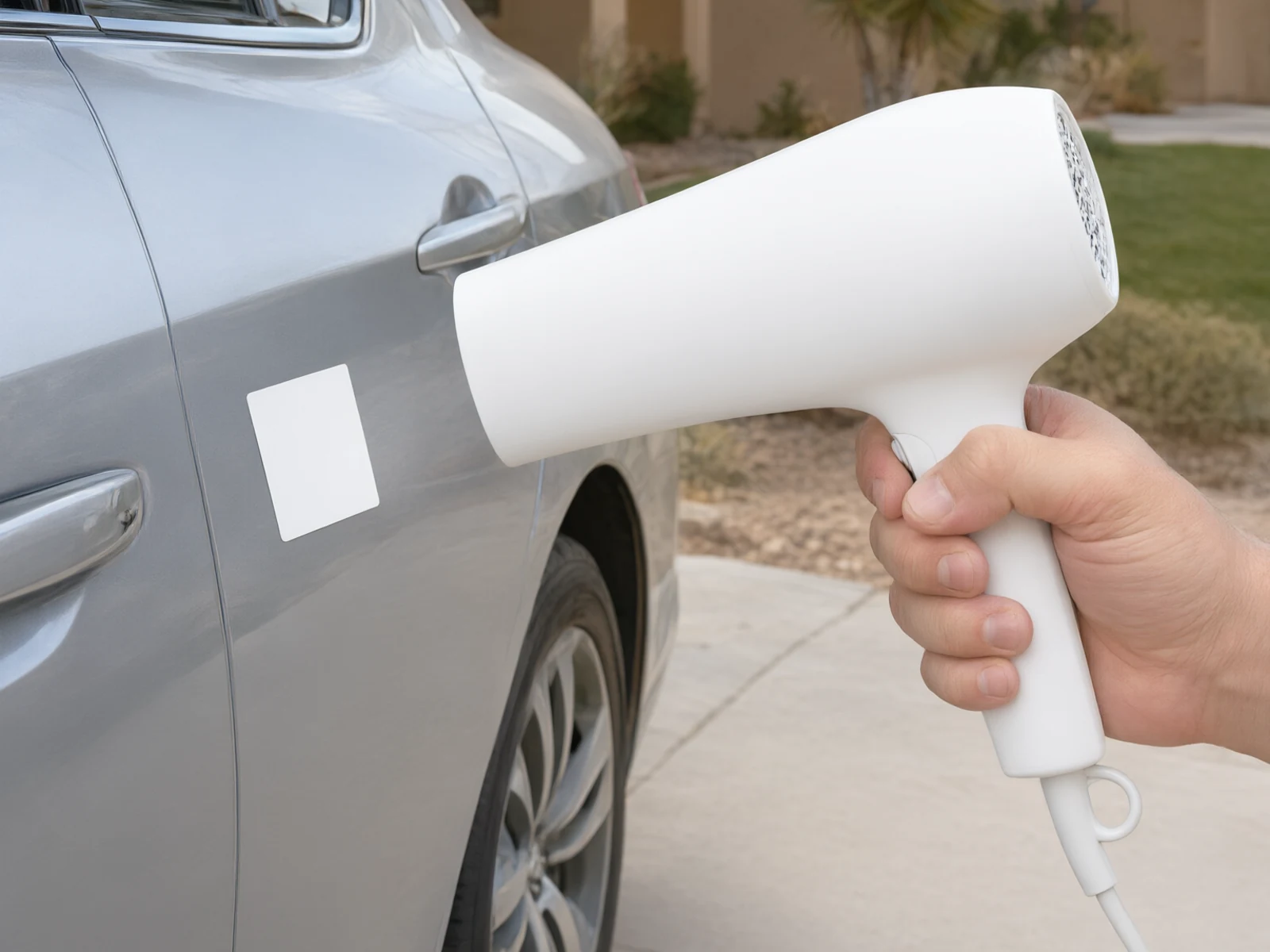
Warm the sticker. Some sources suggest a hair dryer held a few inches away and kept moving. Chemical Guys suggests a low setting for about 30 seconds, and Decals.com suggests medium. Because the sources differ, follow the directions for your vehicle or for the product you chose, start low and add time before you add heat, and stop if you are unsure. Chemical Guys warns that too much focused heat can warp trim or discolor paint.
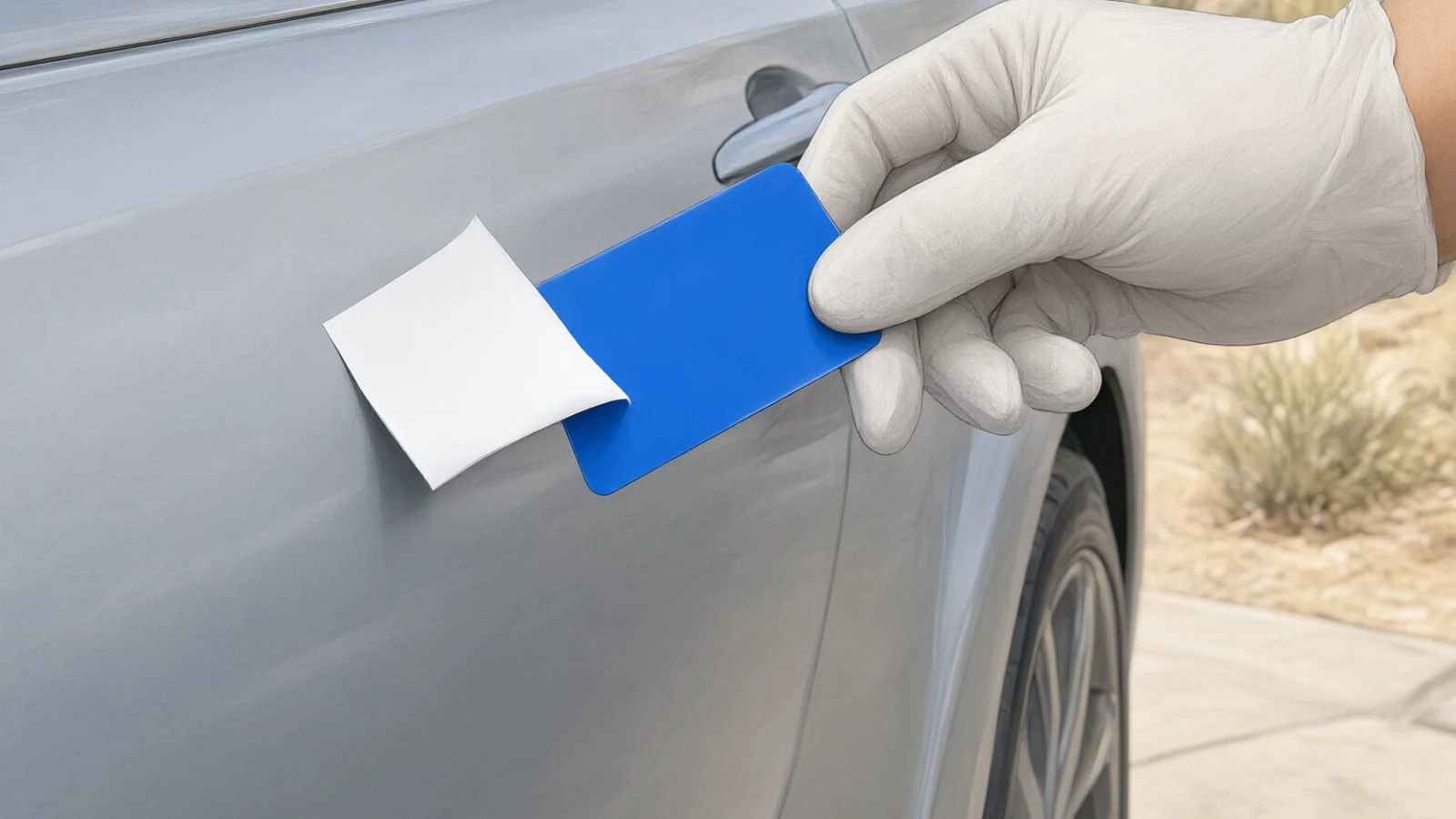
Lift a corner with plastic and peel low. Use a plastic razor blade, a soft plastic card or a plastic trim tool. Peel back along the paint at a low angle rather than pulling straight up. Stoner Car Care says that if the edge resists, warm it again instead of forcing it.
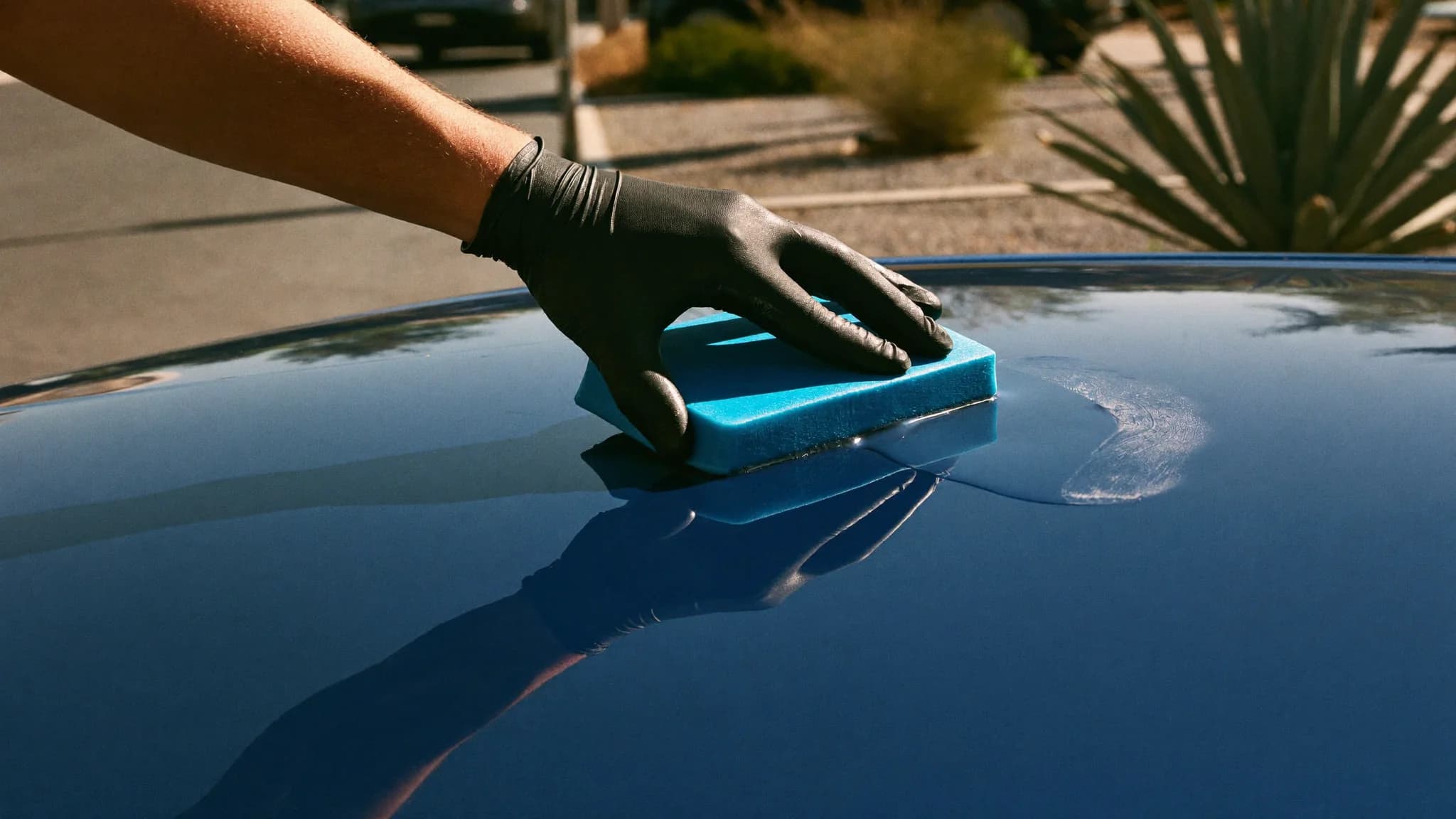
Treat the leftover glue with a remover made for paint. Choose a product that says it is made for automotive paint, put it on a clean microfiber cloth rather than on the paint, and follow the product's directions. Stoner Car Care says to reapply and give it another minute rather than scrubbing harder. If you are not sure which product is safe for your finish, ask the shop that paints or maintains the car.
Wipe, rinse and look again. Check the panel from a few angles. If glue is left, repeat step 4 with a fresh part of the cloth.
Test any remover on a small, hidden spot first. Decals.com gives this advice, and it matters most on older or repainted panels. The panel may also be hot after sitting in Las Vegas sun, so moving the car into shade first is a sensible habit. That is general guidance, not a point from the sources.
AI-generated illustration
What should you never use on clear coat?
Stoner Car Care puts it plainly: the clear coat over your paint is thinner and softer than it looks. Most damage from sticker removal comes from a short list of shortcuts.
Metal scrapers or blades. Chemical Guys warns that metal can scratch or gouge clear coat. Decals.com says never to use a metal scraper directly on paint.
Acetone and paint thinner. Chemical Guys says to skip household solvents like these because they can eat through the paint's protective layers. Decals.com also says never to use acetone on a clear coat finish.
All-purpose cleaners. Stoner Car Care says they can haze or stain clear coat.
Paper towels. Decals.com says to avoid them because they can leave small scratches on soft clear coat. Use microfiber.
Scrubbing harder. Stoner Car Care says that pushing a scraper under a sticker that has not softened is what scratches the panel. More pressure is the wrong answer when the glue will not move.
Too much heat in one spot. Keep the heat moving and stop when the sticker is warm, not hot.
Household vinegar comes up often. Chemical Guys says it has some adhesive-softening properties and suits light residue only. Stoner Car Care says vinegar and alcohol are not as effective on stubborn adhesive. Treat it as a light-duty option, not a rescue for a baked-on label.
What about glass, trim and tint?
Glass, plastic trim and paint are not treated the same, so do not carry a paint method to another surface without checking.
Glass. Chemical Guys says a brand-new, sharp razor blade is only for glass without tint, and never for tinted or coated windows. It also warns that acetone can haze or pit glass. Stoner Car Care likewise says not to use a metal razor on window tint, film or other coated surfaces. Check what is on the window before you reach for a blade.
Plastic trim. Stoner Car Care says plastic does not react well to strong solvents. Test any remover on a hidden spot first. Gentle heat and plastic tools are general guidance here, not a point from that source.
A new paint job or a recent repaint. Decals.com cautions against using heat or chemical removers on fresh or recently repainted panels. Ask the shop that did the work how long to wait and what is safe before you start, and do the same if you are unsure whether a panel was repainted.
How do you finish the spot?
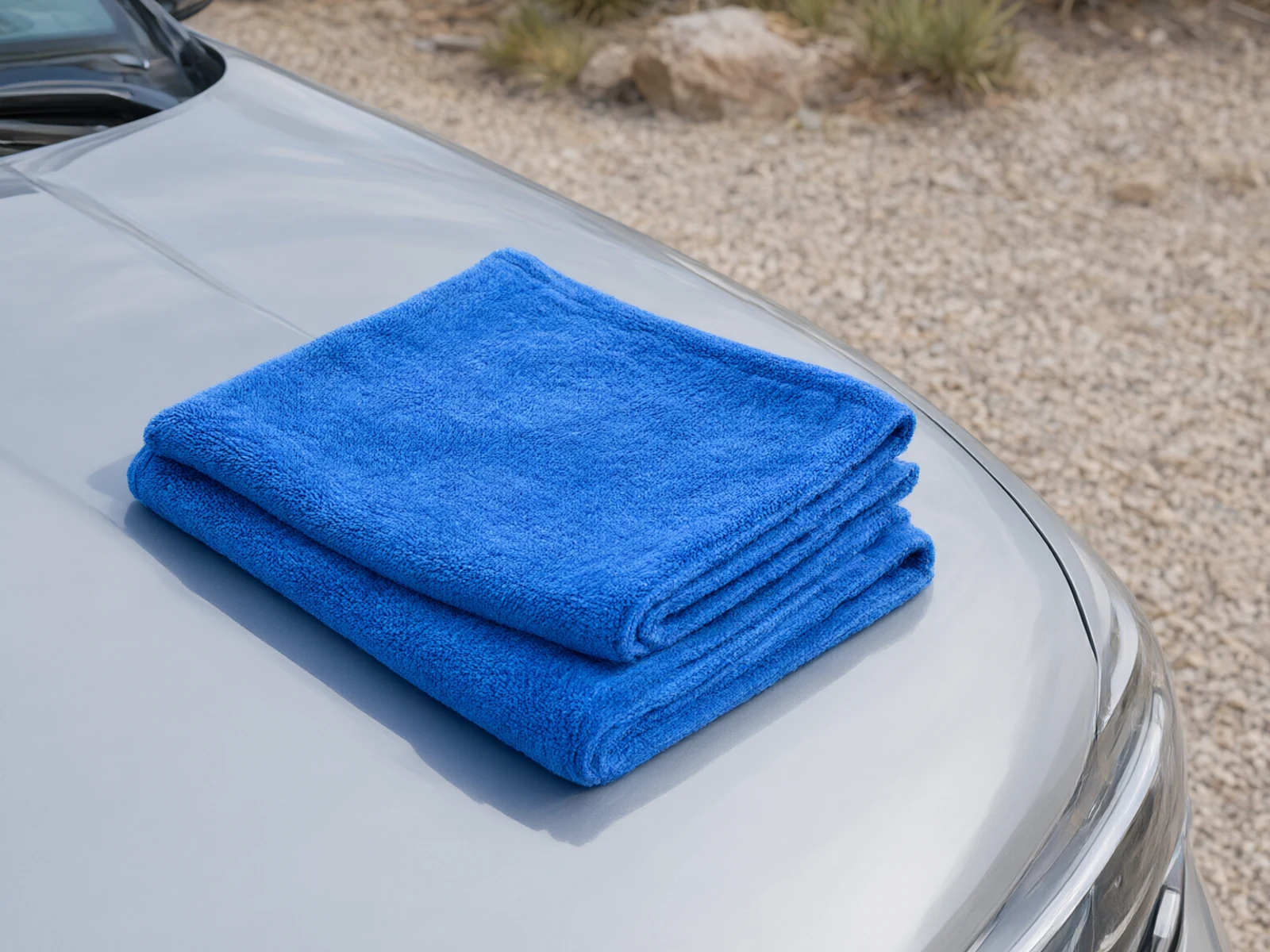
Wash the area with car wash soap and dry it with microfiber. Chemical Guys says to avoid letting the car air dry. Then check the paint once the glue is gone.
If the spot looks dull or has a faint outline: Chemical Guys suggests a light polish if the area looks dull. A faint outline is a question about the paint finish, not about glue, so ask a detailer to look at it before you polish.
If the paint feels rough: Chemical Guys mentions using clay on the area before polish and wax. AOA's guide to a clay bar treatment explains what clay does and does not remove.
Re-protect the spot. Stoner Car Care says clearing adhesive often takes the wax or sealant off that spot, so lay down fresh protection. AOA's guide on how often to wax a car covers wax and sealant timing, and the wax, sealant and ceramic coating comparison can help you choose.
If the mark was sap or tar rather than a sticker, a different method applies. See AOA's guide to bird droppings and tree sap.
AI-generated illustration
When should you stop and ask a detailer?
Stop when the adhesive has not moved after a couple of careful rounds, when the clear coat looks cloudy or scratched, or when the panel may have been repainted and you do not want to guess. Another round with a stronger product is how small marks become big ones.
AOA Detailing is a mobile service in Las Vegas, so a detailer can look at the spot where your car is parked. AOA's exterior detailing page lists paint decontamination with a clay bar and a paint sealant. Its paint correction page lists machine polishing and light to moderate scratch removal. Neither page lists sticker or adhesive removal by name. Ask whether your spot can be handled and what it would add before you book.
FAQ
Is isopropyl alcohol safe on car paint?
Some car care sources name isopropyl alcohol as an option for leftover adhesive, but products and paint finishes differ, and this article does not recommend a strength or a method. Check the directions for the product you choose and for your vehicle, test a hidden spot first and stop if you are unsure. A repair shop or detailer can tell you what is safe for your paint.
Can I use a hair dryer to remove a sticker?
Often, according to the sources. Chemical Guys and Decals.com both name a hair dryer as a heat source, held a few inches away and kept moving, and Chemical Guys suggests a low setting. The goal is to warm the glue, not to cook the paint. Follow the directions for your vehicle or product, and stop if you are unsure.
Does vinegar remove sticker residue?
Only light residue, according to the sources. Chemical Guys says it has some adhesive-softening properties, and Stoner Car Care says it is not as effective on stubborn adhesive. For anything thicker, use a remover made for automotive paint.
Will removing a sticker leave a mark?
It can. Decals.com says a faded outline may show where the decal shielded the paint from UV, and Stoner Car Care says removal can strip the wax or sealant. Fresh protection helps the spot. If a mark or outline stays, ask a detailer to look at it before you polish.
Need a hand with a stubborn spot?
If the residue will not budge, choose Book Now (Free Quote) or call (775) 244-5315 and describe what is stuck to your car. You can also send a message. AOA Detailing is a mobile service in Las Vegas.