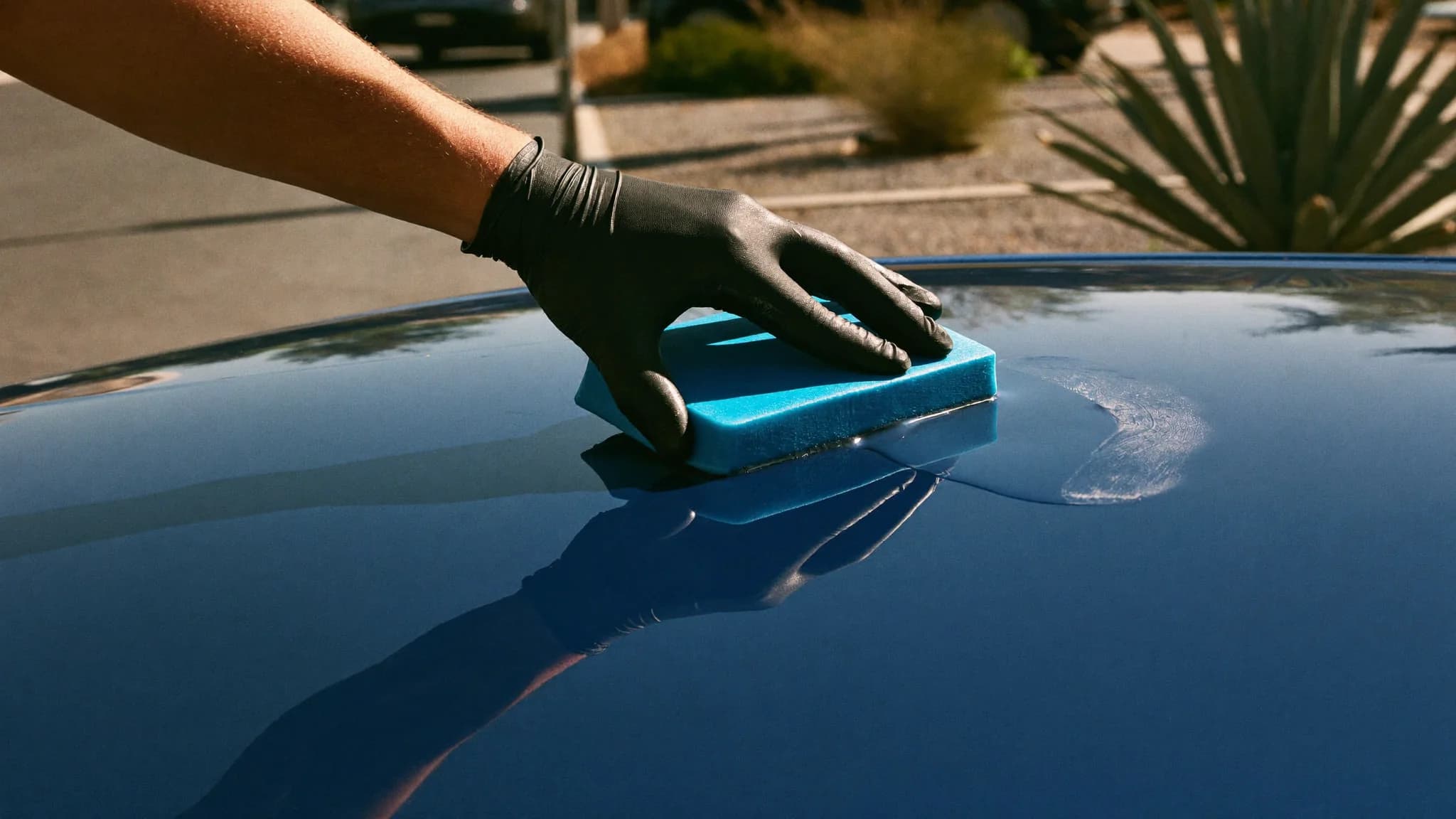
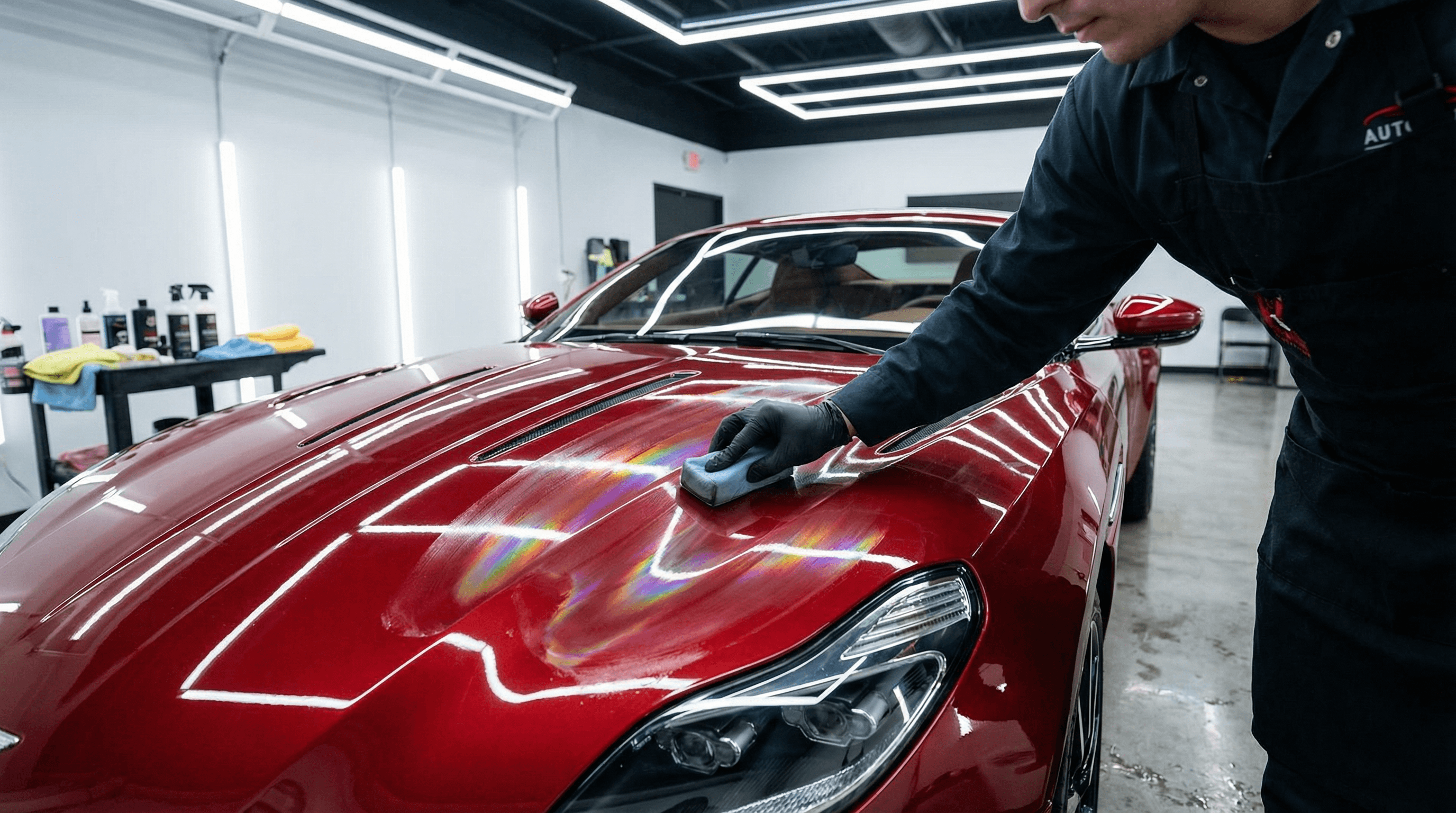
Your car probably needs a clay bar treatment if the paint feels rough or gritty after a wash. In Las Vegas, desert dust, road film and very hard tap water leave residue that washing alone can’t lift. A clay bar treatment, part of a professional exterior detail, pulls that bonded grit off so the paint is smooth again.
Quick Summary
- A clay bar treatment removes contaminants that bond to the top of your paint and survive a normal wash.
- You can check your own car in two minutes with the plastic bag test (steps below).
- Clay cleans the surface. It doesn’t remove swirl marks, scratches, oxidation or water spots that have etched into the clear coat.
- Clay comes before polishing, sealant or ceramic coating, so the protection bonds to clean paint.
- AOA Detailing’s Prestige Exterior Experience includes paint decontamination, done at your home or office.
What is a clay bar treatment?
A clay bar treatment is a paint-cleaning step that uses a soft, pliable clay compound and a slick lubricant to lift contaminants stuck to the surface of your car’s clear coat. The clay glides over the paint and grabs anything raised above it.
Think of it as the difference between rinsing a dish and scrubbing it. Soap and water remove loose dirt. Clay removes the stuck-on layer that soap slides right over.
The things clay picks up are usually too small to see one by one. Together they make the paint feel like fine sandpaper and look slightly dull, even right after a wash.
What does a clay bar remove from your paint?
Clay removes bonded surface contamination: anything sitting on top of the clear coat and stuck firmly enough that washing doesn’t move it. That usually includes:
- Road film and tar specks kicked up from hot asphalt
- Brake dust and metal particles that land on paint and wheels
- Overspray from nearby painting or construction work
- Tree sap and bug residue left behind after the worst has been washed off
- Fine grit from desert dust that has baked onto the surface
If bird droppings or sap have been sitting on your car for a while, read our guide to bird droppings and tree sap damage. Clay can lift the leftover residue. Any etching underneath needs a different fix.
Why do Las Vegas cars pick up so much contamination?
Las Vegas cars collect bonded grime faster because desert conditions keep feeding it to the paint. Dust settles on cars parked outside, heat helps residue stick, and the local water leaves minerals behind.
The water is a big part of it. The Las Vegas Valley Water District rates local tap water as “very hard,” at roughly 280 to 291 parts per million (16 to 17 grains per gallon) of dissolved minerals, mostly calcium and magnesium (LVVWD water quality facts). The district notes that mineral residue forms when water is left to evaporate on a surface.
On a car, that means every sprinkler mist, driveway wash or rinse left to air-dry can leave a thin mineral film. Fresh deposits can often be cleaned off during a detail. Spots left to bake in the sun can etch into the clear coat, and those need polishing instead. Our guide to removing water spots in Las Vegas explains the difference.
How can you tell if your car needs a clay bar? Try the bag test
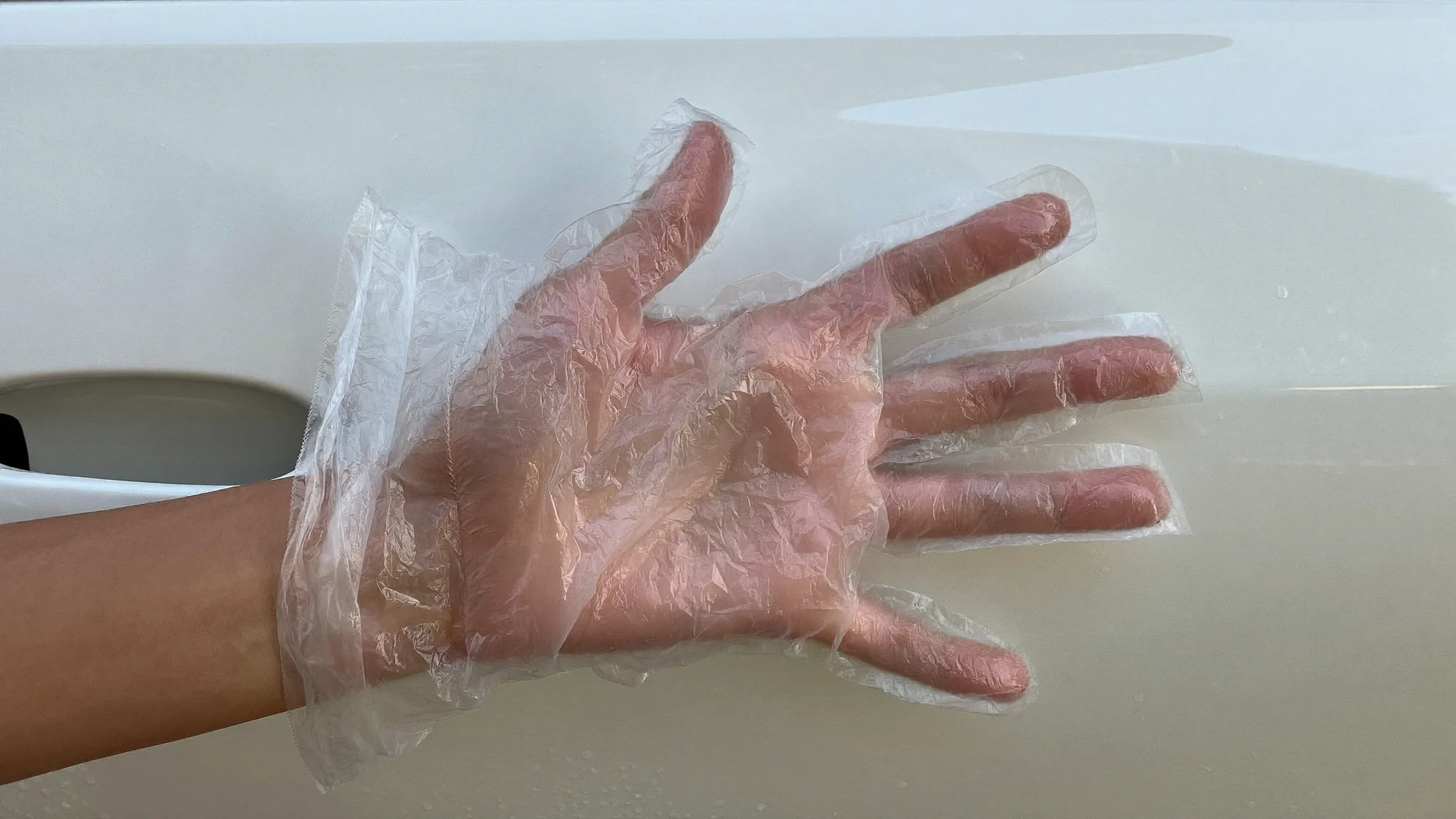
The quickest way to tell is the plastic bag test. Your fingertips are better at feeling grit through thin plastic than on bare paint.
- Wash and dry one panel, such as the hood or the top of a door.
- Put your hand inside a thin plastic sandwich bag.
- Glide your fingertips lightly across the paint. Don’t press.
- Feel for anything other than smooth glass: bumps, drag or a sandy texture.
If the paint feels rough, it has bonded contamination and is a good candidate for clay. If it feels smooth, you probably don’t need clay right now. Check again in a few months, or before you add new protection.
A few other signs point the same way:
- The paint looks dull even right after a wash.
- Wax or sealant doesn’t bead water for long after you apply it.
- You see tiny dark or orange dots on light-colored paint, often near the wheels.
What clay can’t fix
A clay bar treatment cleans the surface; it doesn’t repair it. This is the most common misunderstanding about clay.
Clay won’t remove:
- Swirl marks and fine scratches. These are grooves in the clear coat, not something sitting on it.
- Oxidation and fading. That’s damaged clear coat, which needs correction.
- Etched water spots. Once minerals have eaten into the finish, they’re below the surface.
- Rock chips. Missing paint needs touch-up or body work, not cleaning.
If the bag test feels smooth but the paint still looks hazy or swirled, the problem is in the clear coat. That’s a job for paint correction, which levels the clear coat by machine polishing. Our article on how paint correction works covers it in detail.
Clay bar treatment and protection: why order matters
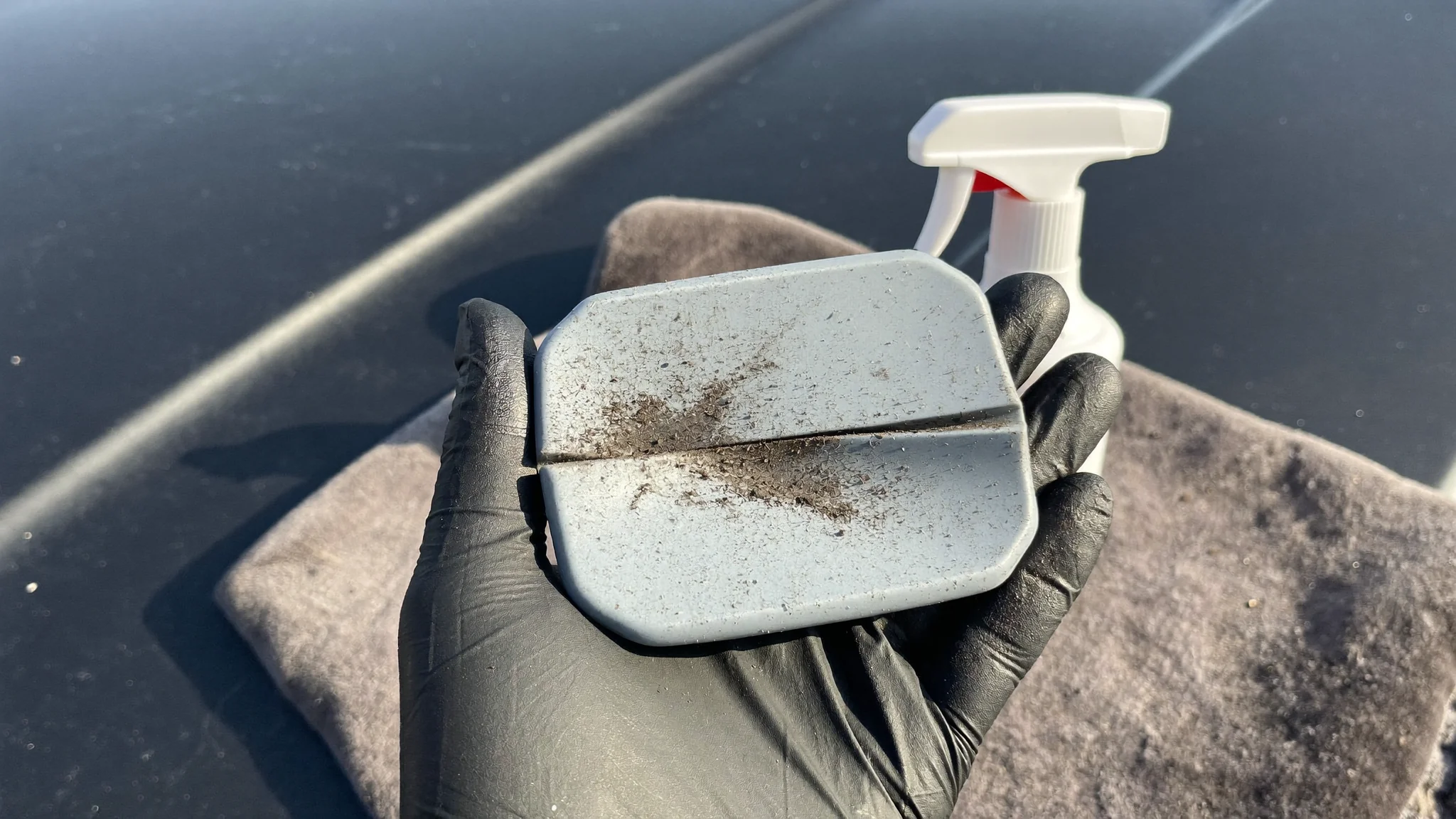
Clay comes before any polish, sealant or ceramic coating. Protection products are designed to bond to the clear coat. If bonded grit is still on the paint, the product sits on top of the grit instead.
Here’s the usual order in a full exterior detail:
- Wash to remove loose dirt.
- Decontaminate with clay to remove bonded grit.
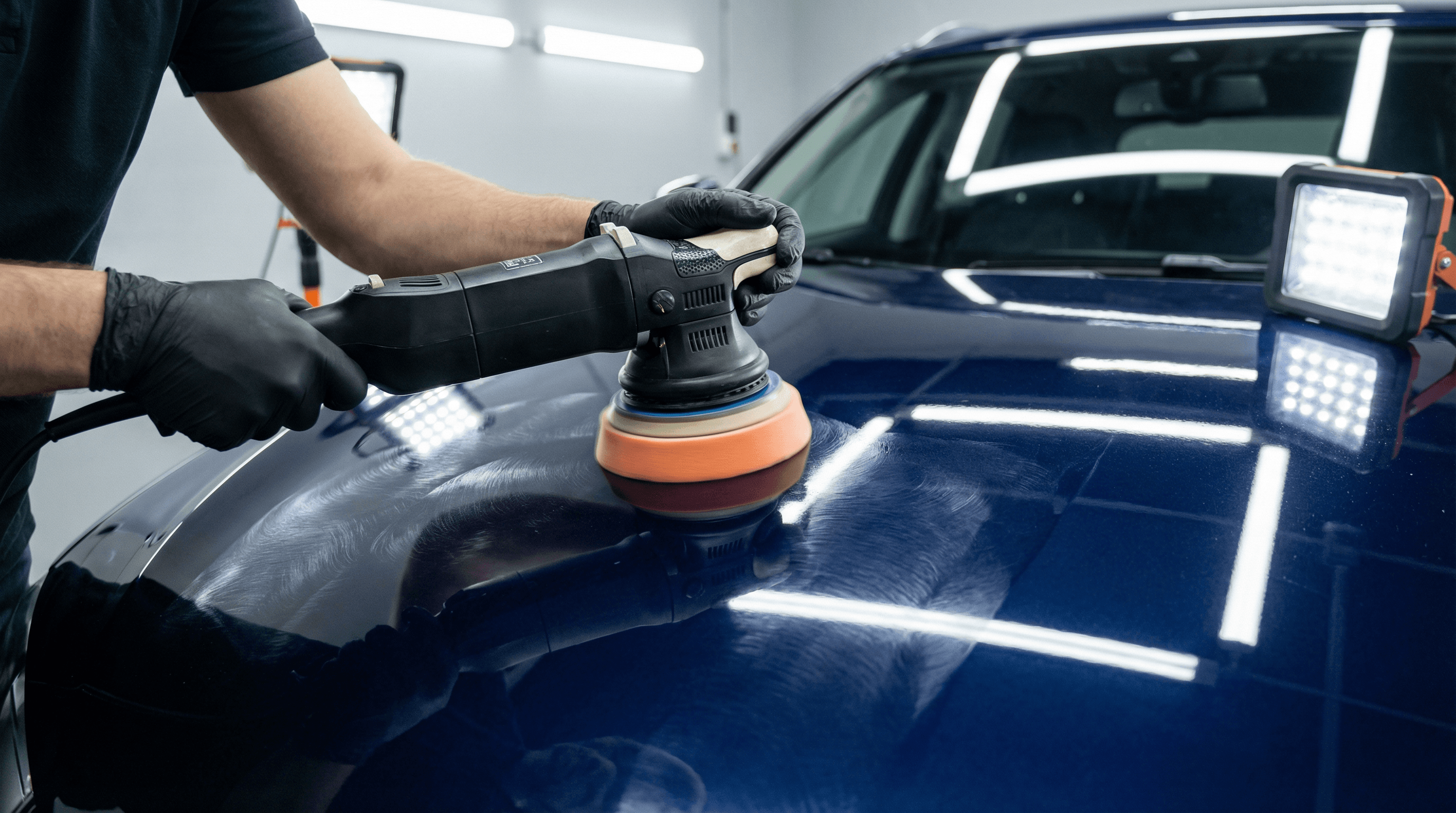
- Polish or correct if the paint needs it.
- Protect with a sealant, wax or ceramic coating.
Skipping the clay step is like painting a wall without wiping off the dust first. The finish might look fine for a week, but it won’t last as long as it should.
This is also why a ceramic coating should go on clean, decontaminated paint. If you’re thinking about one, see what ceramic coating does in Las Vegas.
Should you clay your car yourself?
You can, but take care. Clay works by friction, so the paint needs plenty of lubricant the whole time. Rubbing a dry clay bar across paint can leave fine marring that then has to be polished out.
If you try it at home:
- Work in the shade on a cool panel, never on a hot hood in direct sun.
- Keep the surface wet with a dedicated clay lubricant.
- Use light pressure and straight passes.
- Fold the clay often to expose a clean side.
- If you drop the clay on the ground, throw it away. It will pick up grit that can scratch.
In a Las Vegas summer, finding a cool panel is the hard part. Lubricant dries fast in the heat, and a panel that’s too warm to touch is too warm to clay. That’s one reason many owners leave decontamination to a professional and save the bag test for themselves.
How AOA Detailing handles clay bar decontamination
AOA Detailing’s exterior detailing service lists paint decontamination with a clay bar. In that process, clay follows a pre-wash rinse and a two-bucket hand wash with pH-neutral soap. After that comes polish to bring back clarity, then sealant or wax for protection.
The Prestige Exterior Experience package is the one that lists paint decontamination, along with deep wheel and tire decontamination and bug and tar removal. The Signature Exterior Detail’s list doesn’t include paint decontamination, so ask about Prestige if the bag test feels rough. If you also want the inside done, the Prestige Full Experience on the full detailing page combines the Prestige Exterior and Prestige Interior services.
AOA Detailing is fully mobile, so the work happens at your home or office. The team serves Las Vegas, Henderson, Summerlin, North Las Vegas and nearby communities.
Not sure whether your car needs clay, correction or both? Do the bag test, then book a free quote or call (775) 244-5315. Describe what you felt and what you see, and AOA Detailing can recommend the right service.
FAQ
How often should a car get a clay bar treatment?
There’s no fixed schedule. Use the plastic bag test after a wash. Clay the paint when it feels rough, and always before you apply new sealant or a ceramic coating. Cars parked outside, near construction or under sprinklers tend to need it more often.
Is a clay bar treatment safe for my paint?
Yes, when it’s done with plenty of lubricant, light pressure and clean clay. Clay can leave light marring if it’s used dry or with dirty clay, so a professional detail typically follows clay with polishing before protection goes on.
Will a clay bar remove scratches or swirl marks?
No. Clay removes contamination sitting on top of the paint. Scratches and swirl marks are damage in the clear coat, so they need paint correction.
Do I need a clay bar treatment before a ceramic coating?
Yes. A ceramic coating needs to bond to clean, smooth paint. Decontaminating with clay, and correcting the paint if needed, gives the coating the best surface to bond to.
Can a clay bar remove hard water spots?
Clay can help lift fresh mineral deposits sitting on the surface. Spots that have etched into the clear coat won’t come off with clay and need polishing. Drying your car by hand instead of letting it air-dry prevents most new spots.
Sources