How to Get Gum Off a Car Seat: A Careful First Approach
Share
How to get gum off a car seat starts with cold, not scrubbing. Chill the gum until it turns hard and brittle, lift it off with a plastic tool, then clean what is left for your seat material. If the gum has melted deep into fabric, describe the spot when you ask about AOA's interior detailing. Gum removal is not listed by name, so confirm whether AOA can help before booking.
Quick Summary
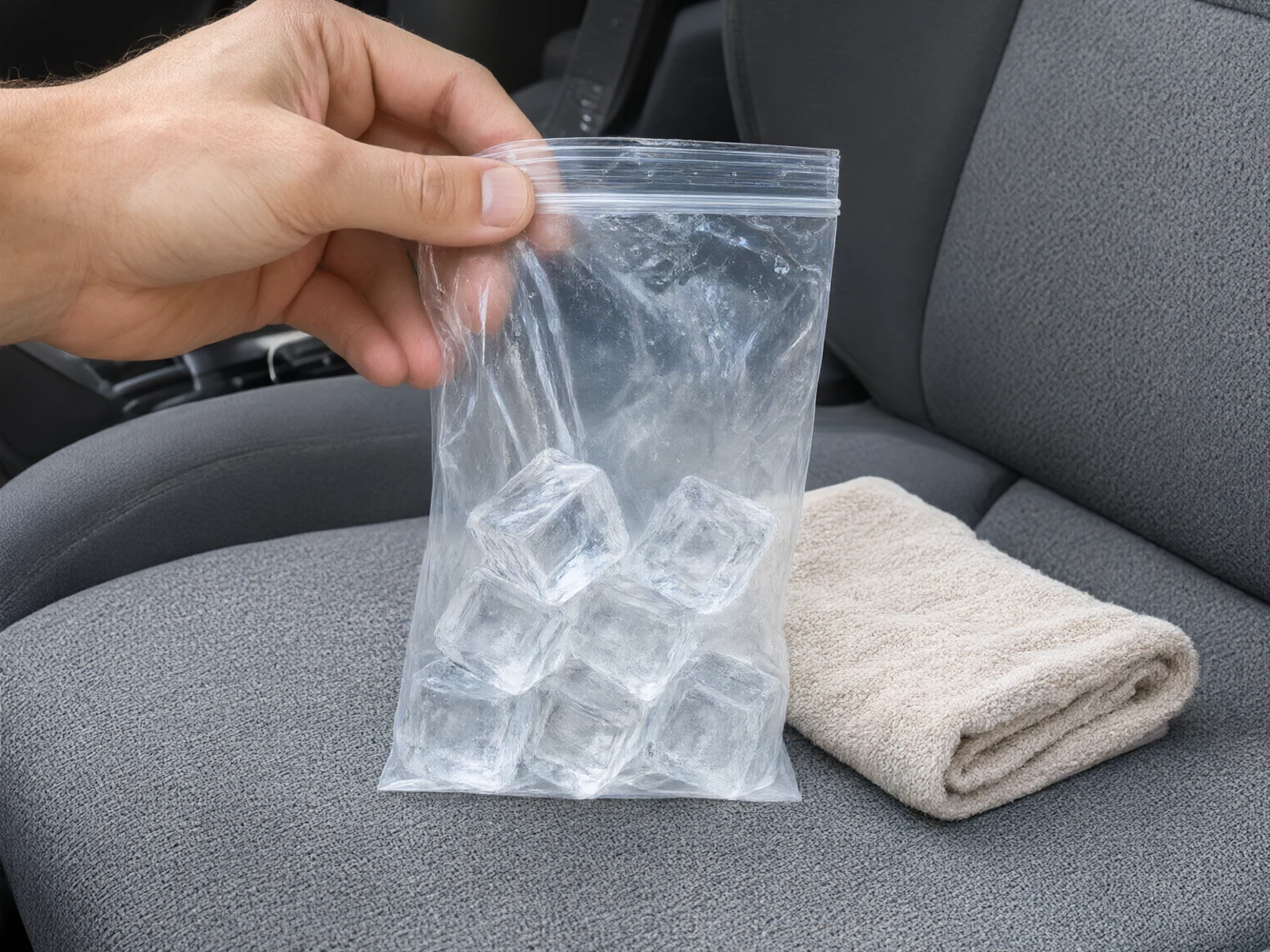
Freeze first. Hold ice in a sealed plastic bag on the gum until it is firm enough to lift away cleanly.
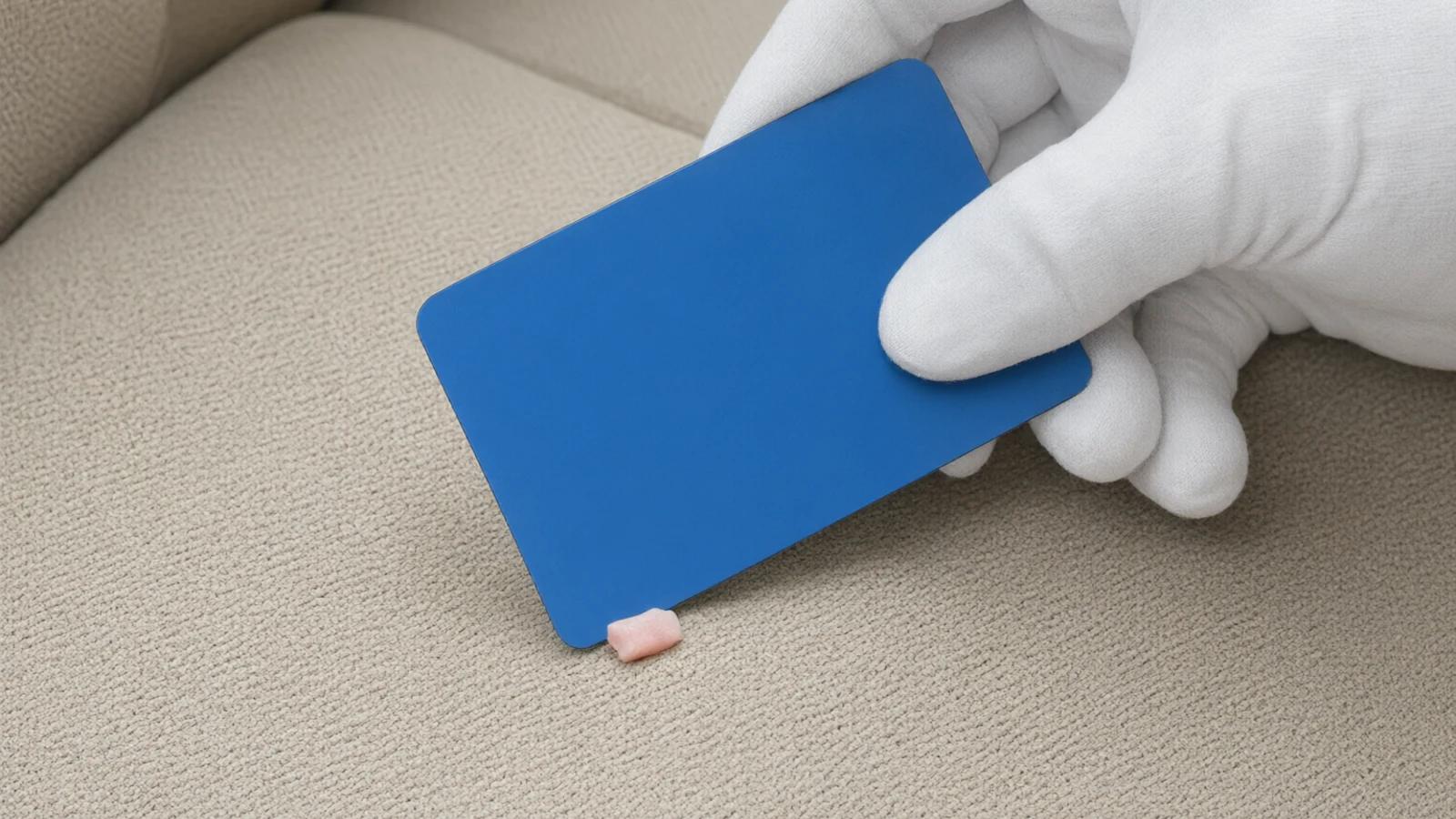
Lift with a plastic scraper, a stiff card or a spoon. Work from the outside edges inward and throw each piece away.
If the gum softens again, put the ice back. Do not scrape soft gum, because it smears into the weave.
Clean leftovers for your material: a fabric or upholstery cleaner for cloth, a vinyl cleaner for vinyl, and a leather-safe cleaner for leather.
Skip oils and solvents such as WD-40. YourMechanic, a mobile auto repair service, warns they can leave stains that are impossible to remove.
Test any cleaner on a hidden spot first, and stop if the color changes or the surface looks damaged.
Gum is soft, stretchy and sticky at room temperature, so it does not just sit on top of a seat. Chemical Guys, a car care brand, explains that gum flows into the spaces between fibers and wraps around them. Pulling on it alone can damage the fibers before it releases.
Heat makes this worse. Chemical Guys says gum that is pressed in and warmed by a foot or the sun bonds deeper with every passing hour. YourMechanic says gum usually does not stick to leather well unless it has been warmed and pressed in or left to melt in a hot car.
That matters in Las Vegas, where a parked car can get very hot. This is general guidance, not a point from the sources: deal with gum early in the day or in the shade, before the cabin heat softens it further.
How to get gum off a car seat: the freeze-and-lift method
Every source we read starts the same way: harden the gum first. The steps below combine the University of Georgia Cooperative Extension, Chemical Guys and YourMechanic.
Check your vehicle's seat-care instructions first. If the material or its finish is uncertain, or those instructions prohibit this method, stop and ask the vehicle maker or a qualified detailer.
Cool the area if you can. YourMechanic suggests running the air conditioning for a while in a hot car and parking in the shade, which cuts the time it takes to chill the gum.
Freeze the gum. Put ice in a sealed plastic bag and hold it directly on the gum. Chemical Guys says to hold it for 5 to 10 minutes and warns that the gum must be hard and brittle all the way through. Partly frozen gum can crack and still smear. YourMechanic says a few minutes can be enough on a seat. Times vary with the gum, the seat and the temperature, so judge by feel: the gum should be firm enough to lift away cleanly.
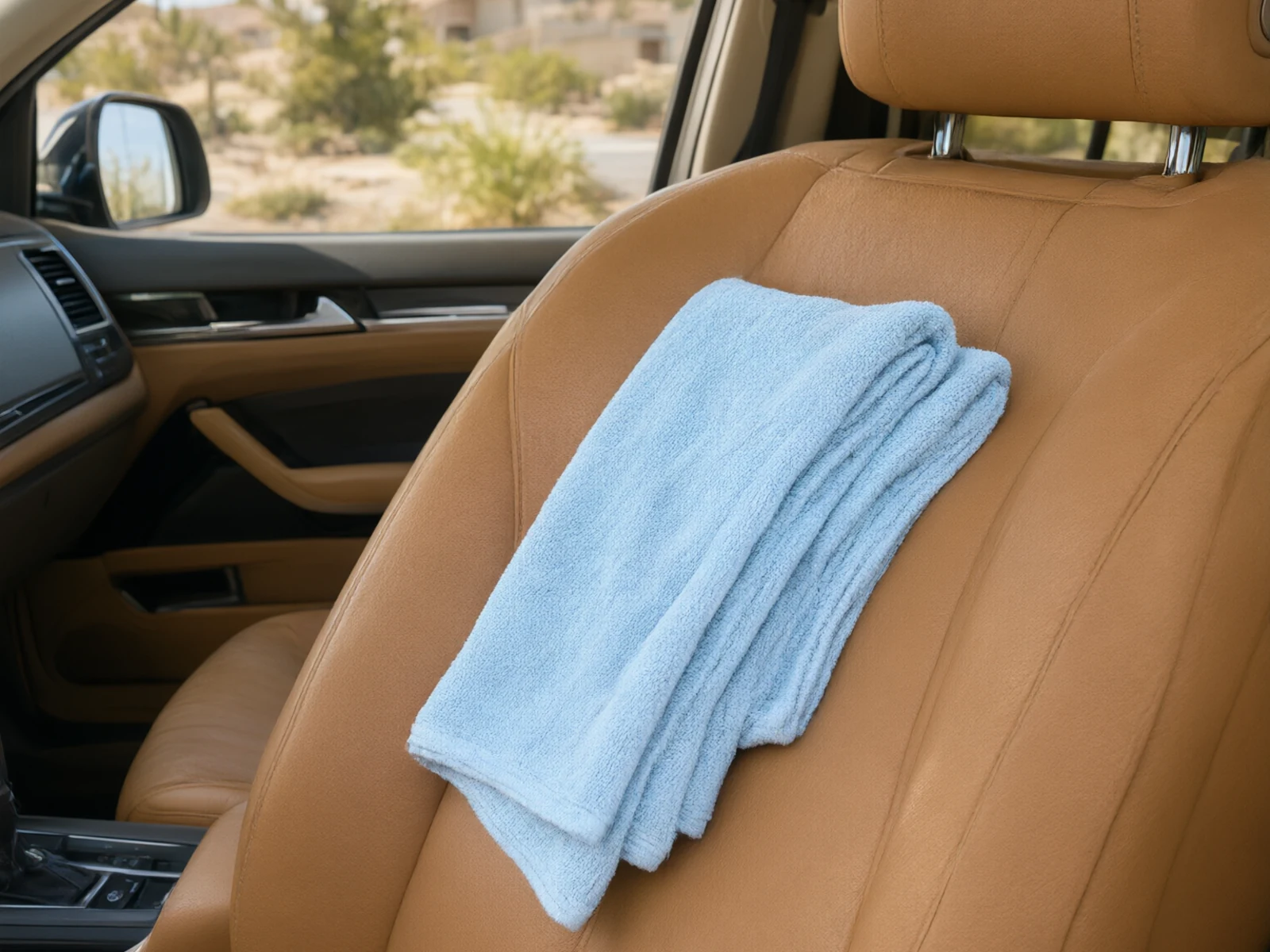
Dry any drips. YourMechanic says to dry water thoroughly with a towel to avoid stains.
Lift with something blunt. Use a small plastic scraper, a stiff card or a spoon. YourMechanic suggests prying under one corner until the gum starts to peel, and Chemical Guys suggests working from the outer edges inward so you do not spread it. Throw away each chunk as it comes off.
Re-chill when it softens. If the gum turns pliable again, YourMechanic says to put the ice back and repeat.
Collect the loose pieces. Pick up the lifted gum without rubbing it back into the surface. On fabric or carpet, vacuum loose fragments before cleaning the residue.
Take your time with the cold step. If the gum softens, pause and chill it again.
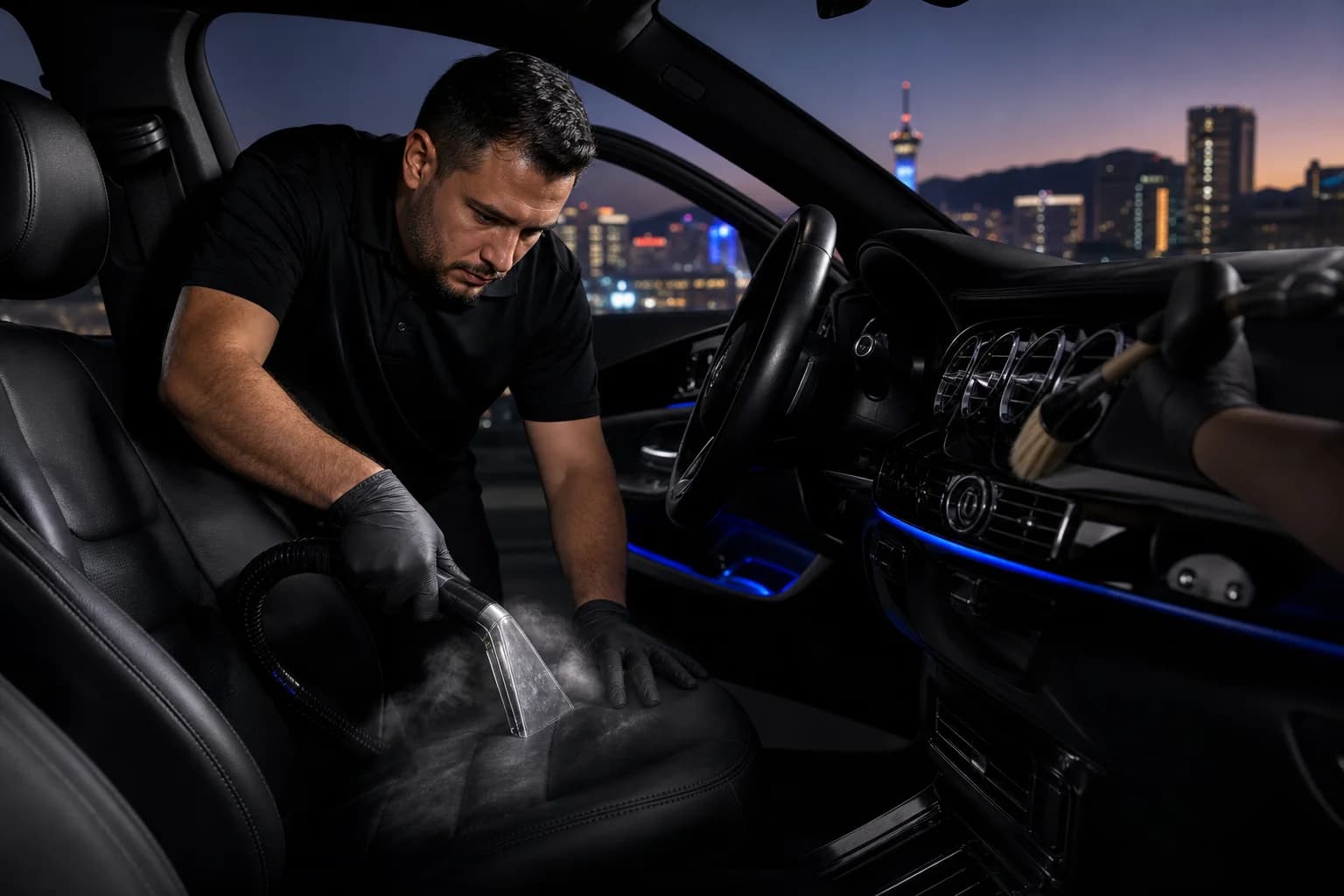
AI-generated illustration
What changes for cloth, vinyl and leather?
The freeze-and-lift steps are the same. The cleanup after them depends on what the seat is made of, so check this before you pick a product.
Cloth seats
For fabrics, the University of Georgia Cooperative Extension says to apply ice to harden the gum, scrape off the excess, then sponge with a commercial fabric or upholstery cleaner and change the absorbent cloth as it picks up the stain. It also says to read the care label first and to pretest each cleaning agent on an inconspicuous area to check colorfastness.
UGA's fabric instructions are general textile guidance, not approval for every fixed car seat. Follow your vehicle's care instructions and the cleaner's label.
Vinyl seats
YourMechanic groups vinyl with cloth: ice, scrape, then a vinyl cleaner or spot cleaner to finish. Dry up any extra moisture with a clean towel afterward. Follow the directions on the cleaner's label.
Leather seats
For leather, follow the vehicle maker's care instructions and use only a cleaner permitted for that finish. YourMechanic discusses several options, but that does not establish that an adhesive remover or household soap is suitable for every seat. If the permitted cleaner will not lift the residue, stop and ask a detailer.
Floor carpet is tougher than seat fabric, but the same rule applies: freeze first. The University of Georgia Cooperative Extension suggests cutting a hole in cardboard the size of the gum and using it as a shield so you do not freeze the surrounding carpet or scatter frozen pieces. Then scrape the gum and residue out carefully.
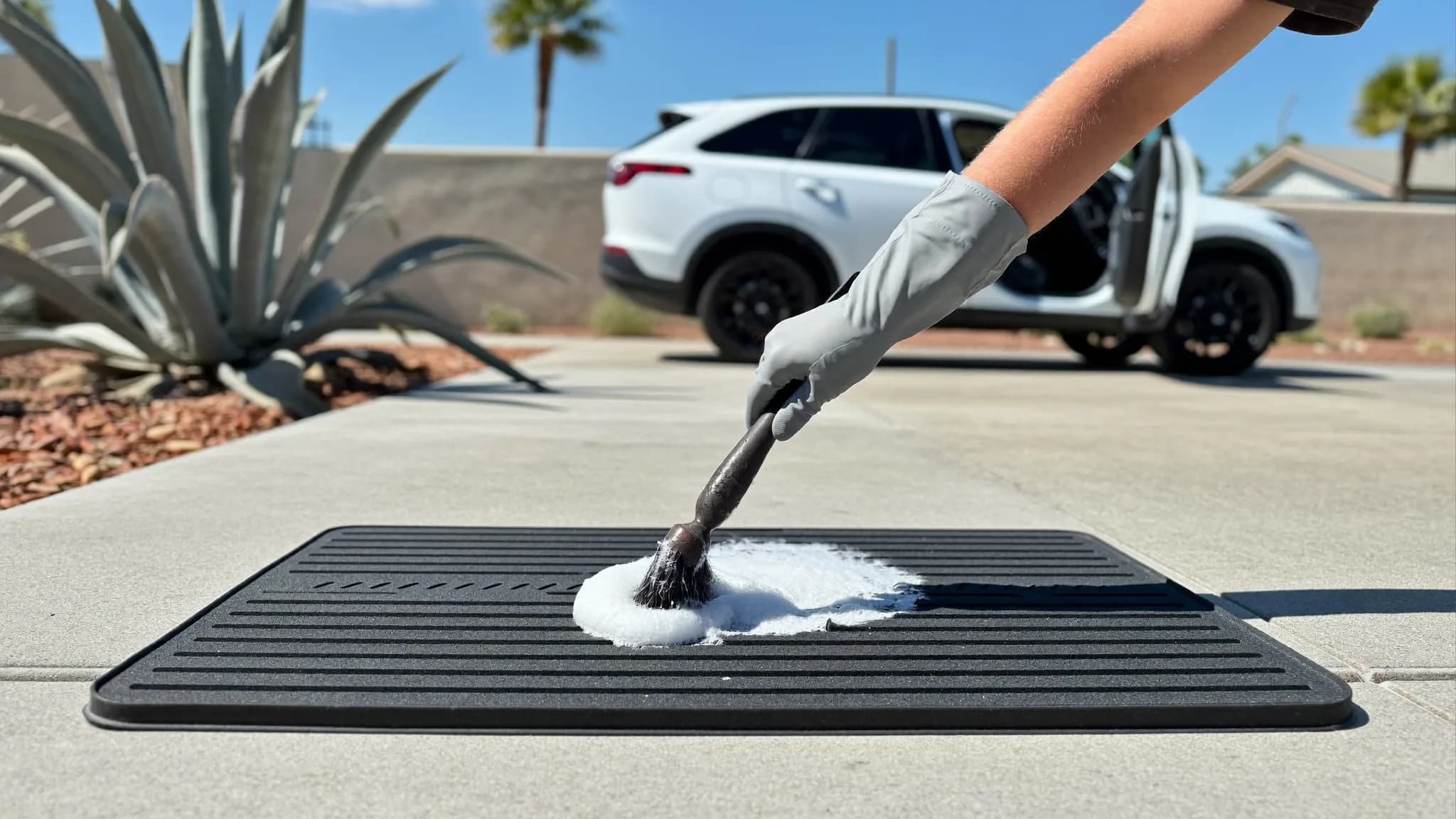
For remaining carpet residue, use a cleaner approved for that carpet and follow its application and dwell directions. Chemical Guys describes gentle agitation and blotting; repeat only as the product directions allow rather than adding force.
The University of Georgia also lists lacquer thinner or dry-cleaning solvent for carpet residue. Those need good ventilation and care around backing and nearby materials, so this article does not recommend them for a car. Ask a detailer before you reach for a solvent inside a vehicle.
Oils such as peanut butter or vegetable oil. YourMechanic says the safest bet is to avoid methods that use oils.
Solvents such as WD-40. The same source says they can do more harm than good and leave stains that are impossible to get out.
Metal tools. This is general guidance, not a point from the sources: a sharp knife can cut fabric, vinyl or leather. A plastic scraper or card is enough.
Hard scrubbing. Chemical Guys says repeated passes work better than one heavy application.
Soaking the seat. Water that drips from the ice or a wet cleaner can leave marks, which is why YourMechanic says to dry drips right away.
Skipping the test spot. The University of Georgia Cooperative Extension says to pretest each cleaner on an inconspicuous area.
When should you call a detailer?
Stop and get help when the gum has melted into a perforated or stitched area, the seat is leather and you are not sure of the cleaner, or you have scraped twice and a stain or shiny patch remains. More force is how a gum problem becomes a repair problem.
AOA Detailing is a mobile service in Las Vegas, so a detailer can look at the seat where your car is parked. AOA's interior detailing page lists deep cleaning of seats and upholstery, light stain treatment in the Signature package, and heavy stain treatment and leather cleaning and conditioning in the Prestige package. The page does not name gum removal, so describe the spot and ask whether it fits before you book.
Yes, according to all three sources. Cold makes gum hard and brittle, so it breaks away instead of smearing. Chemical Guys explains that gum chilled below a certain temperature loses the stretchy, sticky behavior that makes it cling to fibers. Make sure the gum is firm enough to lift away cleanly before you try to lift it.
How long should I hold ice on the gum?
It depends on the source and the gum. Chemical Guys says 5 to 10 minutes. YourMechanic says a couple of minutes. Times vary with the gum, the seat and the temperature, so go by feel: hold the ice until the gum is firm enough to lift cleanly, and re-chill if it softens while you work.
Can I use WD-40 or peanut butter on gum?
YourMechanic says the safest bet is to avoid oils like peanut butter and vegetable oil and solvents such as WD-40, because they can leave stains that cannot be removed. Use ice, a plastic scraper and a cleaner made for your seat material instead.
Is it safe to get gum off leather myself?
It depends on the seat and its finish. Follow the vehicle maker's care instructions and use only a cleaner permitted for that finish. YourMechanic says gum does not usually stick to leather well unless it was warmed and pressed in, so ice and a plastic scraper come first. If the cleaner will not lift the residue, or the seat is stained or you are unsure, stop and ask a detailer.
Need help with a stubborn spot?
If the gum will not come out cleanly, choose Book Now (Free Quote) or call (775) 244-5315 and describe the seat and the spot. You can also send a message. AOA Detailing is a mobile service in Las Vegas.