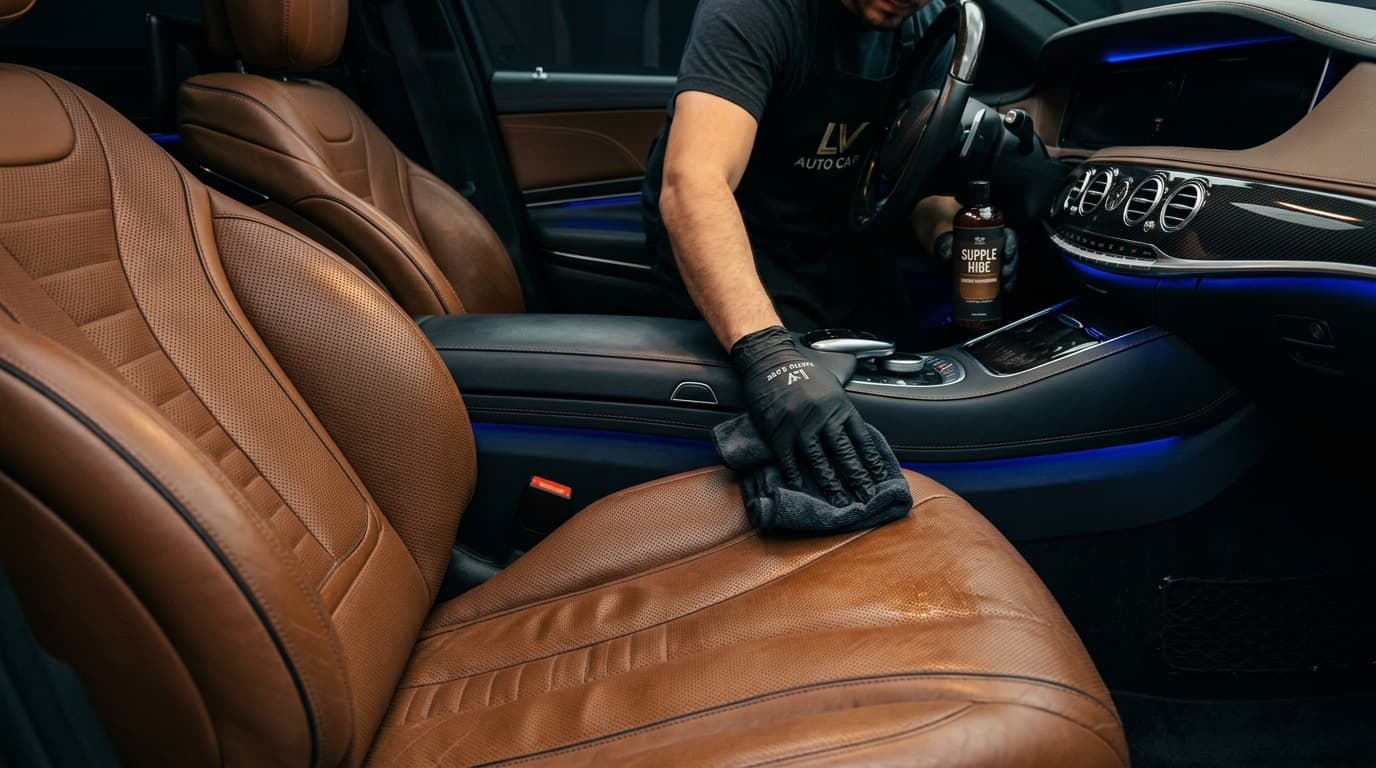
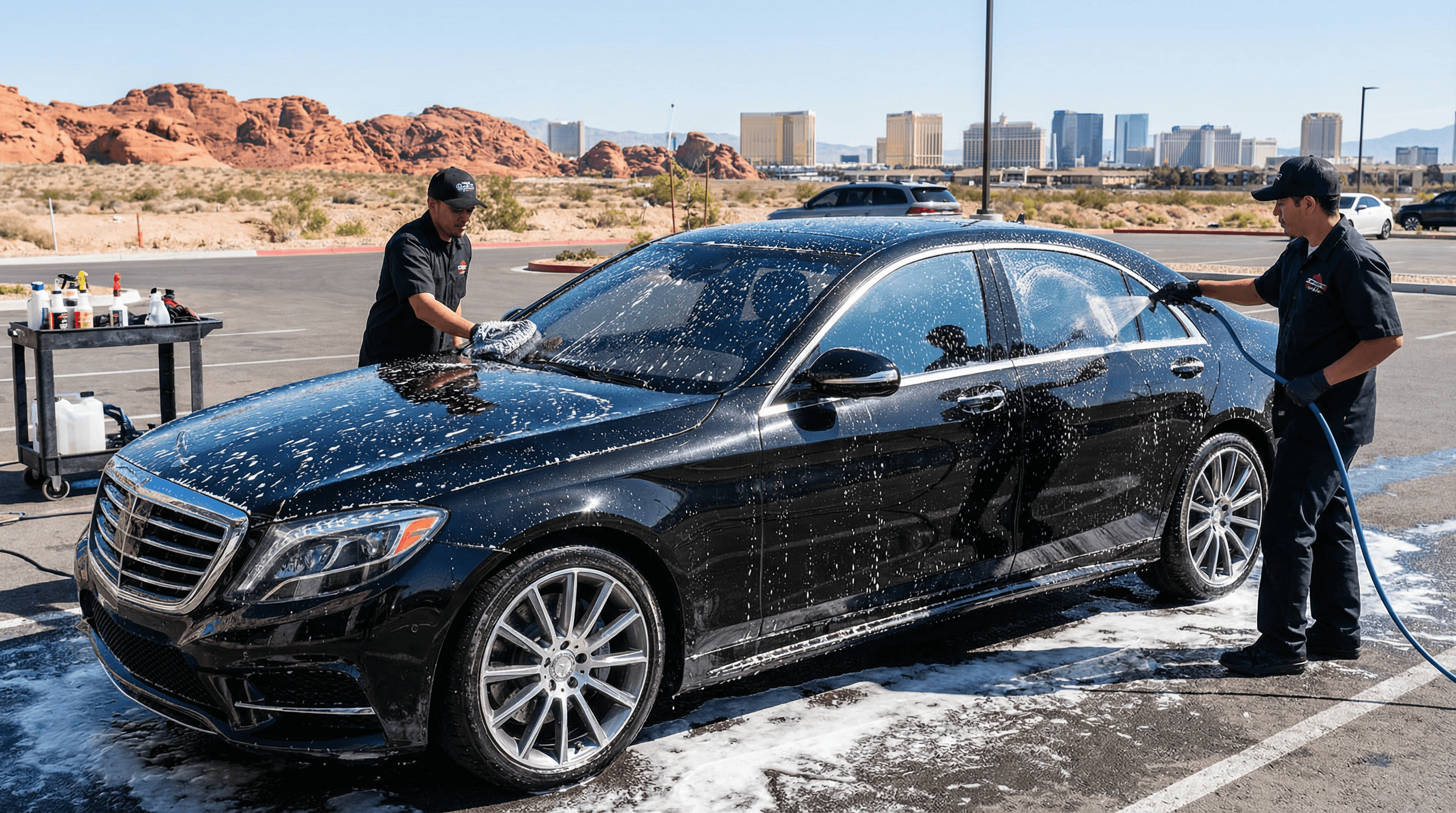
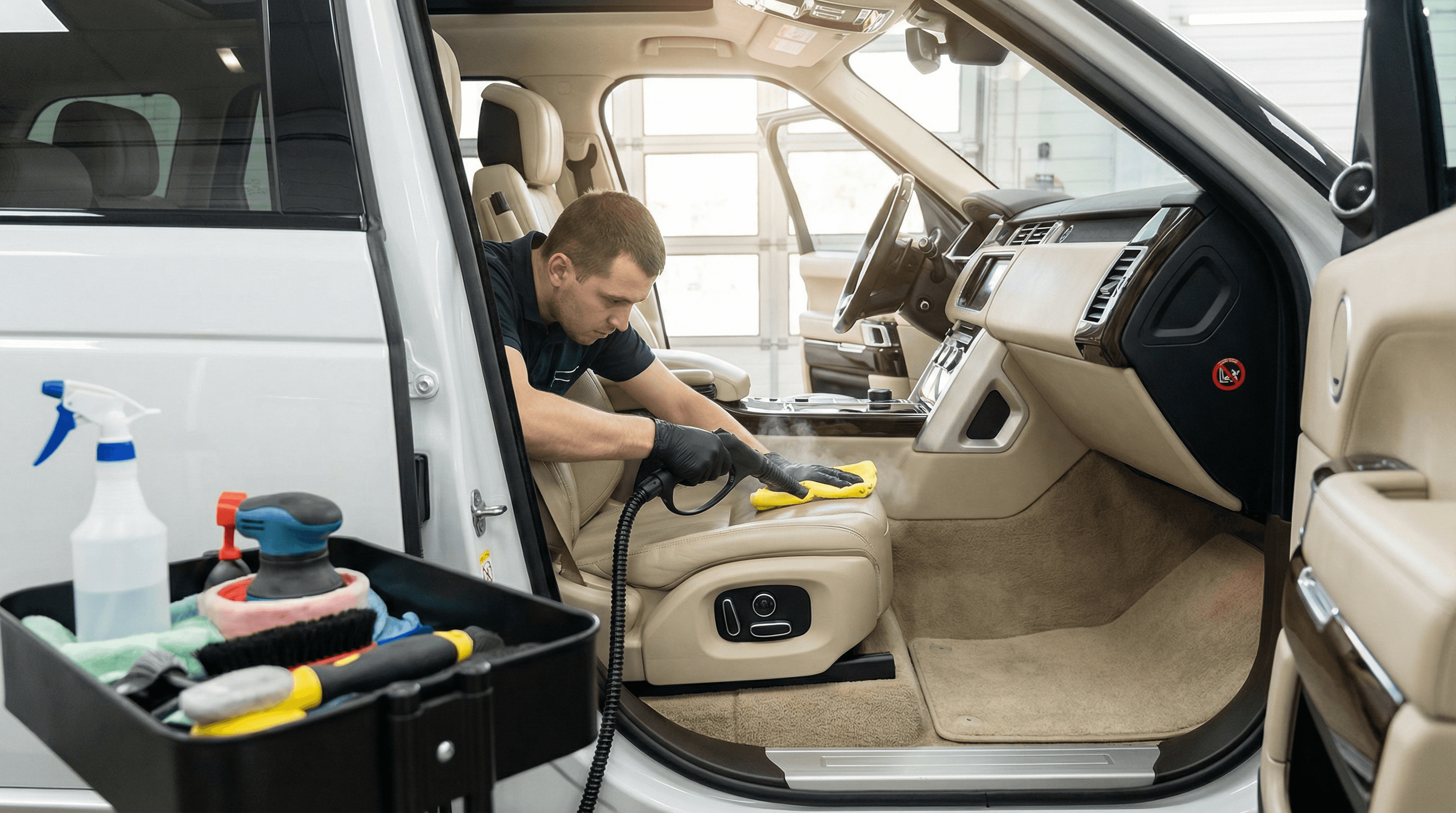
Your Leather Seats Are Fighting Las Vegas Every Single Day
Pull open your car door after it’s been parked in the sun on a July afternoon in Las Vegas. The leather is hot enough to burn skin. The cabin temperature regularly exceeds 160°F. The humidity outside is in the single digits.
That’s not just uncomfortable — it’s actively destroying your seats.
Leather is a natural material, and like skin, it needs moisture to stay supple and strong. Las Vegas strips that moisture out aggressively. Without regular care, leather cracks, fades, stiffens, and eventually tears. And unlike paint damage or water spots that can often be corrected, severely cracked leather is extremely difficult — and expensive — to restore.
The good news: protecting leather seats in Las Vegas heat is straightforward if you know what you’re doing and stay consistent. At AOA Detailing, we’ve conditioned hundreds of leather interiors across Summerlin, Henderson, Spring Valley, and the greater Las Vegas valley. This guide covers exactly what we recommend.
Quick Summary- Las Vegas heat and low humidity are uniquely destructive to leather — temperatures inside parked cars regularly exceed 160°F
- UV radiation fades and dries leather faster than almost any other climate in the country
- Clean before you condition — product applied over grime gets trapped and accelerates damage
- Condition leather every 6–8 weeks in Las Vegas (not the 3–6 months recommended in milder climates)
- A ceramic-coated or UV-protective leather treatment adds a durable barrier against heat and fading
- Professional interior detailing catches early damage before it becomes permanent
Why Las Vegas Is Uniquely Harsh on Leather
Most leather care guides are written for mild climates — think Pacific Northwest or the Midwest. A product that says “condition every 3–6 months” was tested in a 70°F environment with moderate humidity. Las Vegas throws all of that out the window.
Heat Extraction
Leather contains natural oils and moisture that give it flexibility and strength. High heat — the kind your car interior experiences parked outside in a Las Vegas summer — accelerates evaporation of those oils dramatically. A car parked on the Strip with black seats can reach interior temperatures of 170°F or higher, according to research from the National Renewable Energy Laboratory. That kind of heat does in one afternoon what a mild climate would take years to do.
UV Radiation
Las Vegas sits at an elevation of roughly 2,000 feet and receives approximately 294 sunny days per year — one of the highest UV exposure rates in the country. UV-A and UV-B radiation penetrate automotive glass and break down the dyes and fibers in leather. The result: fading, bleaching, and structural breakdown of the top grain. That’s why a five-year-old car in Las Vegas often looks older than an eight-year-old car from Seattle.
Extreme Low Humidity
The Mojave Desert’s average humidity hovers around 20–30% — and during summer months, it frequently drops below 15%. Leather that’s been baked by heat and starved of moisture dries out at an accelerated rate. This isn’t just about aesthetics. Dry leather loses tensile strength. It becomes brittle. It cracks.
Fine Desert Dust
Las Vegas’s fine silica dust — the same dust that causes swirl marks on paint — settles into the grain of your leather, acting as a mild abrasive every time you sit down. Over months and years, this wears through the top coat and damages the grain structure.
The Damage Timeline: What Happens Without Protection
Understanding the progression helps you know how urgent protection really is:
Months 1–6 (Drying Phase): Leather loses surface moisture and begins to feel slightly stiff. Surface may appear slightly lighter than when new. Largely reversible with conditioning.
Months 6–18 (Surface Degradation): Top coat begins to show micro-cracking under magnification. Fading becomes visible near windows and on areas with direct sun exposure. Still reversible with professional conditioning and light surface treatment.
Months 18–36 (Active Cracking): Visible cracks form along flex lines — the bolster edges, seat base corners, headrests. Color fading is pronounced. Restoration requires professional treatment and may involve dye or leather filler.
Beyond 36 Months (Structural Damage): Deep cracking, peeling, and tearing. At this stage, full leather restoration or replacement may be the only option. Preventive care at this stage was the only real solution.
Most Las Vegas drivers we work with arrive at the “active cracking” phase and want to know if it can be saved. Often it can — but the cost and effort required are far greater than if they’d maintained it from the start.
Step-by-Step: How to Protect Your Leather Seats in Las Vegas
Step 1: Start With a Proper Clean
Conditioning leather that hasn’t been cleaned first is one of the most common mistakes. Dirt, sweat, body oils, and desert dust that sit on the surface get sealed in by conditioner — accelerating degradation rather than slowing it.
Use a dedicated leather cleaner (not an all-purpose interior cleaner, which can be too harsh or too alkaline) and a soft-bristle brush for textured leather or a microfiber applicator for smooth top-grain leather. Work in sections, using circular motions to lift embedded grime from the grain.
Wipe clean with a fresh microfiber, then allow the leather to dry fully before conditioning.
Step 2: Apply a Quality Leather Conditioner
A good leather conditioner replenishes the oils and moisture that Las Vegas heat extracts. Look for a product that contains lanolin or neatsfoot oil as active ingredients. Avoid silicone-heavy “shine” products — they create a glossy surface appearance but don’t penetrate the grain and can actually seal out beneficial moisture over time.
Apply conditioner with a clean foam or microfiber applicator. Work it into the grain in circular motions, covering the seat base, backrest, bolsters, and headrest. Let it absorb for 10–15 minutes, then buff off any excess with a dry microfiber.
Las Vegas frequency recommendation: Every 6–8 weeks. This is significantly more frequent than generic product instructions suggest — but generic instructions aren’t designed for a climate where your seats reach 160°F in a parking lot.
Step 3: Apply a UV-Protective Leather Coat
After conditioning, apply a UV-protective leather sealant or ceramic leather coating. This creates a barrier between the leather surface and UV radiation, dramatically slowing the fading and drying process.
A quality UV-protective coating applied professionally can extend the life of your leather condition by months between treatments. It also makes the surface more resistant to surface soiling from body oils and perspiration — reducing the accumulation of grime between cleanings.
At AOA Detailing, our interior detailing service includes professional leather cleaning, deep conditioning, and UV-protective treatment applied as part of a complete interior detail.
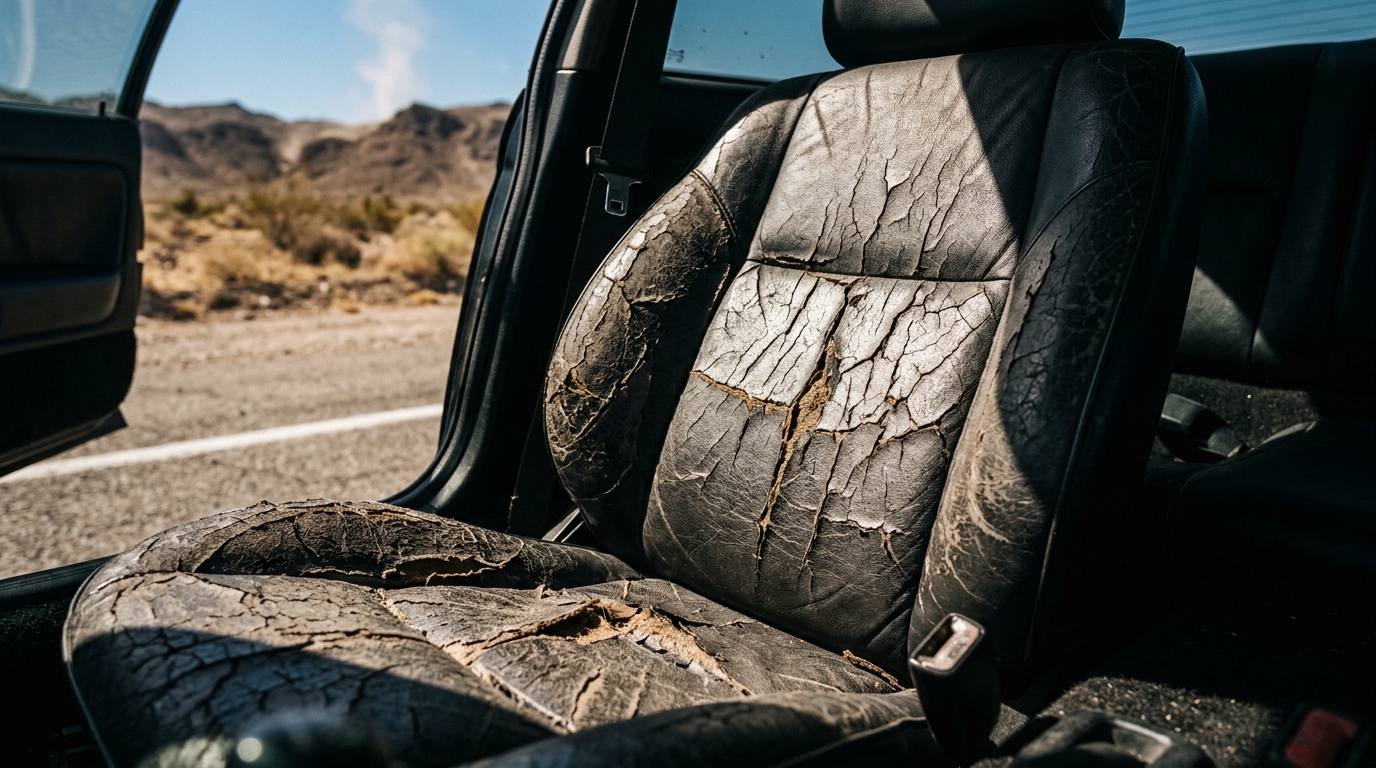
Heat-damaged leather without protection: cracking, fading, and structural breakdown visible across all contact surfaces.
Step 4: Protect Parked Vehicles from Direct Sun
The best leather conditioner in the world won’t overcome daily 8-hour sun exposure in a Las Vegas summer without help. Reducing the heat load inside your car is equally important:
Window tinting: A quality ceramic tint blocks up to 99% of UV radiation and significantly reduces cabin temperatures. This is one of the highest-ROI protective investments you can make for your interior.
Windshield sun shade: Reduces cabin temperatures by 15–25°F according to tests by the Arizona Department of Transportation. Inexpensive and highly effective. Use one every time you park outside — yes, even in April and October.
Covered parking: Underground parking garages and covered spots around Las Vegas — at resorts, shopping centers, and HOA structures throughout Summerlin, Henderson, and Centennial Hills — make a meaningful difference. If you have the option, use it.
Seat covers (selectively): During periods of extended sun exposure, breathable seat covers create an additional heat barrier. However, they can trap humidity and odors if left on permanently — use them strategically.
Step 5: Address Spills and Stains Immediately
In the desert climate, liquid spills dry within minutes — often before you notice the stain has set. Unlike humid climates where spills stay wet and can be blotted up, Las Vegas heat locks in coffee, food grease, sunscreen, and body oils almost instantly.
Keep a small detailing spray and microfiber in your car for immediate cleanup. A quick wipe while the spill is wet takes five seconds. Removing a set stain from leather takes a professional treatment.
How Often Should You Have Your Leather Professionally Conditioned?
This is one of the most frequent questions we get at AOA Detailing. Our general recommendation for Las Vegas drivers:
| Vehicle Use |
Recommended Interval |
| Daily driver, outdoor parking |
Every 6–8 weeks |
| Daily driver, mostly covered parking |
Every 8–12 weeks |
| Weekend or occasional use |
Every 3 months |
| Collector/stored vehicle |
Before and after each storage period |
These intervals assume routine maintenance cleaning between professional treatments. If you’re doing nothing at home, shorten these intervals.
A professional interior detailing service at AOA Detailing goes beyond conditioning — we inspect for early signs of cracking, assess the leather’s moisture level, spot-treat damaged areas, and apply professional-grade products that aren’t available at retail. It typically takes 2–4 hours depending on vehicle size and current condition.
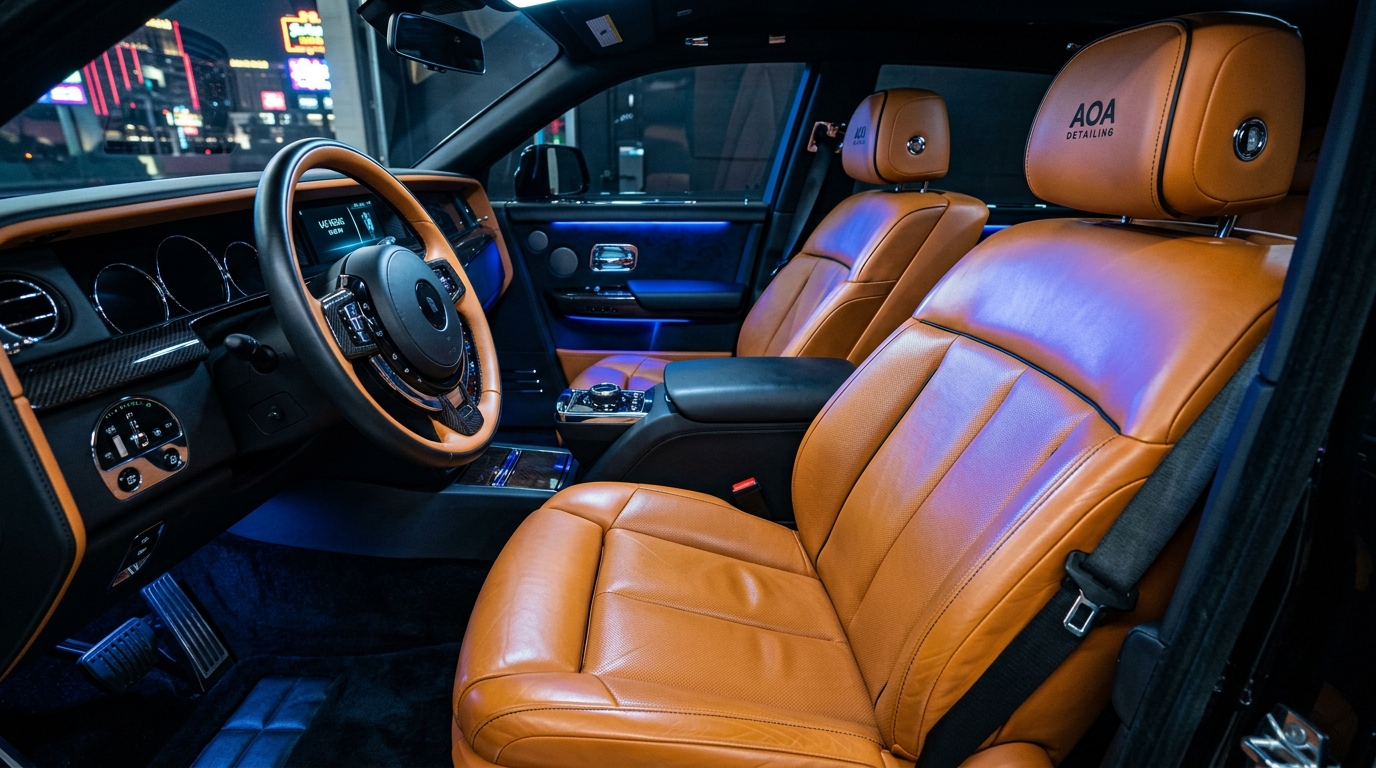
What properly maintained leather looks like — deep color, smooth grain, and that showroom sheen that Las Vegas heat tries to take away.
Signs Your Leather Needs Immediate Attention
If you notice any of the following, schedule a professional interior detail before the damage advances:
- Surface cracking along bolster edges or seat base corners — even hairline cracks indicate the leather is in the drying-out phase
- Sticky or tacky feel after hot days — this is the leather’s surface coating breaking down
- Fading near windows — UV damage is beginning to bleach the top dye layer
- Stiff, inflexible feel when you press into the seat — the leather has lost critical moisture
- Peeling top coat — the finishing layer has failed; requires professional leather restoration
The difference between a $250 interior detail and a $1,200+ leather restoration is catching these signs early.
Leather vs. Leatherette: Does the Same Advice Apply?
A note for drivers with synthetic or leatherette interiors — increasingly common in vehicles from Kia, Hyundai, and some trim levels of BMW and Mercedes.
Leatherette (sometimes called SynTex, NuLuxe, or SoftTex depending on the manufacturer) is a vinyl-based material that behaves differently from genuine leather. It doesn’t absorb conditioner the same way. UV degradation still applies, but the cracking pattern is different — it tends to peel rather than crack along grain lines.
For leatherette, the most important treatments are a dedicated vinyl/leatherette cleaner and a UV-protective vinyl sealant. A standard leather conditioner won’t harm it, but it also won’t penetrate or benefit the material the same way. Ask your detailer specifically about leatherette care if your vehicle uses it.
Can Cracked Leather Be Saved?
Yes — in many cases. If the cracking is surface-level and hasn’t fully penetrated through the grain, professional leather restoration using leather filler, color matching, and refinishing can dramatically improve the appearance and slow further deterioration.
At AOA Detailing, we’ve restored leather in vehicles that owners thought were beyond help. A combination of deep conditioning, leather filler for cracks, professional dye matching, and protective coating can make cracked leather look and feel dramatically better.
That said, restoration is never as complete as prevention. If your leather has deep structural cracks, tears, or peeling that’s gone through multiple layers, a full replacement is sometimes the only path to a truly clean result.
Our interior detailing service includes a full leather assessment — we’ll tell you honestly where your seats stand and what the best approach is.
Frequently Asked Questions
How long does a professional leather conditioning take?
A full interior detail with leather conditioning at AOA Detailing typically takes 2–4 hours, depending on vehicle size and how much cleaning is needed before we can condition. We come to you — Summerlin, Henderson, Spring Valley, North Las Vegas, and anywhere within 25 miles of the Las Vegas valley.
Can I use coconut oil or olive oil to condition leather?
We strongly advise against this. Natural cooking oils can go rancid inside the leather grain, causing odors and attracting bacteria. They can also darken leather permanently and leave a sticky residue. Use a dedicated automotive leather conditioner only.
My leather looks fine — do I still need to condition it?
Yes. Leather can be losing moisture and flexibility long before visible cracking appears. By the time you can see the damage, the leather is already in a more advanced deterioration state. Regular conditioning in Las Vegas is preventive, not reactive.
Does ceramic coating work on leather?
Yes — ceramic coating formulated specifically for leather (different from paint ceramic coating) creates a hydrophobic, UV-resistant barrier on the leather surface. It significantly reduces maintenance frequency and protects against UV fading. This is one of our most requested add-ons for clients who want maximum protection. Explore our full detailing packages for ceramic leather coating options.
What about steering wheels and leather dashboards?
Same rules apply — and because the steering wheel sees the most hand contact and the dashboard takes the most direct UV exposure, these areas often degrade fastest. Both should be included in any leather conditioning service.
Protect Your Interior Before Las Vegas Takes It
Las Vegas is beautiful, but it’s genuinely one of the hardest environments on the planet for car interiors. The combination of extreme heat, UV radiation, and near-zero humidity creates conditions that age leather faster than nearly any other major city in the United States.
The solution isn’t complicated — it’s consistent. Regular cleaning, regular conditioning, UV protection, and smart parking habits will keep your leather looking and feeling close to new for years.
If your leather is already showing stress — cracking, fading, stiffening — the time to act is now, not after another Vegas summer accelerates the damage further.
AOA Detailing is mobile. We come to you — your home, office, or anywhere convenient within 25 miles of Las Vegas. Our interior detailing service covers full leather cleaning, deep conditioning, UV sealant, and a complete interior refresh. We also serve Henderson, Summerlin, Spring Valley, and surrounding areas.
Call us at (775) 244-5315 or visit aoa-detailing.com to schedule your appointment.
Your leather seats are worth protecting. Let’s get it done before the next heat wave.