What Most People Think an Exterior Detail Is (And What It Actually Is)
Most drivers think of an exterior detail as a really thorough car wash. That’s understandable — the end result looks similar from a distance. But the process, the tools, and the outcomes are fundamentally different.
A proper exterior detail is a systematic decontamination and restoration process. It removes not just surface dirt but embedded contaminants, corrects paint imperfections, and applies protection that a car wash can’t provide. In Las Vegas, where the environment is actively working against your paint every single day, understanding this difference matters.
I’ve been detailing cars in the Las Vegas Valley for years, and I’ve seen what happens to vehicles that rely on automated car washes for maintenance. The spinning brushes and recycled water create swirl marks and micro-scratches that accumulate over time. The alkaline dust that’s everywhere in our desert environment gets dragged across the paint surface, acting like fine sandpaper. The result is a finish that looks dull and hazy, even on relatively new vehicles.
What’s Actually Included in a Professional Exterior Detail
Pre-Wash and Rinse
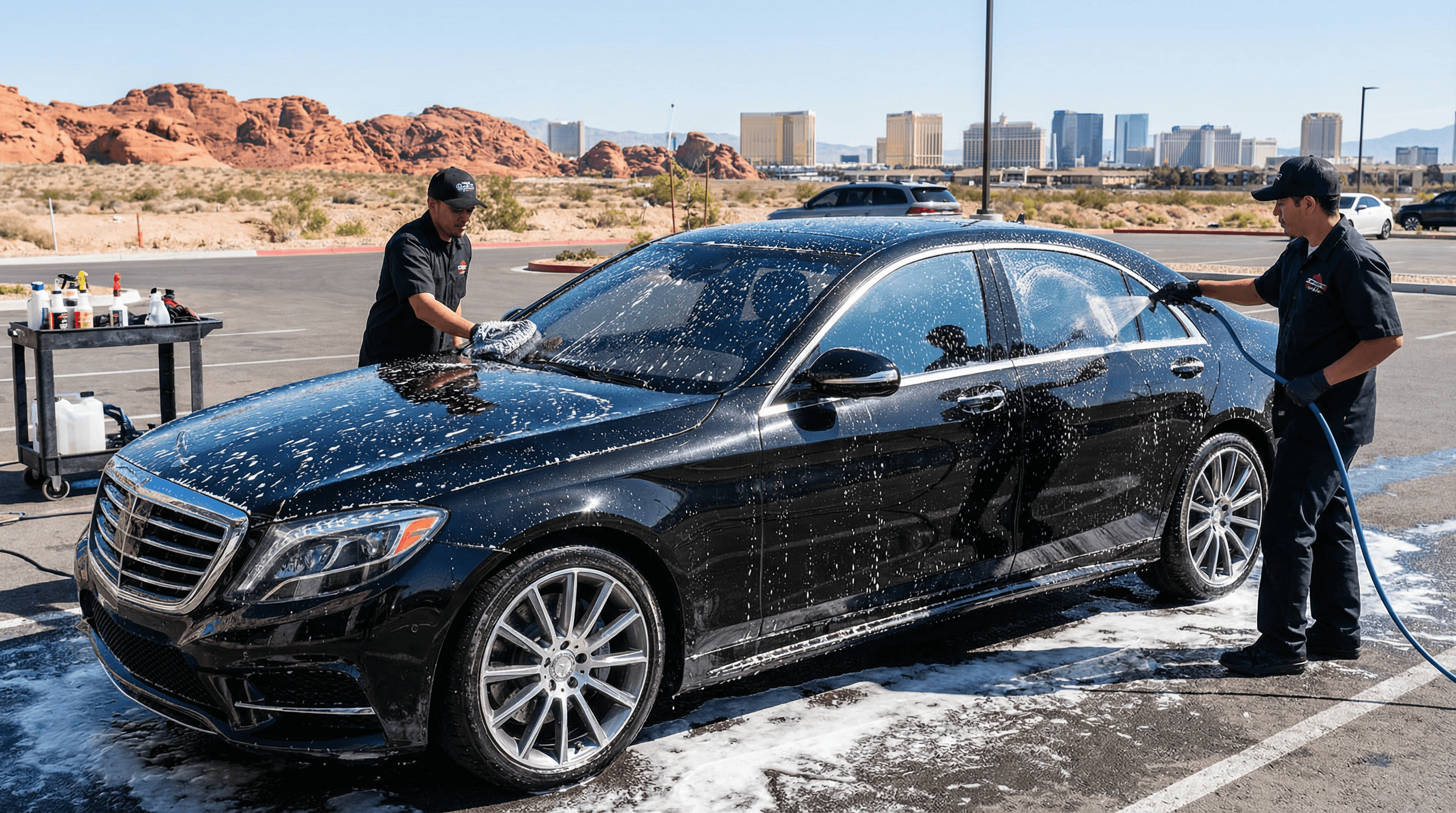
Before any contact with the paint surface, we rinse the vehicle thoroughly with clean water to remove loose dirt and debris. This step matters more than most people realize — dragging a wash mitt across a dusty surface without pre-rinsing is one of the primary causes of wash-induced swirl marks.
Two-Bucket Hand Wash
We use the two-bucket method: one bucket with clean soapy water for the wash mitt, and one bucket with clean water for rinsing the mitt before reloading it with soap. This prevents the dirt you’ve just removed from being reapplied to the paint surface. We use a pH-neutral automotive shampoo that cleans effectively without stripping any existing protection.
Chemical Decontamination
This is the step that separates a professional detail from a car wash. We apply an iron remover to the paint surface — a chemical that reacts with and dissolves embedded iron particles from brake dust and industrial fallout. You can see it working: the chemical turns purple as it reacts with the iron. After rinsing, we apply a tar and adhesive remover to address any road tar or sticky residue.
Clay Bar Decontamination
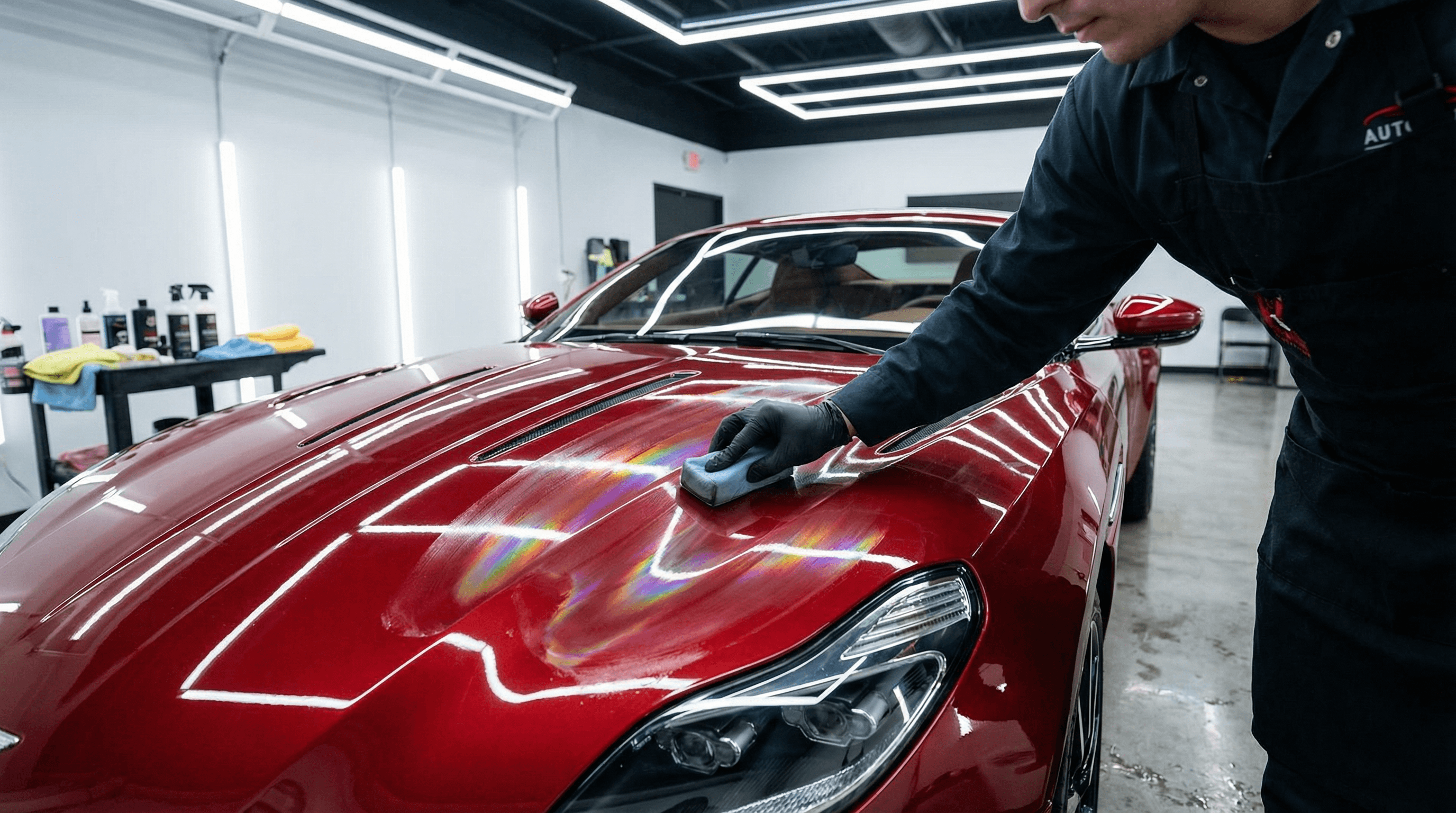
After chemical decontamination, we clay bar the entire paint surface. A clay bar is a specialized compound that physically pulls embedded contaminants from the paint. Run your hand across a freshly clayed panel and it feels like glass — smooth and perfectly clean. This step is essential before any polishing or protection application.
Paint Inspection and Correction
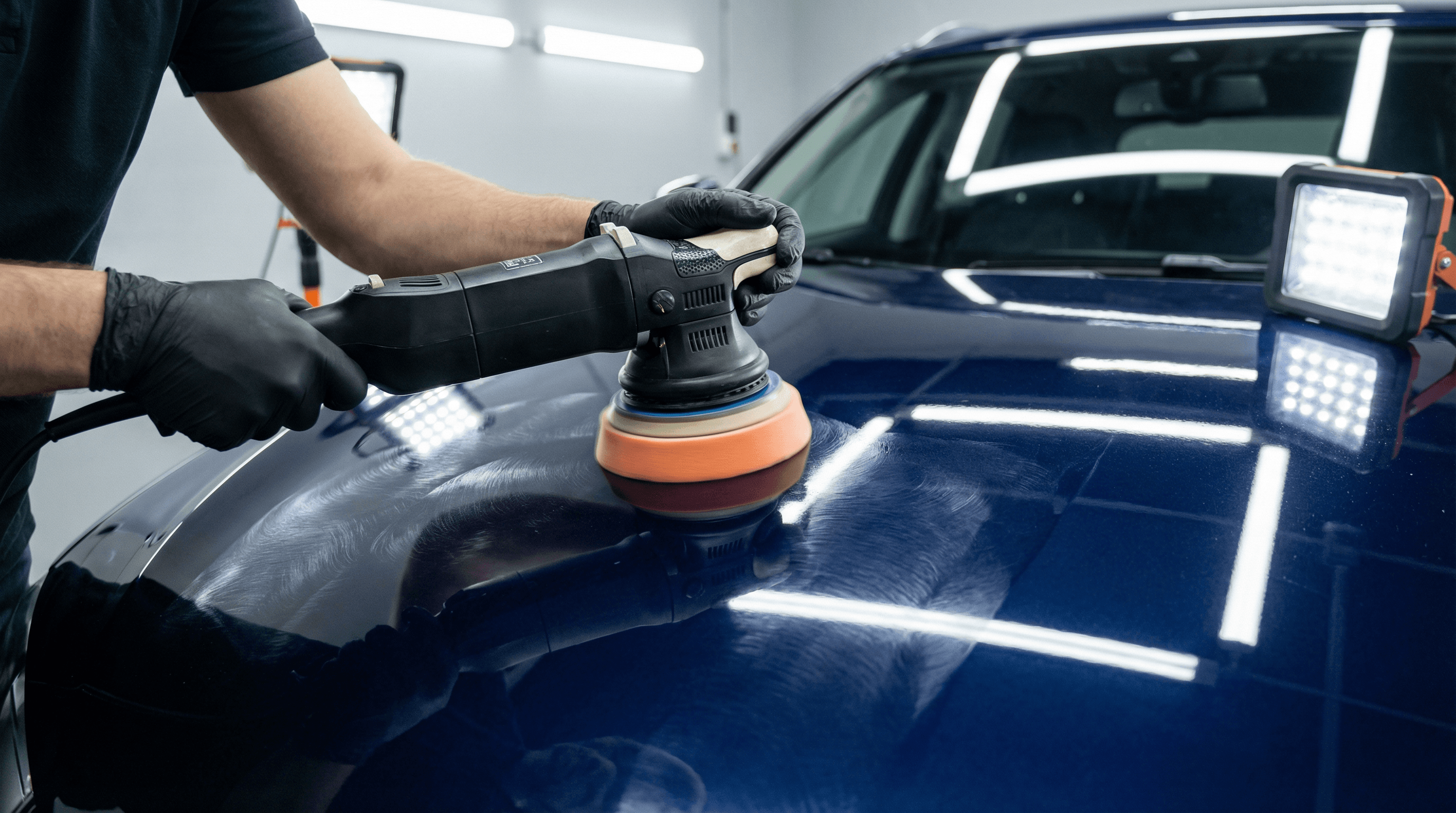
Under proper lighting, we inspect the paint for swirl marks, light scratches, water spots, and oxidation. Depending on the service level, we’ll perform a light polish to remove surface imperfections and enhance gloss. For vehicles with significant paint defects, a full paint correction may be recommended.
Wheel and Tire Cleaning
Wheels accumulate brake dust — a combination of iron particles, carbon, and adhesive compounds that bonds aggressively to wheel surfaces. We use a dedicated wheel cleaner and brushes to clean the face, spokes, and barrel of each wheel. Tires are cleaned and dressed with a non-sling tire dressing that provides UV protection and a clean, matte finish.
Glass Cleaning
All exterior glass is cleaned with a streak-free glass cleaner, including the windshield, side windows, and rear glass. We also clean the wiper blades, which are a common source of streaking.
Protection Application
The final step is applying a layer of protection to the paint surface. Depending on the service, this may be a spray wax, a paint sealant, or a ceramic coating. Each provides a different level of durability and protection. We’ll recommend the right option based on your vehicle, your budget, and how long you want the protection to last.