Why Sunscreen Stains in Car Interiors Form
Sunscreen is designed to stay on skin through heat, sweat, and water. Those same properties make it difficult to remove from a vehicle. Mineral formulas can contain zinc oxide or titanium dioxide, which leave a pale residue. Chemical formulas, moisturizers, and water-resistant ingredients can leave an oily film that attracts dust.
In Las Vegas, the problem develops faster. A parked cabin can become dangerously hot, and warm sunscreen transfers easily from arms, legs, hands, and shoulders onto seats, door panels, center consoles, seat belts, and steering-wheel trim. The heat then helps the residue settle into textured grain, stitching, and fabric fibers.
Kevin sees this pattern on family SUVs after pool days, rideshare vehicles, daily drivers parked near resorts, and cars returning from Lake Mead. Because he personally completes every AOA Detailing job, the cleaning method is chosen for the actual material and condition rather than applied as a one-product-fits-all shortcut.
What Sunscreen Does to Different Materials
The correct cleaning process depends on where the transfer landed.
Coated Leather and Vinyl
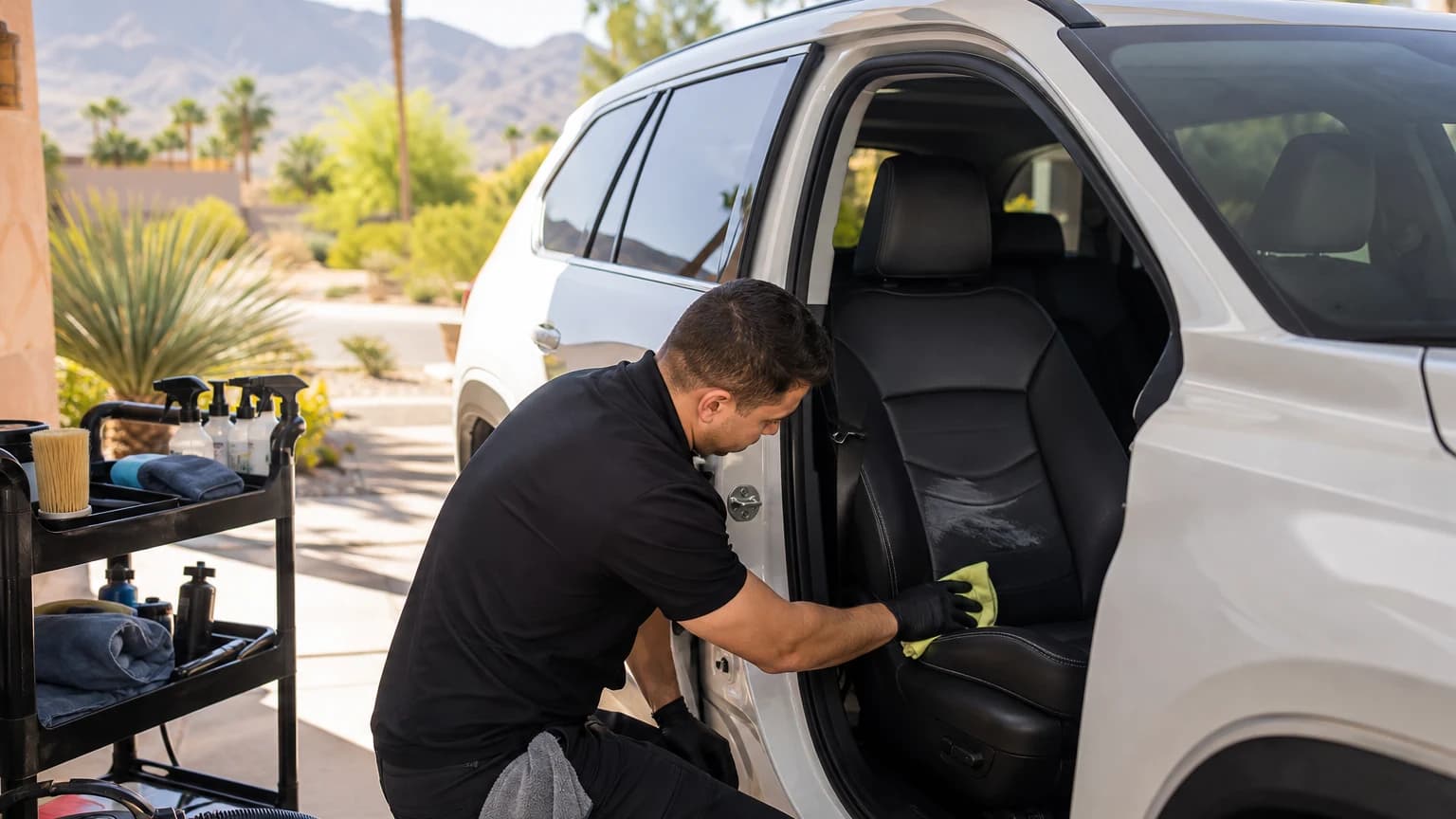
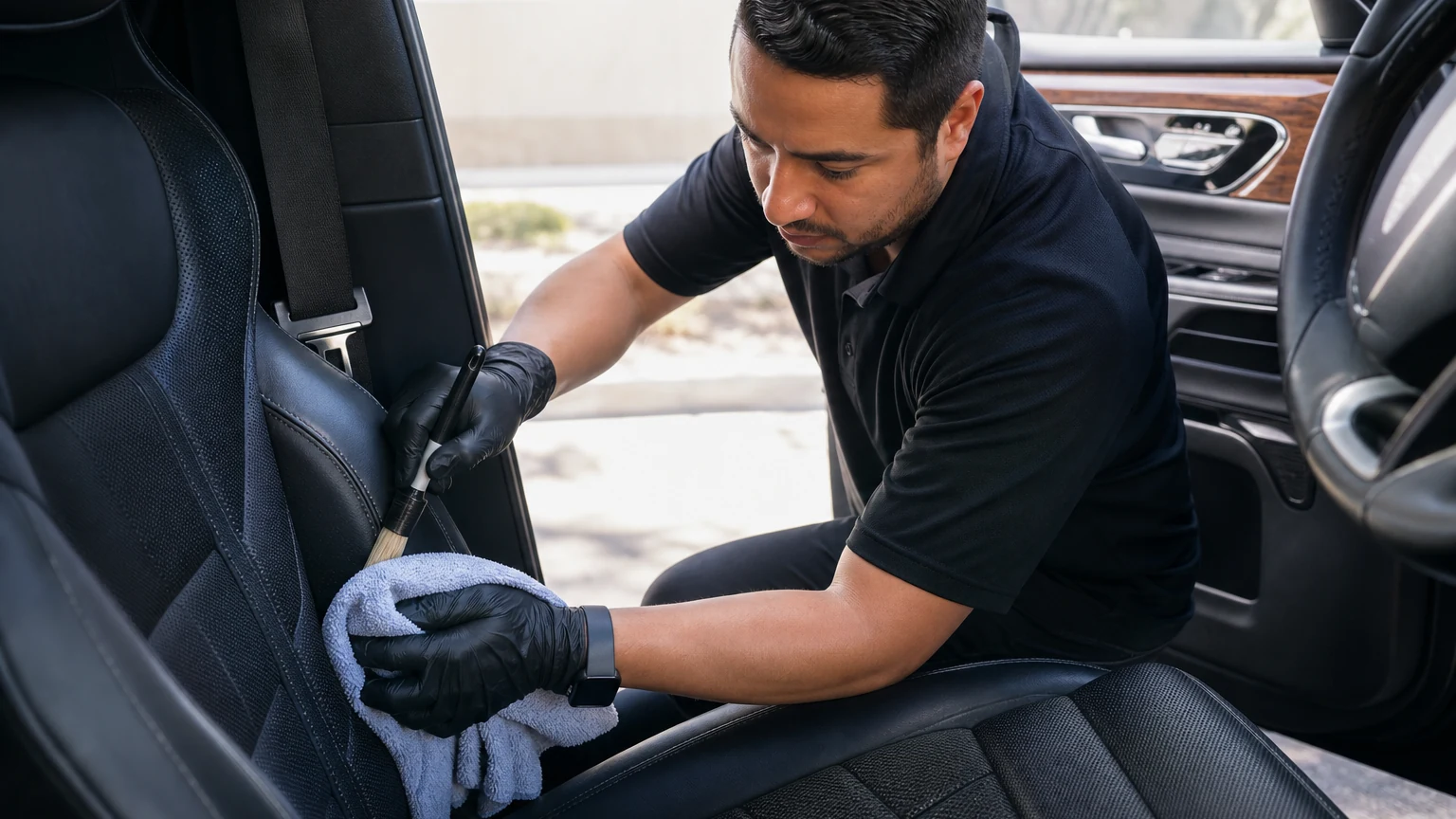
Most modern automotive leather has a protective topcoat. Sunscreen usually sits on that coating at first, creating a chalky white streak or greasy sheen. If it is left through repeated heat cycles, it can collect in the grain and around perforations. Harsh degreasers may remove the residue, but they can also dull or weaken the protective finish.
Fabric Upholstery
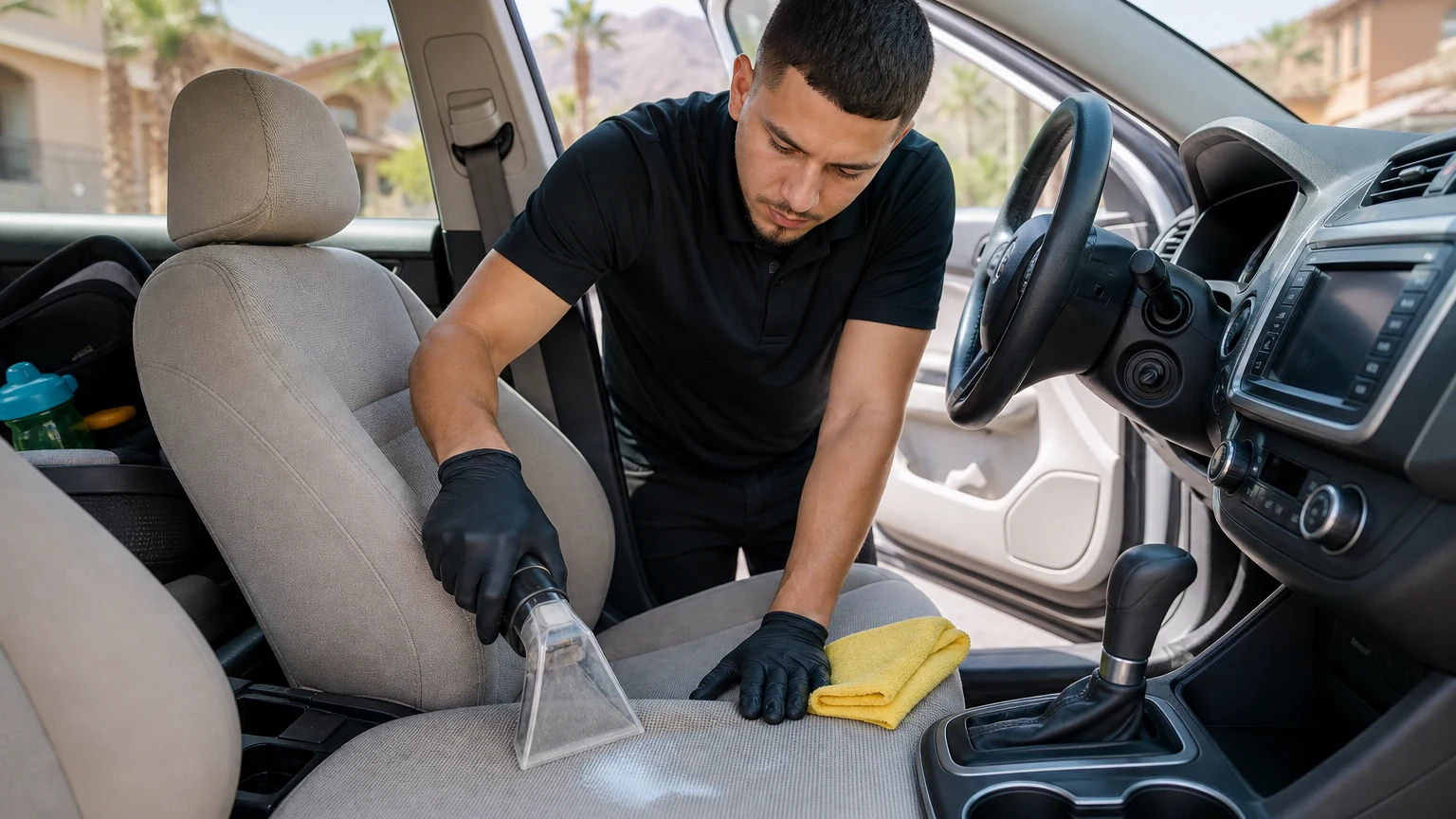
Fabric absorbs the liquid portion of sunscreen while pale mineral particles remain near the surface. Scrubbing can spread the oily portion outward and create a ring. Too much water can push the stain into the cushion or leave a musty odor if the seat does not dry properly.
Plastic, Door Panels, and Trim
Textured plastic traps residue in small grooves. An aggressive all-purpose cleaner may discolor sun-warmed trim or leave a patch that looks different under direct light. Soft brushes and controlled product application are safer than spraying the panel heavily.
Headliners and Seat Belts
These surfaces require restraint. Saturating a headliner can weaken its adhesive and cause sagging. Seat belts must remain structurally sound and free of slick dressing. If either surface has a large sunscreen stain, professional assessment is the safer route.
Safe Sunscreen Stain Removal Steps
For a fresh, small mark on a known material, use the least aggressive process that works.
1. Cool the Interior
Move the vehicle into shade and let the surface cool. Do not apply cleaner to a dashboard, seat, or door panel that is hot to the touch. Product can flash-dry before it has time to lift the residue.
2. Blot Fresh Residue
Use a clean, dry microfiber towel to lift excess product. Blot instead of rubbing. Work from the outside edge toward the center so the mark does not spread.
3. Identify and Test the Material
Confirm whether the surface is coated leather, vinyl, fabric, suede-like microfiber, or plastic. Apply a small amount of material-specific cleaner to a hidden area first. Check for color transfer, darkening, or a change in sheen before continuing.
4. Apply Cleaner to the Towel or Brush
Do not flood the surface. Put a small amount of pH-appropriate cleaner on a microfiber towel or soft interior brush, then work the affected area gently. On perforated leather, keep liquid away from the holes as much as possible.
5. Extract Fabric Instead of Soaking It
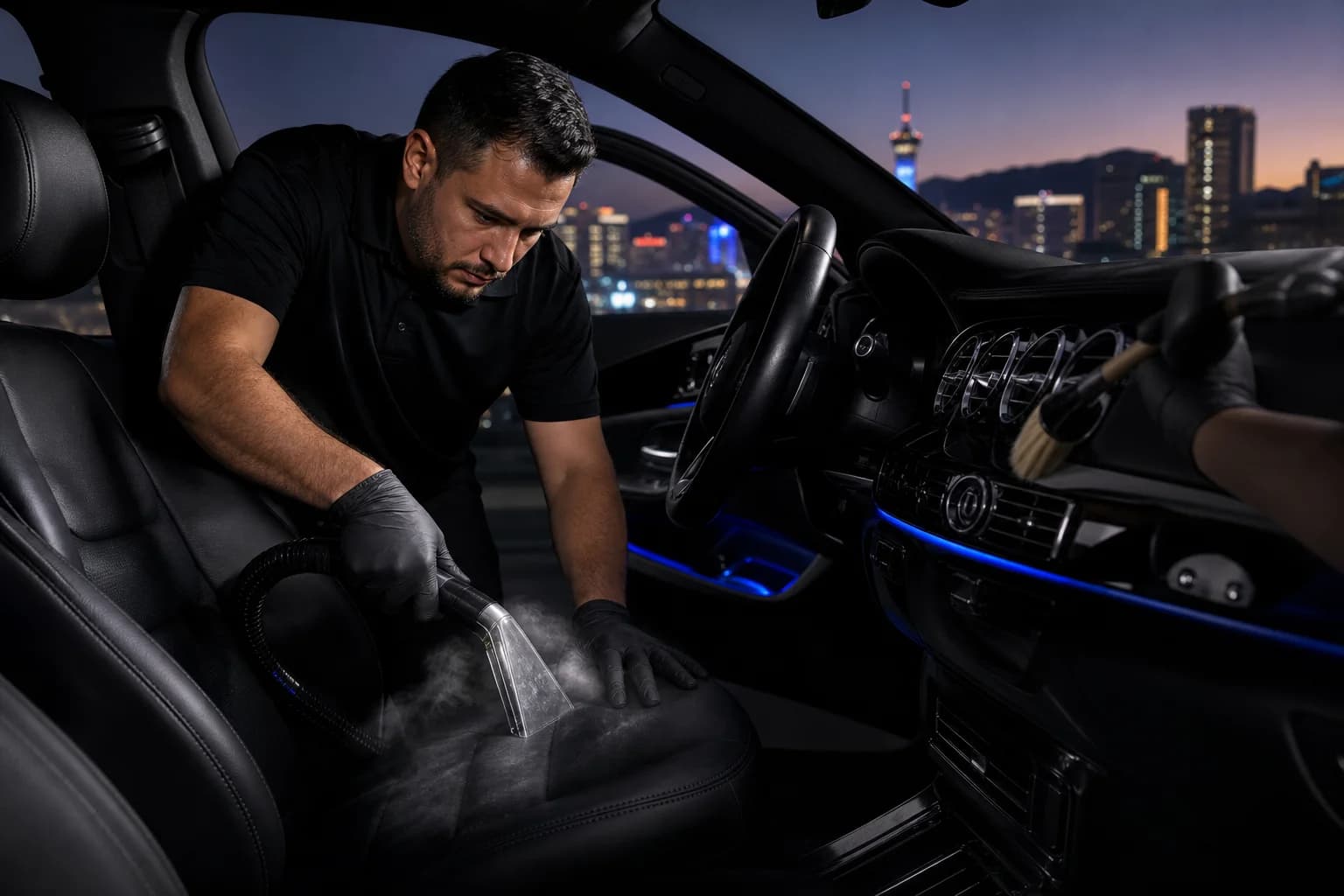
On fabric, controlled upholstery extraction lifts dissolved residue and moisture out of the fibers. Repeatedly adding water without extracting it can make the stain larger and extend drying time.
6. Wipe, Inspect, and Let It Dry
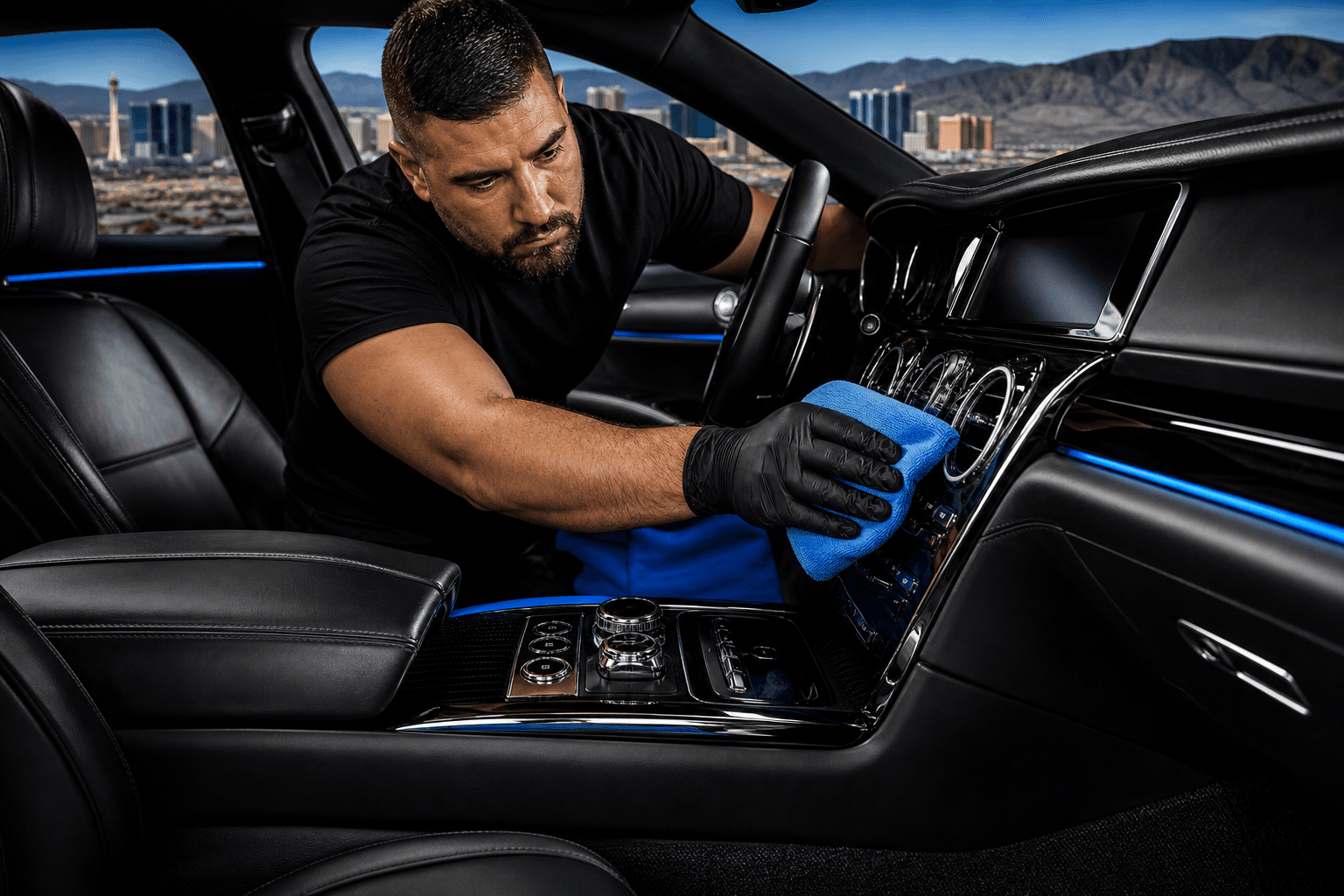
Remove cleaner with a second slightly damp microfiber towel, then dry the surface. Inspect it from more than one angle after it has fully dried. A wet fabric seat or freshly wiped leather panel can temporarily hide residue.
7. Protect the Clean Surface Correctly
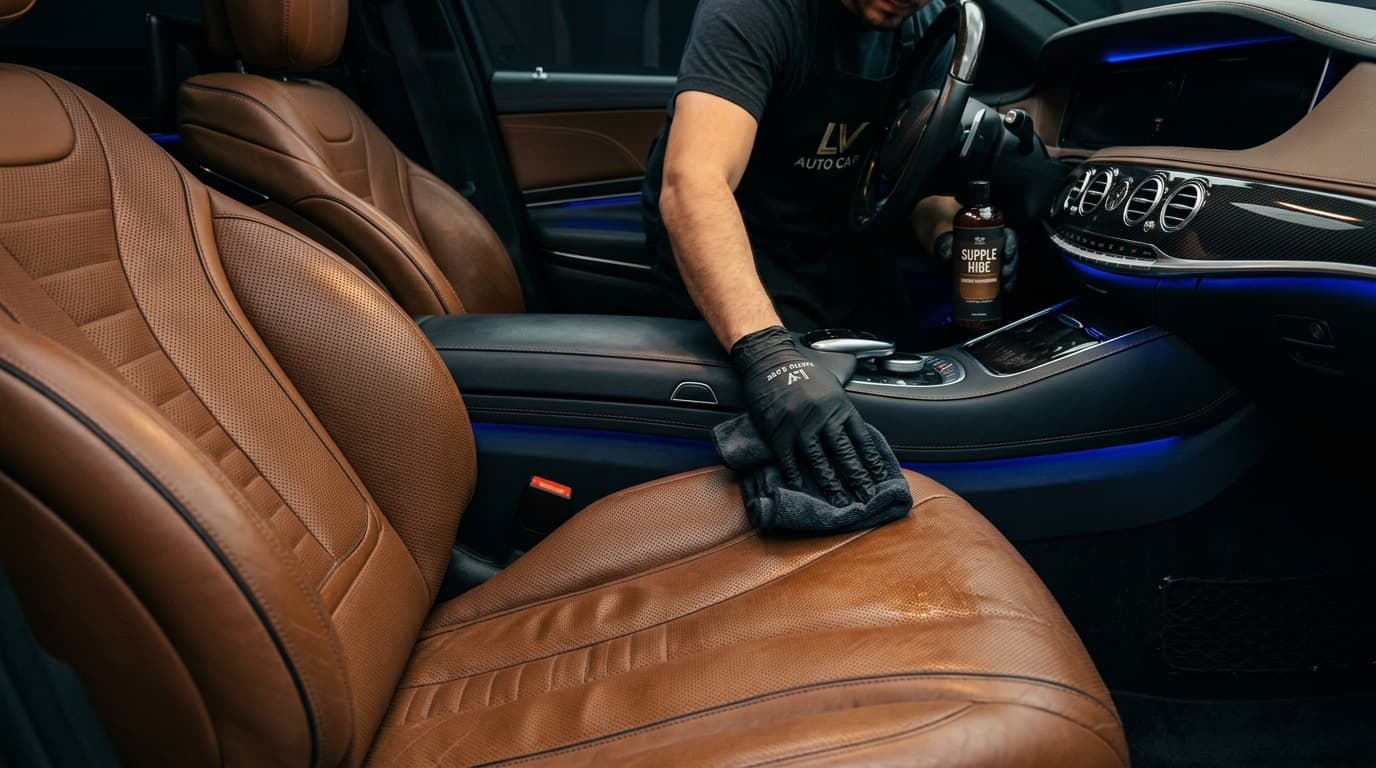
Use a non-greasy, material-safe protectant only after cleaning is complete. Leather conditioner is not a stain remover, and shiny silicone dressing should not be applied to seats, pedals, steering wheels, or seat belts. For a complete reset, AOA’s full detailing service addresses the interior and exterior together.
Mistakes That Make Sunscreen Stains Worse
Avoid these common reactions to a visible white smear:
- Using a magic eraser. Melamine foam is abrasive and may remove the leather or plastic finish along with the stain.
- Reaching for dish soap or a strong degreaser. High-strength cleaners can dry, fade, or spot automotive materials.
- Scrubbing a fabric seat in circles. This pushes oily residue farther into the fibers and can leave a larger ring.
- Saturating perforated leather or a headliner. Excess moisture can reach foam, electronics, or adhesive beneath the surface.
- Covering the mark with dressing. A glossy product can hide the stain briefly while creating a slippery, dust-attracting film.
- Cleaning only the most visible patch. Sunscreen often transfers to the door armrest, seat belt, console, and steering-wheel area during the same trip.
If a hidden-area test changes the color or sheen, stop. A small sunscreen mark is easier to correct than a large patch of damaged finish.
When Professional Interior Detailing Is Worth It
Professional help is appropriate when the stain is old, covers multiple surfaces, has penetrated fabric, or sits on delicate material. It is also the better choice when a DIY attempt has already created a ring, rough patch, or uneven sheen.
AOA Detailing brings the equipment to your home or workplace. Kevin can inspect the material, choose the least aggressive cleaner, use soft agitation for textured surfaces, and extract fabric rather than leaving it saturated. An interior appointment can also address the skin oils, sand, drink residue, pet hair, and desert dust that usually surround the sunscreen transfer.
AOA serves Las Vegas, Henderson, Summerlin, North Las Vegas, Spring Valley, Centennial Hills, Boulder City, and nearby communities within 25 miles. Call (775) 244-5315, contact AOA Detailing, or book mobile service online.
How to Prevent New Sunscreen Transfer
Sunscreen belongs in every Las Vegas routine; the goal is to keep using it without sacrificing the interior.
- Let sunscreen absorb according to the label before getting into the vehicle.
- Place a clean, light-colored towel over the seat after pool, lake, or outdoor activities.
- Wipe hands before touching the steering wheel, shifter, touchscreen, or door pull.
- Keep a clean microfiber towel in a sealed bag for fresh transfer, but never dry-scrub a dusty surface.
- Schedule periodic interior maintenance so residue does not build up through an entire summer.
These habits also help protect leather and trim from the broader effects of desert heat. See Kevin’s guide to protecting leather seats in Las Vegas for a longer-term care routine.
Frequently Asked Questions
-
Can sunscreen permanently stain a car interior?
It can leave persistent discoloration or an uneven sheen, especially after repeated heat cycles or aggressive cleaning. Fresh transfer is usually easier to remove, so cool the surface and address it with a material-safe process promptly.
-
Is sunscreen harder to remove from leather or fabric?
Both present different risks. Coated leather can be damaged by harsh chemicals or abrasion, while fabric can absorb oils and develop rings. Correct material identification matters more than choosing one universal cleaner.
-
Can I use an all-purpose household cleaner on car seats?
It is not recommended. Household products may be too alkaline, leave residue, or affect the protective coating on automotive leather and vinyl. Use a cleaner labeled for the specific vehicle material and test it first.
-
Will leather conditioner remove the white sunscreen mark?
No. Conditioner is intended to support leather care after the surface is clean. Applying it over sunscreen can trap residue and create an uneven appearance.
-
How long does professional sunscreen stain removal take?
Timing depends on the material, stain age, vehicle size, and whether multiple surfaces are affected. Kevin assesses the interior before work and explains the safest process and expected result rather than promising a one-pass fix.
Kevin is the founder and owner-operator of AOA Detailing and personally completes every job. With more than a decade of hands-on detailing experience in the Las Vegas Valley, he provides mobile interior, exterior, paint-correction, and ceramic-coating services at homes and workplaces within a 25-mile service area. Call (775) 244-5315 or book online.