Engine Bay Detailing Las Vegas Challenges
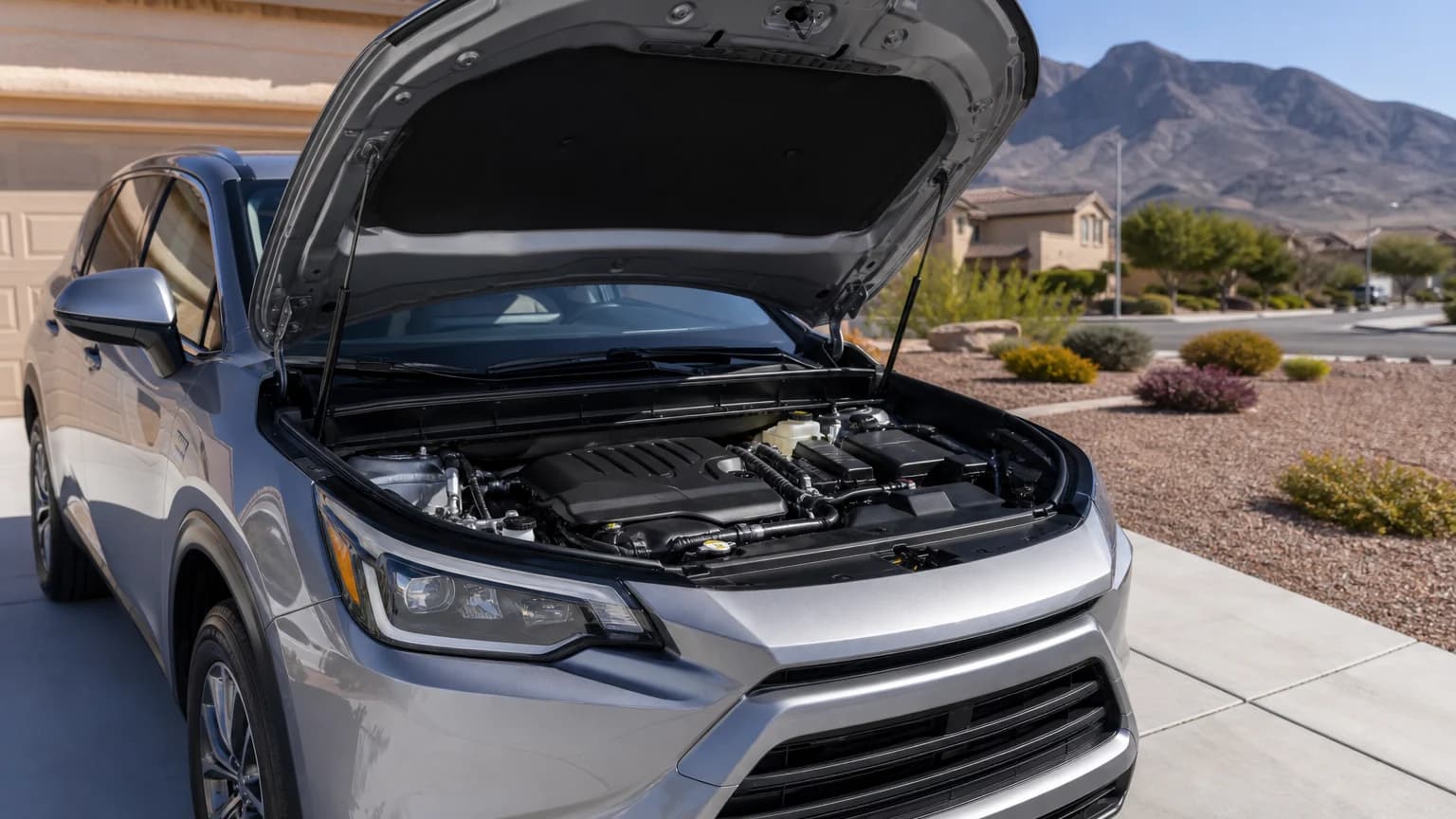
The area under your hood is not sealed. Air moves through the grille continuously, and in the Las Vegas Valley it carries fine silica dust, caliche powder, and construction grit year-round. Over a summer of commuting on US-95 or I-15, that material settles onto every horizontal surface and works into the seams around the intake, battery tray, and windshield cowl.
Heat compounds it. Ambient temperatures above 110 degrees are normal here for weeks at a time, and under-hood temperatures climb far higher. Each heat cycle bakes accumulated dust into the light oil film every engine bay develops, producing a hardened layer a garden hose will not touch. That coating also acts as insulation, holding heat against components and hoses designed to shed it.
Monsoon season adds a second problem. A haboob deposits a heavy dust layer, and the rain that follows turns it into a thin mud film that dries into the corners of the bay — often as caked residue along the firewall and strut towers.
A clean bay is also diagnostic. Rodents in valley neighborhoods are drawn to warm engine bays and drag nesting material into vehicles that sit for long stretches, and a weeping gasket or seeping hose clamp is easy to spot against clean surfaces but nearly invisible under years of accumulated film.
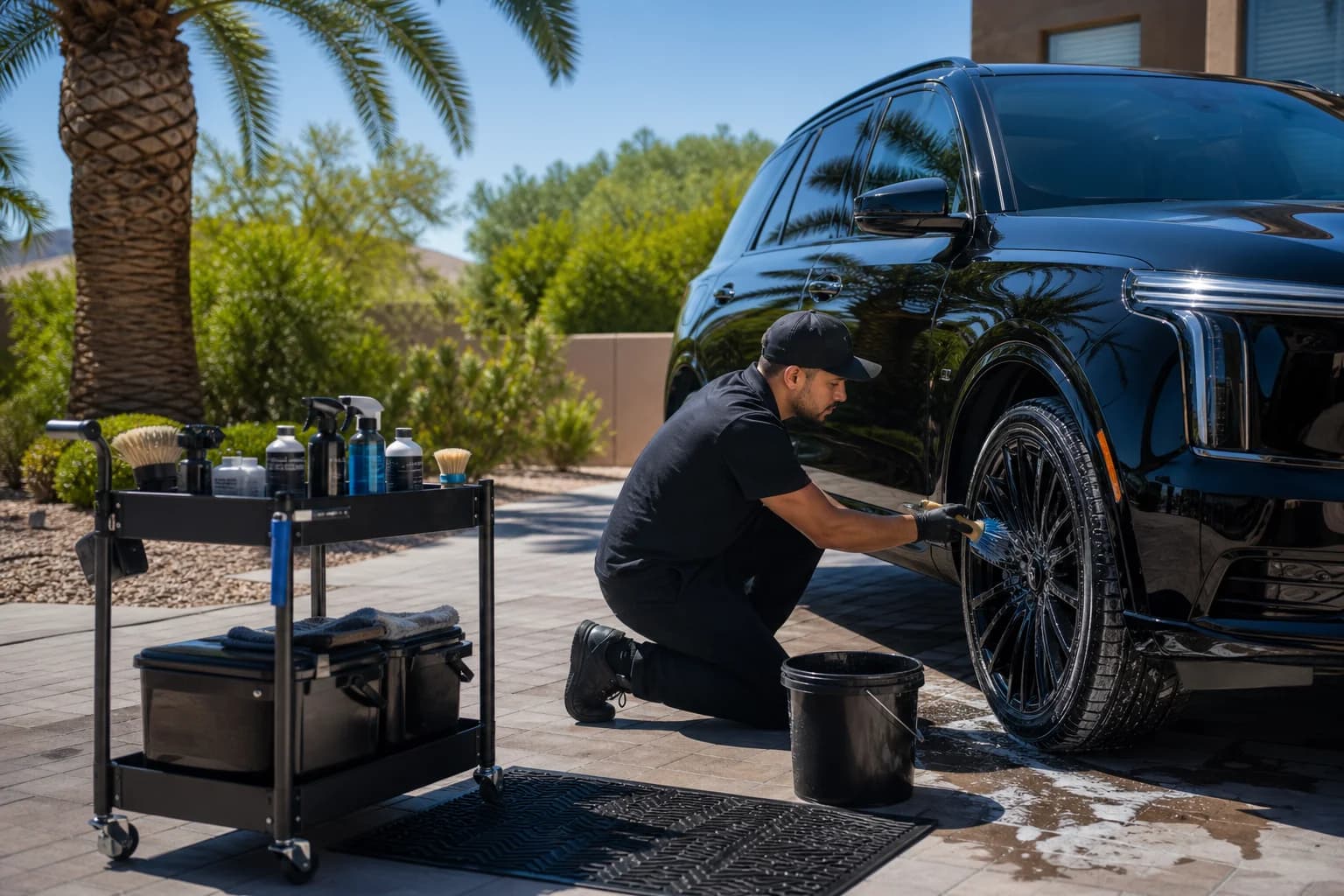
Kevin founded AOA Detailing to provide careful mobile vehicle care at customers’ homes and workplaces. He personally completes every appointment and inspects each bay before choosing a method, because a ten-year-old truck with exposed connectors and a late-model crossover with shrouded components call for different handling. AOA serves Las Vegas, Henderson, Summerlin, North Las Vegas, Spring Valley, and nearby communities within 25 miles.
What Professional Engine Bay Detailing Includes
A responsible engine bay service is a sequence, and most of the work happens before any liquid is used. The specifics vary by vehicle, but Kevin’s approach generally follows this order:
- Cool-down and inspection. The engine must be cool to the touch. The bay is checked for damaged wiring, aftermarket splices, active leaks, or evidence of rodent activity before anything is cleaned.
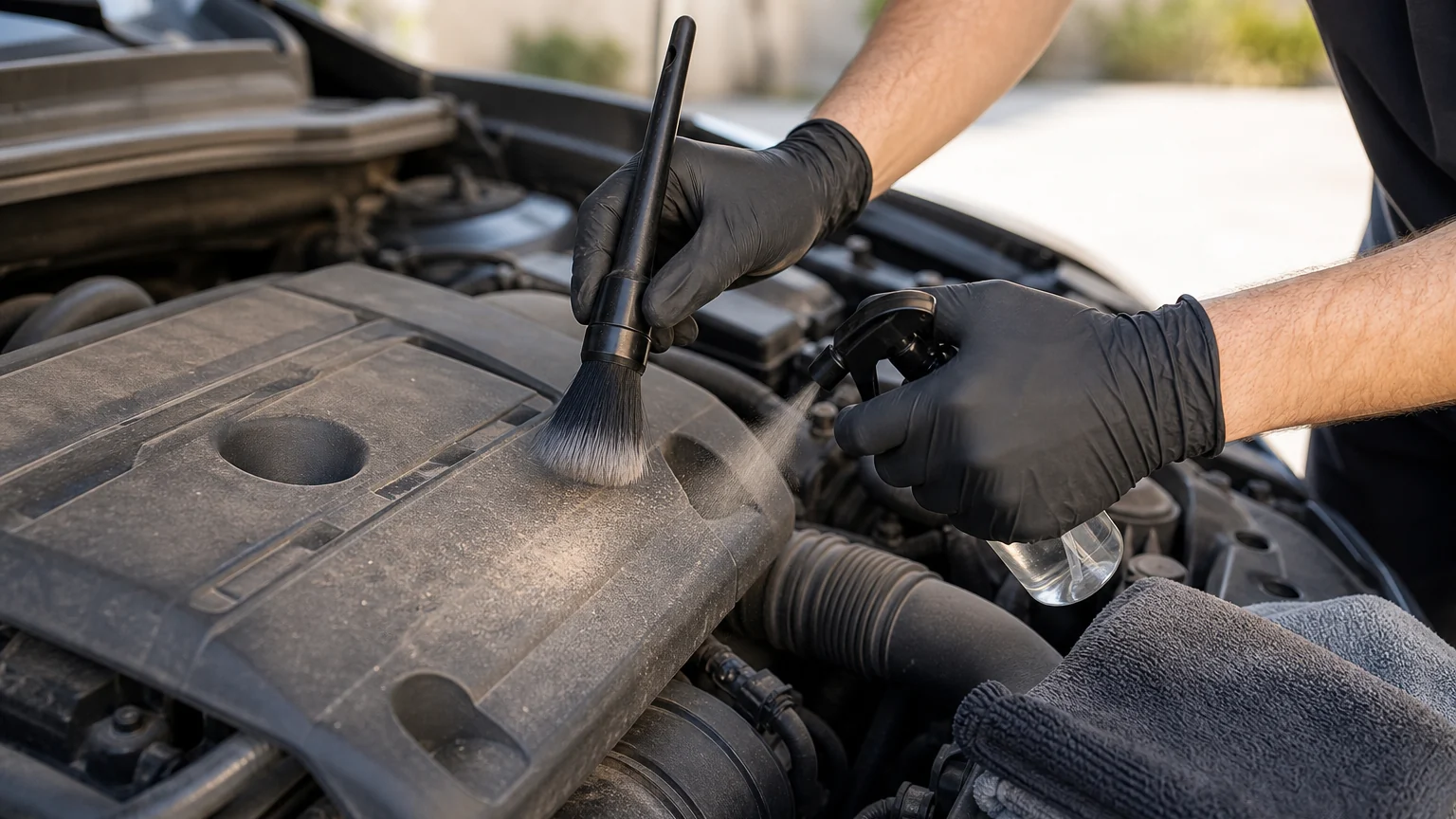
- Dry debris removal. Leaves, dust, and sand are lifted out with soft brushes and filtered low-pressure air. Removing dry material first means far less mud to extract later.
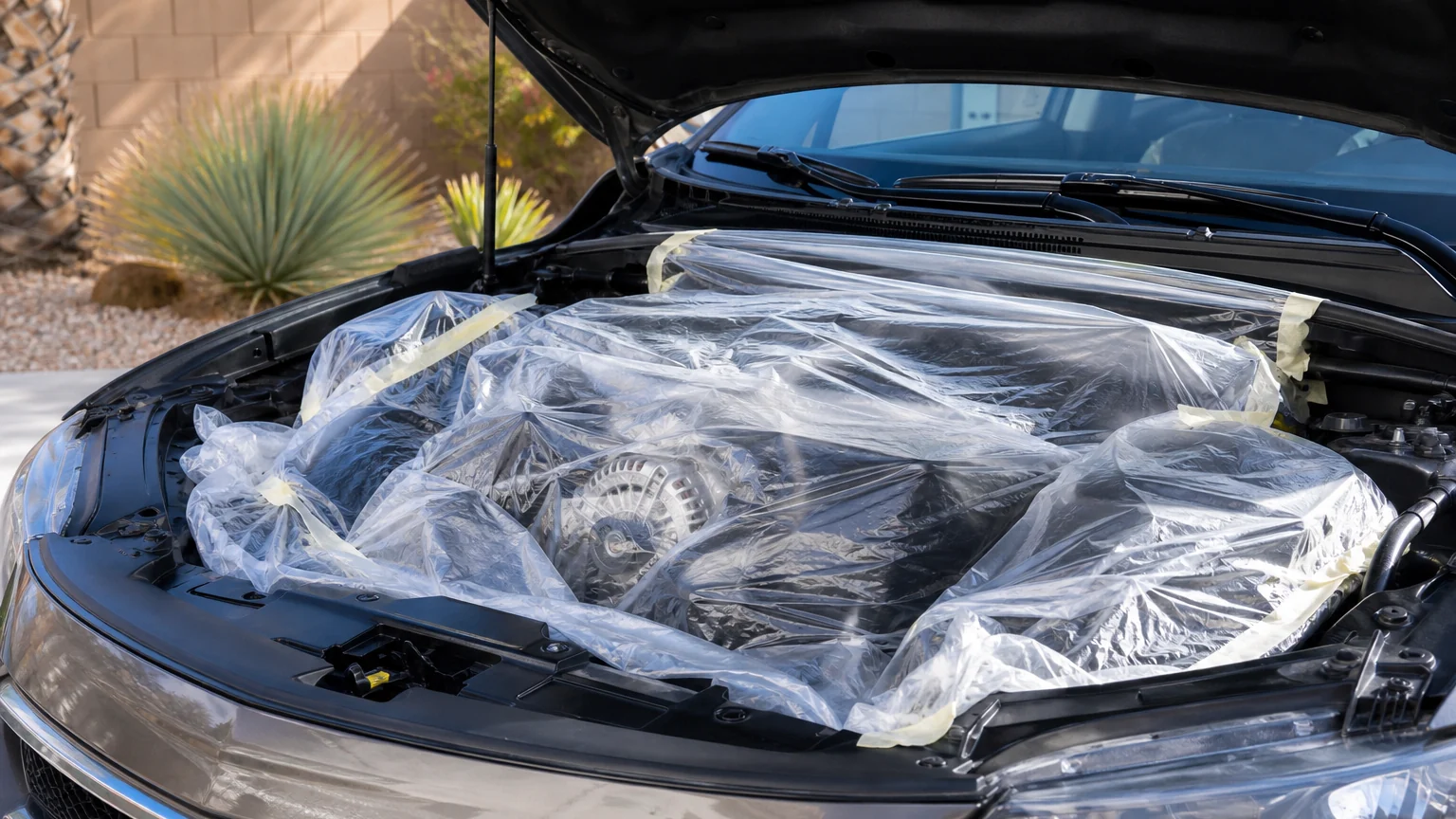
- Masking and protection. The alternator, fuse box, air intake, exposed connectors, and sensitive electronics are covered before cleaning begins.
- Targeted degreasing. An automotive-specific, appropriately diluted product is applied section by section rather than saturating the whole bay at once.
- Agitation. Material-appropriate brushes release bonded grime from plastic covers, hoses, and painted surfaces without scuffing them.
- Controlled rinse and drying. Low-pressure misting removes suspended soil, then microfiber and filtered air clear residual moisture from crevices and connector housings.
- Dressing and final inspection. A light, non-greasy dressing restores plastics and hoses, and the bay is checked once more before the hood closes.
This work pairs naturally with a full detailing appointment, where the exterior, wheels, interior, and engine bay are handled in one visit rather than spread across separate trips.
Protect Electronics Before Any Liquid
Modern engine bays are more sensitive than older ones, not less. Even where major components are shrouded, sensors, ground points, and connector housings sit exposed, and water that reaches the wrong place may not cause a fault immediately. Intermittent electrical problems appearing days later are why careless engine bay washing has a bad reputation.
Protection usually starts with the alternator, the fuse box or power distribution center, the air intake and filter housing, the battery and its terminals, and any visibly exposed connectors or control modules. Sheeting is secured so it stays put through the rinse, then removed carefully.
Engine temperature matters as well. A cool engine keeps products from flash-drying onto hot aluminum and painted surfaces, which can leave permanent staining, and exhaust manifolds and turbo housings stay hot long after the hood is opened.
There are conditions where the right decision is not to proceed. If a bay has damaged wiring insulation, unprotected aftermarket splices, a known electrical fault, an active fluid leak, or a rodent nest, Kevin will say so and recommend a qualified mechanic first. Detailing is cosmetic care, not electrical or mechanical repair, and cleaning around an existing fault can make diagnosis harder rather than easier.
Degrease Without Damaging Finishes
An engine bay mixes materials that react differently: painted strut towers and inner fenders, bare and anodized aluminum, powder-coated brackets, rubber hoses, textured plastic covers, and factory labels. One aggressive product applied everywhere will clean some of those surfaces and dull, stain, or streak others.
The practical approach is a properly diluted automotive degreaser applied in sections, given a controlled dwell time, and agitated before it has any chance to dry. Working panel by panel keeps the product active where it is needed and prevents the streaking that appears when degreaser dries on a warm surface.
Brush selection matters as much as chemistry. Soft detailing brushes handle plastic covers and painted surfaces; stiffer brushes are reserved for wheel-well liners and contaminated brackets. Wire and brass brushes have no place in a passenger-vehicle engine bay, and neither do oven cleaners or undiluted purple cleaners, which permanently etch aluminum and discolor plastics.
Rinsing is the step most often done wrong. Controlled misting removes suspended soil without driving it anywhere new. Drying then combines microfiber, filtered air through crevices, and where appropriate a brief run at idle.
Dressings, Trim, and a Factory-Look Finish
The finish should look clean and factory-correct, not wet. Heavy silicone dressings produce an initial shine that fails quickly in this climate: a greasy surface attracts airborne dust, and within a week or two the bay looks worse than before. A water-based, non-greasy dressing applied thinly gives plastics and hoses a satin appearance that holds up.
Application discipline matters too. Overspray belongs nowhere near the serpentine belt, pulleys, or brake components, so product goes onto an applicator rather than across the bay, and excess is wiped rather than left to pool in seams. Drivers who want protection that extends to the paint itself often pair this work with a ceramic coating, a separate service with its own preparation requirements.
Engine Bay Cleaning Mistakes to Avoid
Most engine bay damage comes from a small set of avoidable shortcuts:
- Pressure washing the bay. High pressure at the firewall, fuse box, or connector housings can force water past seals and create faults that appear days later.
- Cleaning a hot engine. Products flash-dry on hot surfaces, leaving stains, and hot exhaust components make the work unsafe.
- Household chemicals. Oven cleaner, undiluted degreasers, and laundry products can etch aluminum, discolor plastics, and damage decals.
- Skipping the dry pass. Wetting dust before removing it creates mud that settles deeper into seams.
- Leaving components uncovered. A few minutes of masking prevents the most common category of post-wash electrical complaints.
- Over-dressing. Greasy finishes look good for a week, then collect Las Vegas dust like a magnet.
- Treating a clean bay as a repair. Cleaning makes a leak visible; it does not fix one.
If you find chewed wiring, nesting material, pooled coolant or oil, or you notice a fuel smell, stop and take the vehicle to a qualified mechanic. Those conditions need mechanical attention before cosmetic work is worth doing.
When Mobile Engine Bay Detailing Makes Sense
Engine bay attention is most valuable at specific moments rather than on a fixed schedule. It is worth doing before selling or trading in a vehicle, since a clean bay signals maintenance — the same logic covered in AOA’s guide to how detailing affects resale value in Las Vegas. It also helps before a pre-purchase inspection or scheduled mechanical work, when visibility matters to whoever is diagnosing.
Seasonal timing matters here too. The end of a hot, dusty summer and the weeks following monsoon storms are when accumulated grit is heaviest. Drivers preparing a vehicle for sale often combine this with the broader steps in Kevin’s guide to mobile detailing before a car sale.
Because AOA is mobile, the work happens at your home or workplace within 25 miles of Las Vegas. Kevin assesses the bay first and gives an honest recommendation — including when the answer is that it does not need service yet.
To schedule, book AOA Detailing online or call Kevin at (775) 244-5315. Appointments are available Monday through Friday from 8 a.m. to 6 p.m. and Saturday from 9 a.m. to 5 p.m. You can also contact AOA Detailing with questions about your specific vehicle.
How to Keep an Engine Bay Clean in Las Vegas
A few habits slow accumulation considerably:
- Open the hood every month or two and look — early detection is most of the benefit.
- Clear leaves and dust from the cowl area and keep its drains open so monsoon water exits where it should.
- Park in shade or covered parking when possible to reduce heat cycling on hoses and plastics.
- Address small leaks promptly, since oil film is what binds dust into a hardened layer.
- Skip the greasy dressings that make dust cling.
Frequently Asked Questions
1. Is engine bay detailing safe for modern cars?
Yes, when it is done with a cool engine, proper masking of electronics, appropriate products, and controlled low-pressure rinsing. The risk comes from pressure washing, harsh chemicals, and skipping protection — not from cleaning the bay itself.
2. How often should an engine bay be detailed in Las Vegas?
There is no fixed interval. Most drivers here benefit from attention once or twice a year, weighted toward the end of summer and after monsoon season. Vehicles that sit outdoors, tow, or cover high desert mileage may warrant it more often.
3. Will cleaning the engine bay fix an oil leak or a warning light?
No. Cleaning makes leaks and damage visible, which helps a mechanic diagnose them, but it repairs nothing. Active leaks, electrical faults, and mechanical problems need a qualified repair shop.
4. Can you detail an engine bay at my home or office?
Yes. AOA Detailing is mobile and serves suitable homes and workplaces within 25 miles of Las Vegas. Confirm access, shade, and space when booking, and plan for the engine to be cool at the start of the appointment.
5. Does a clean engine bay help when selling a car?
It supports the overall impression. Buyers and appraisers often open the hood, and a clean, well-kept bay is consistent with a maintained vehicle. It will not offset mechanical issues, but it removes an easy reason to hesitate.
Kevin is the founder and owner-operator of AOA Detailing and personally completes every appointment. With more than a decade of hands-on detailing experience in Las Vegas conditions, he provides mobile interior, exterior, paint-correction, ceramic-coating, and full-detail services. Call (775) 244-5315, contact AOA Detailing, or book online.