Why Las Vegas Is the Worst City for Wheels
Las Vegas combines every environmental factor that accelerates wheel deterioration into one location. Understanding why your wheels degrade faster here explains why regular detailing is not optional — it is preventive maintenance.
Extreme Surface Temperatures. Asphalt parking lots in Las Vegas reach 160°F or higher during summer months. Your wheels absorb that radiant heat from below while your brakes generate 400–600°F temperatures from above. That thermal cycling expands and contracts the wheel finish, creating microscopic cracks where contamination penetrates.
Brake Dust Accumulation. Every stop generates metallic dust from your brake pads and rotors. In moderate climates, rain washes some of that dust away naturally. Las Vegas averages 4.2 inches of rain per year — one of the lowest in the nation. Without rain, brake dust accumulates continuously and bonds to wheel surfaces within 48–72 hours of heat exposure.
Alkaline Road Dust. The Mojave Desert soil is highly alkaline, with pH levels reaching 8.5–9.0 in areas around the valley. That alkaline dust settles on wet brake dust and creates a corrosive compound that etches clear-coated and painted wheel finishes. Vehicles driven on unpaved roads near Red Rock, Henderson, or the northwest valley collect even more of this abrasive material.
UV Radiation on Tires. The same UV index of 10–11 that damages your paint attacks the rubber compounds in your tires. UV breaks down the antiozonant chemicals that tire manufacturers build into the rubber to prevent dry rot and cracking. Without those protectants, sidewall cracking can appear within 18 months of a new tire installation in Las Vegas.
What Brake Dust Actually Does to Your Wheels
Brake dust is not just cosmetic dirt. It is a mixture of metallic particles from your brake pads (iron, copper, carbon, and adhesive compounds) and iron shavings from your rotors. When this dust lands on a hot wheel surface, it begins a chemical bonding process called sintering — the particles fuse to the wheel finish at a molecular level.
Within the first 24 hours, brake dust sits on the surface and can be rinsed away with water. After 48–72 hours in Las Vegas heat, the iron particles begin oxidizing and embedding into the clear coat. After one to two weeks without cleaning, the contamination has penetrated deep enough that water pressure alone cannot remove it.
This is why your wheels look dirty again within days of a car wash. The car wash removes surface grime but leaves the embedded contamination that has already bonded to the finish. Only chemical decontamination with a dedicated wheel cleaner and iron remover can break those bonds and extract the embedded particles.
Left untreated for months, brake dust contamination permanently stains wheel finishes. I see this regularly on vehicles that have gone six months or longer without proper wheel cleaning — the pitting and discoloration cannot be fully reversed without refinishing the wheel.
Professional Wheel and Tire Detailing Las Vegas: The AOA Process
Professional wheel detailing goes far beyond spraying a wheel cleaner and wiping it down. Here is the process we follow at AOA Detailing for every vehicle:
Step 1: Pre-Rinse and Cool Down. We rinse wheels with ambient-temperature water to remove loose debris and reduce surface temperature. Applying chemicals to a hot wheel causes rapid evaporation and can stain the finish — a common mistake at automated car washes.
Step 2: pH-Balanced Wheel Cleaner. We apply a dedicated wheel cleaner formulated for your specific wheel type. Painted, clear-coated, polished aluminum, chrome, and powder-coated wheels each require different chemistry. Using the wrong product damages finishes — acidic cleaners on polished aluminum, for example, cause irreversible etching.
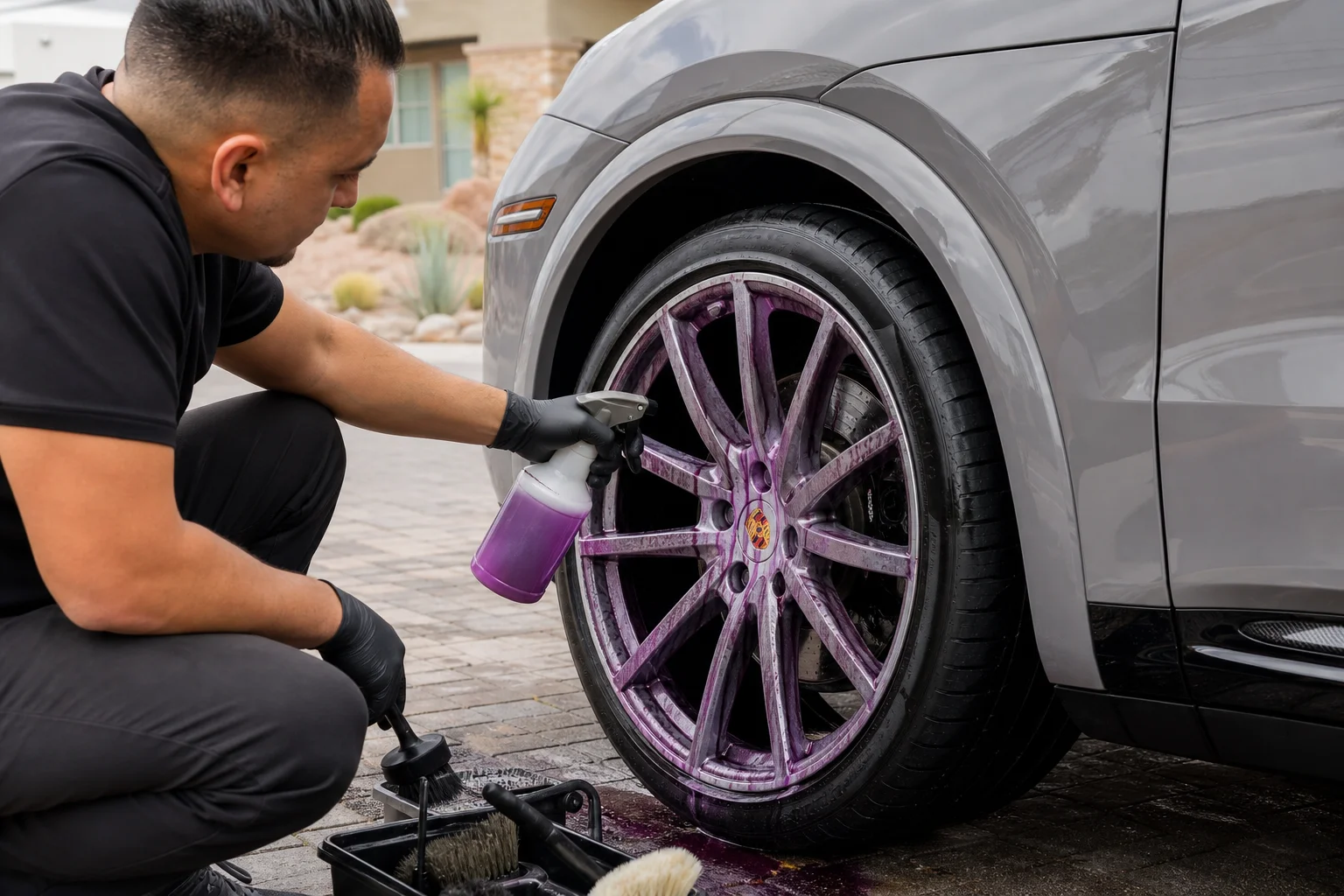
Step 3: Iron Decontamination. A dedicated iron remover (iron fallout remover) is sprayed across the entire wheel face, barrel, and spokes. This product turns purple on contact with embedded iron particles, chemically dissolving the bonds holding contamination in place. This step is what separates professional detailing from basic washing.
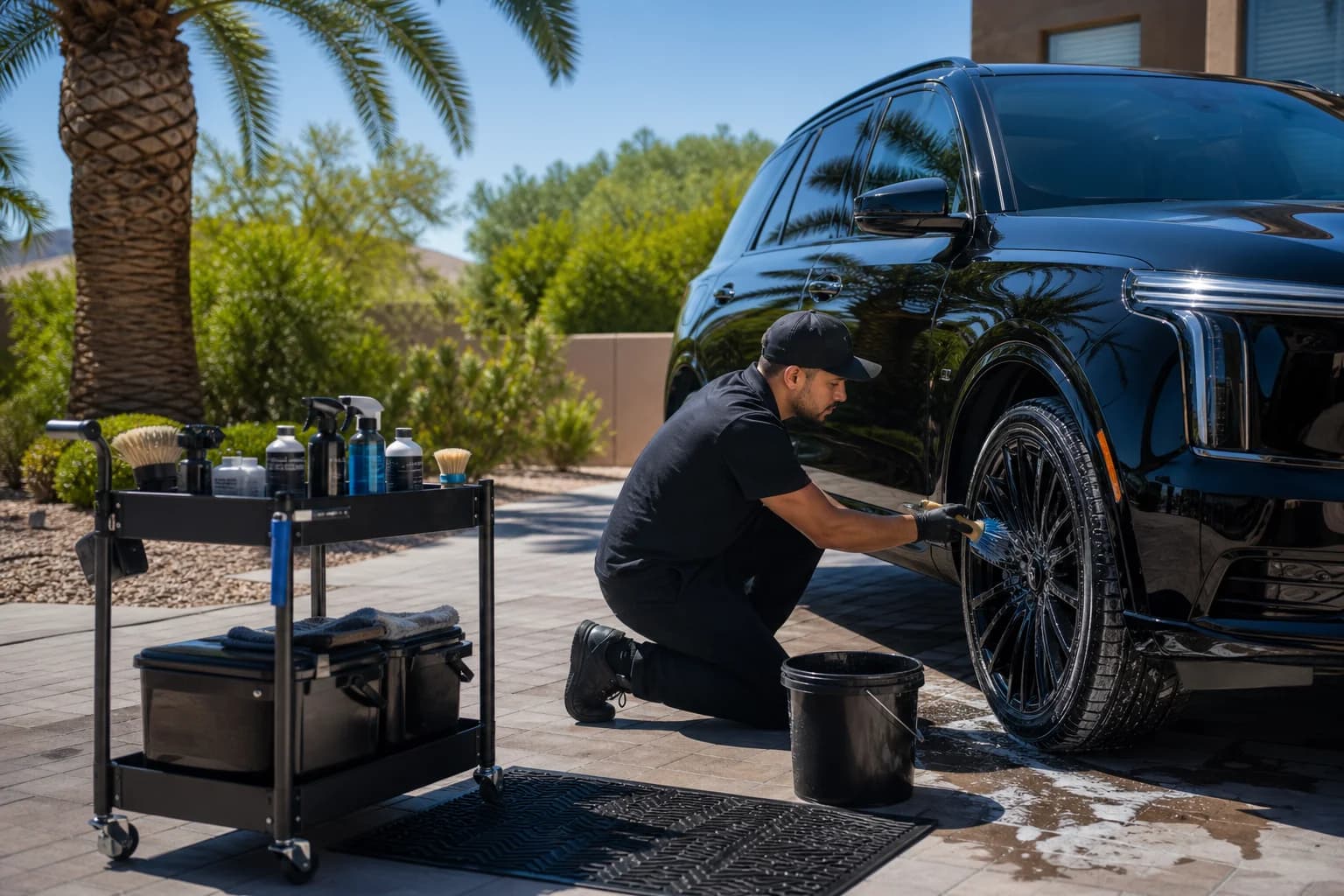
Step 4: Agitation and Detail Brushing. Using multiple brush sizes — barrel brushes for the inner wheel well, spoke brushes for tight gaps, and soft detail brushes for the face — we manually agitate every surface. Lug nut recesses, valve stem areas, and the inner barrel collect the heaviest contamination and require targeted attention.
Step 5: Rinse and Dry. A thorough rinse removes all chemical residue, followed by hand drying with microfiber towels to prevent water spots. Hard water in Las Vegas leaves mineral deposits that etch into wheel finishes just like they do on paint.
Step 6: Tire Cleaning. Tires are cleaned separately with an all-purpose cleaner and a stiff tire brush to remove old tire dressing, road grime, and browning (blooming) from the rubber surface. This step is essential before applying any dressing — layering new dressing over dirty rubber creates a sticky mess that flings onto your fenders.
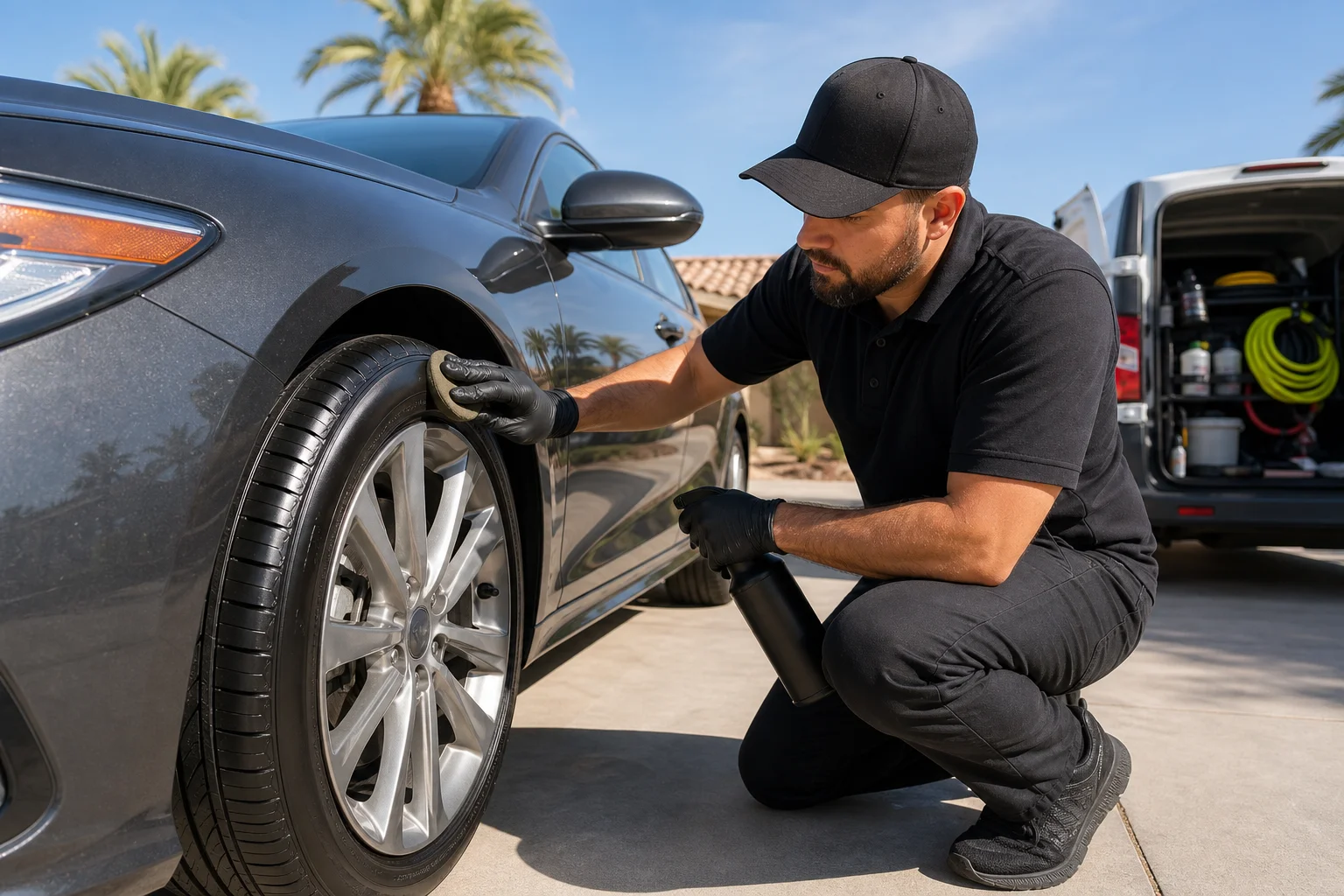
Step 7: Tire Dressing Application. We apply a UV-protective tire dressing that conditions the rubber and provides a clean, even finish. We use water-based dressings that absorb into the rubber rather than sitting on the surface — no greasy sling, no artificial shine that attracts dust.
Tire Care in Desert Heat
Tires in Las Vegas face a unique combination of stresses that shorten their lifespan and degrade their appearance faster than anywhere in the country.
Heat Degradation. Pavement temperatures exceeding 150°F mean your tires operate at the upper limit of their temperature rating for months at a time. This constant heat accelerates rubber compound breakdown, causes accelerated wear, and can trigger blowouts on underinflated tires — a hazard I see the aftermath of on Las Vegas freeways every summer.
UV Dry Rot. Ultraviolet radiation breaks down the polymers in tire rubber, causing sidewall cracking that appears as small surface cracks initially and deepens into structural cracks over time. Tires parked in direct sunlight — especially vehicles in uncovered parking lots — show dry rot within 2–3 years regardless of tread depth remaining.
Tire Blooming. The brown discoloration that appears on tire sidewalls is called blooming. It occurs when antiozonant compounds migrate to the tire surface and oxidize. While this process is actually protective (the compounds sacrifice themselves to absorb ozone and UV), it looks unsightly and is more pronounced in hot, dry climates.
Professional tire conditioning addresses all three issues. Quality UV-protective tire dressings replace the depleted antiozonant layer, slow UV penetration, and maintain the flexible properties of the rubber. Applied every two to four weeks in Las Vegas summer conditions, proper tire care can extend tire life by 15–20 percent and maintain appearance between full detailing appointments.
How Ceramic Coating Protects Wheels Long-Term
The same ceramic coating technology that protects your vehicle’s paint can be applied to wheels for lasting protection against brake dust and contamination. Ceramic-coated wheels offer several advantages for Las Vegas drivers:
Brake Dust Resistance. The hydrophobic ceramic layer prevents brake dust from bonding directly to the wheel surface. Contamination sits on top of the coating rather than embedding into the clear coat, making regular cleaning dramatically easier and faster.
Heat Resistance. Quality ceramic coatings withstand temperatures up to 1,400°F — well above the temperatures generated by braking. The coating maintains its protective properties through the extreme thermal cycling Las Vegas wheels experience.
Chemical Resistance. Ceramic coatings resist the alkaline road dust and cleaning chemicals that degrade unprotected wheel finishes over time.
Easier Maintenance. A ceramic-coated wheel typically requires only a rinse and light wipe to look clean. The biweekly deep-cleaning sessions that uncoated wheels demand become monthly or even less frequent.
We recommend ceramic wheel coating for any vehicle that will be driven regularly in Las Vegas. The upfront investment pays for itself in reduced cleaning time and prevention of the permanent staining that uncoated wheels inevitably develop.
Common Wheel Damage We See in Las Vegas
Years of detailing vehicles in the Las Vegas valley have shown me the same patterns of wheel damage repeatedly. Recognizing these issues early prevents costly wheel replacement:
Curb Rash. Las Vegas has particularly aggressive curbing at shopping centers and parking structures. Tight turns in parking garages scrape alloy wheels against concrete curbs, removing the clear coat and exposing raw aluminum to corrosion. We see curb rash on roughly 40 percent of the vehicles we detail.
Clear Coat Peeling. Factory clear coat on wheels fails under Las Vegas conditions faster than in moderate climates. Peeling typically starts at the outer edge where road debris impacts the finish and progresses inward. Once the clear coat begins lifting, brake dust and moisture accelerate corrosion underneath.
Oxidation and Pitting. Machined or polished aluminum wheels that lose their protective coating develop white oxidation spots and surface pitting. This damage requires machine polishing to correct — chemical cleaners alone cannot restore the finish.
Lug Nut Corrosion. Chrome or decorative lug nut covers swell and corrode in Las Vegas heat, sometimes bonding to the lug nut and making tire changes difficult or impossible. Regular cleaning and anti-seize application during wheel detailing prevents this common issue.
Identifying these problems during routine detailing allows us to recommend corrective action before a cosmetic issue becomes a structural or safety concern.
FAQs
How often should I have my wheels detailed in Las Vegas?
Every two to four weeks during summer months (May through September) and monthly during the rest of the year. Vehicles driven aggressively or with performance brake pads that generate more dust may need more frequent attention. Regular exterior detailing appointments include thorough wheel and tire care.
Can brake dust permanently damage my wheels?
Yes. Brake dust that remains on wheels for more than two to four weeks in Las Vegas heat begins permanently embedding into the finish. After several months, the staining and pitting cannot be reversed without professional refinishing or replacement. Prevention through regular decontamination is far more cost-effective than correction.
What is the brown stuff on my tires?
That brown discoloration is called tire blooming. It occurs when antiozonant chemicals in the rubber migrate to the surface and oxidize. It is not harmful to the tire — in fact, it is a protective process — but it looks unsightly. Professional tire cleaning removes the bloomed compounds, and quality tire dressing helps control the process between cleanings.
Will tire dressing damage my tires?
Water-based tire dressings are completely safe and beneficial for rubber. Solvent-based or silicone-heavy dressings can accelerate rubber degradation and should be avoided. AOA Detailing uses only water-based, UV-protective dressings that condition rubber rather than just coating it.
How long does a wheel ceramic coating last?
A professionally applied ceramic coating on wheels typically lasts one to two years with proper maintenance. The coating does not eliminate the need for cleaning but dramatically reduces the effort required and prevents the contamination bonding that causes permanent damage.
Do you detail inside the wheel barrel?
Yes. Every AOA wheel detailing service includes the inner barrel, spoke backs, and lug nut recesses. These hidden areas accumulate the heaviest brake dust contamination and are the primary source of the baked-on grime that migrates to the visible wheel face over time.
AOA Detailing provides professional mobile wheel and tire detailing throughout Las Vegas, Henderson, Summerlin, North Las Vegas, Boulder City, Spring Valley, Centennial Hills, and surrounding areas within 25 miles. Call Kevin at (775) 244-5315 or book your appointment online to schedule wheel and tire detailing at your location.