Clear Coat Peeling: What Detailing Can and Can't Fix
Share
Clear coat peeling cannot be polished away. Once the clear layer has lifted off the color coat underneath, detailing can clean and protect the paint around it, but the failed area usually needs a body shop to sand and refinish it. This guide helps you tell peeling from simple fading, and shows what paint correction can and cannot do.
Quick Summary
Peeling and fading are different problems. Faded or chalky paint can be a sign of oxidation. Flaking or lifting clear coat is a failed finish.
Polishing removes a thin layer of clear coat. It cannot glue loose clear coat back down, and it cannot replace clear coat that is gone.
Paint correction can help paint that is dull but still sound. Peeling areas usually need sanding and refinishing by a body shop.
Do not pick at flaking edges, polish over them or spray new clear over them.
Protect the panels that are still healthy. Regular washing and sun protection may help slow wear on them; they are precautions, not guarantees.
AOA Detailing is a mobile detailing service in Las Vegas. Its services pages list detailing, paint correction and ceramic coating, and do not list repainting. Ask the team what it can and cannot do for your car.
Clear coat is the transparent top layer of your car's paint. It gives the finish its gloss and protects the colored layer underneath from sun, rain and wear. BASF, a paint maker, describes the clear coat as the uppermost of four layers in an automotive finish, there to protect against mechanical wear and climate.
Peeling, which the paint industry also calls delamination, happens when that clear layer loses its grip. PPG, another paint maker, defines it as clear "losing adhesion to the basecoat system." Its list of causes is mostly about how a coating was applied, such as too much base coat or poor flash-off time. That matters if a panel has been repainted before. On a car that sits outside, AOA Detailing's own guide to oxidized paint explains that long sun exposure breaks down the clear coat, and that severe damage can end in peeling and flaking.
Either way, the result looks the same to you: patches where the glossy layer is gone or lifting.
Is your paint peeling or just faded?
The difference affects what you can do, so look at it first. Oxidized paint often looks dull or chalky while the surface stays in one piece. Peeling paint may show flakes, lifted edges or bare patches. Fading and chalking can have several causes, and a faded look does not show that the clear coat underneath is intact.
Sherwin-Williams, another paint maker, lists chalking as a separate problem in its refinish troubleshooting guide. It describes the pigment as no longer held by the resin, leaving a powder-like surface and a lack of gloss. Its listed repair for chalking is to compound and polish to restore gloss, or to sand off the weathered film and refinish. Peeling is a different entry in the same guide.
Look in daylight, then try this quick check. It is general guidance, not a manufacturer test or a diagnosis, and it can only suggest what is going on. Only an in-person assessment by a qualified person can tell you what has failed.
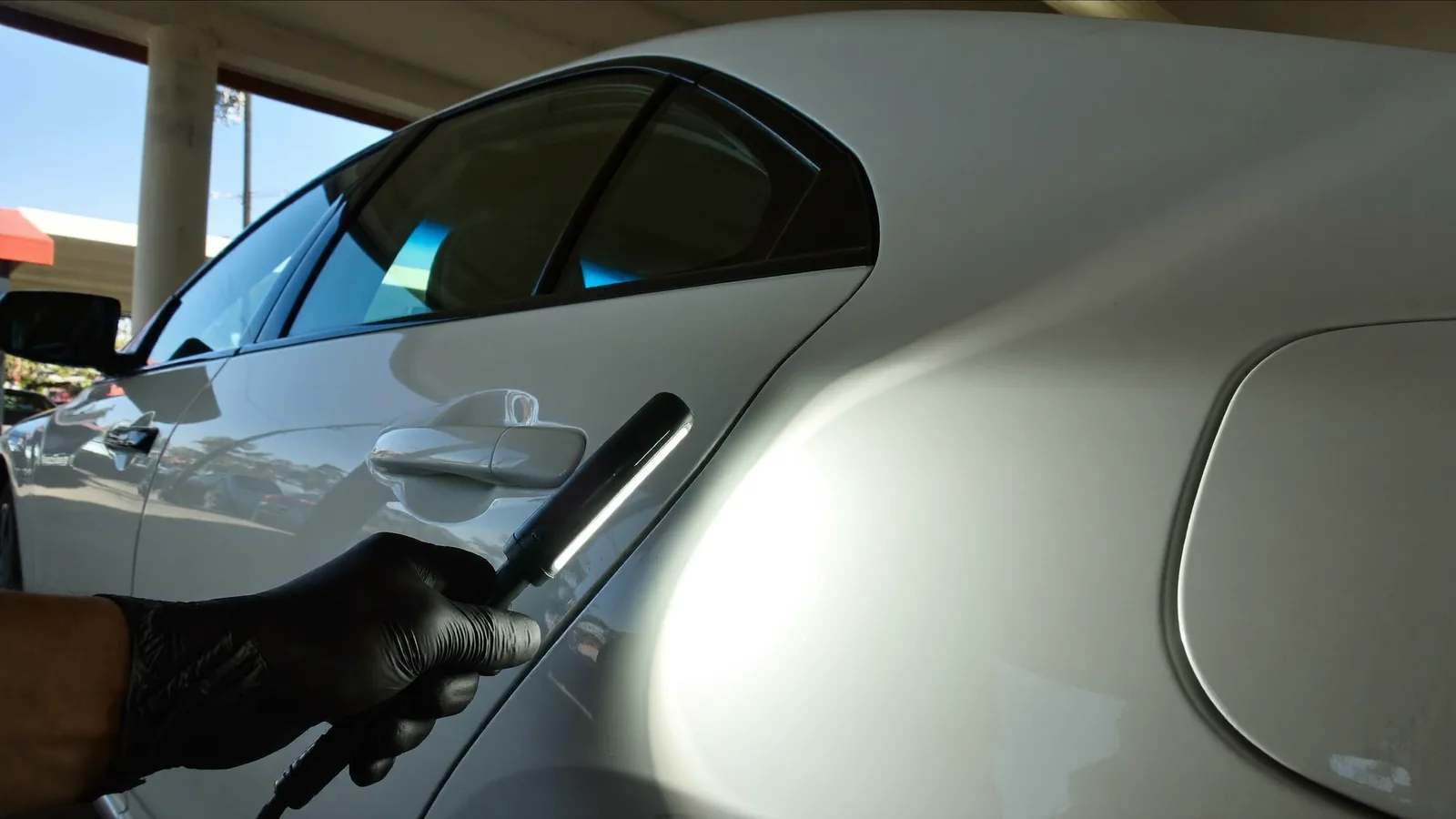
Look at the panel from a low angle. Faded paint looks flat or hazy. Peeling paint shows islands or sheets with an edge.
Check where it started. Roofs, hoods and trunk lids face the sun the most, so that is where trouble often shows first.
Run a clean fingertip lightly across the area. Chalky paint feels dry and rough. A lifted edge feels like a step. Do not pick at it.
Look for a different color or a dull layer showing through. That may suggest the clear coat has failed in that spot, but color or gray tone alone cannot tell you which layer you are seeing.
Steps, flakes or bare patches may suggest failed clear coat rather than oxidation. Have the panel looked at in person before you decide. AOA Detailing's guide draws the same line: oxidation is the breakdown of the clear coat, and clear coat failure is when it has peeled or flaked off.
Why can't polishing fix clear coat peeling?
Polishing works by removing a very thin layer of clear coat, so it needs clear coat to be there. If the layer is already flaking or missing, there is nothing sound left to level.
The numbers show how little there is to spare. I-CAR, a collision repair training group, says average base coat and clear coat finishes are about 4 to 6 mils thick, with the clear coat around 2 mils of that. A mil is one-thousandth of an inch. I-CAR also says that removing too much clear coat can cause hazing, discoloration, peeling and finish failure, because the clear coat provides the UV protection.
In its refinish troubleshooting guidance for chemical staining, Sherwin-Williams gives a similar limit for sanding and buffing: it says a minimum of 2 mils of clear coat is required for adequate ultraviolet protection, and recommends refinishing if correcting the damage would remove more than about half a mil. Those figures come from that refinish guidance and are not a universal threshold for every factory finish, but they show why technicians watch how much clear they take off.
PPG's fix for delamination is not polishing either. It says to sand the affected areas and refinish as needed. AOA Detailing's own guide puts it plainly: paint correction can fix oxidation, but it cannot repair clear coat failure, which requires repainting.
What can detailing do for paint that is peeling?
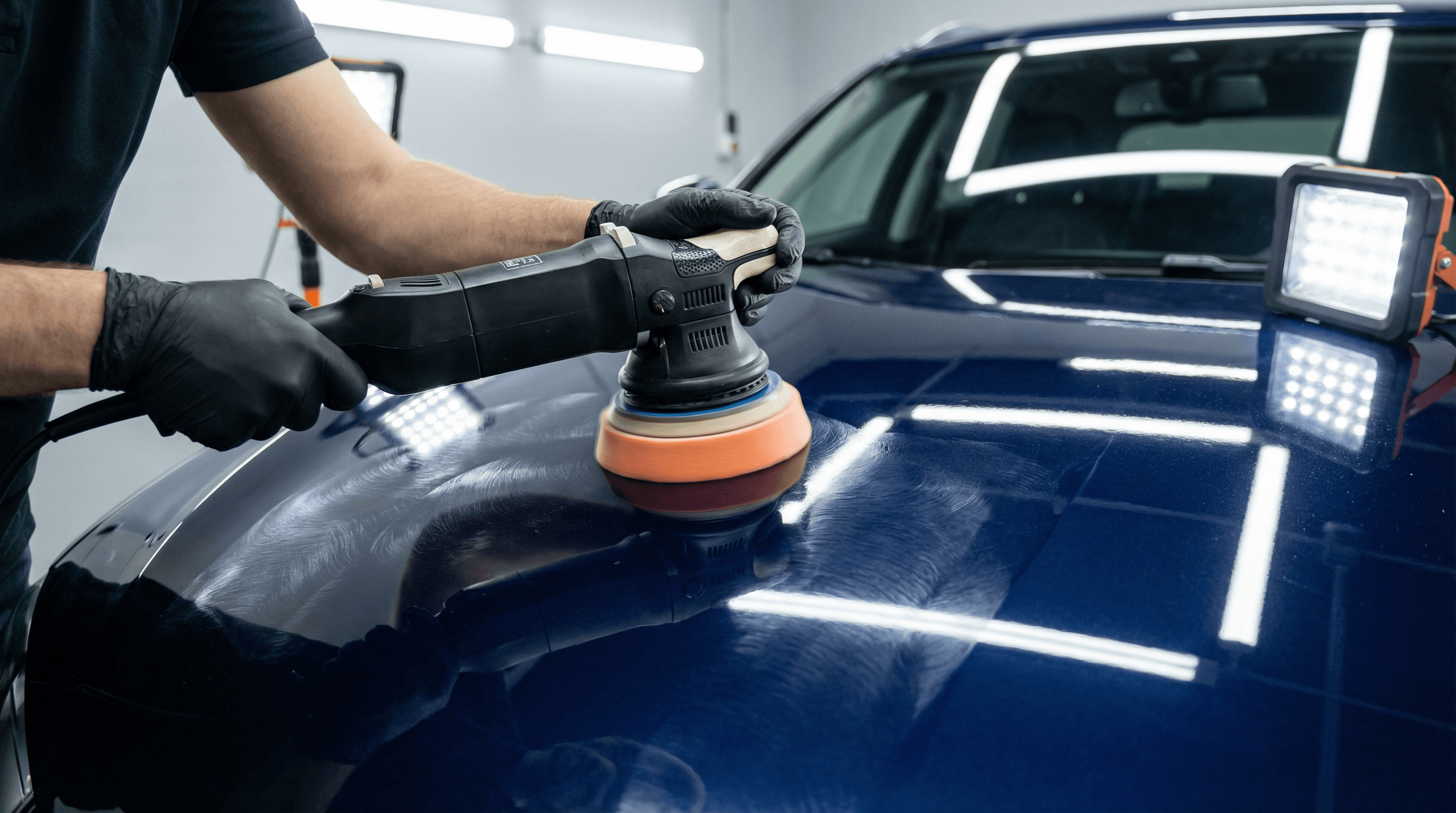
Detailing can clean the car, protect healthy paint and improve dull paint that is still sound. It cannot restore the clear coat that has failed.
Here is what that means in practice:
Dull paint on other panels. If the hood is peeling but the doors are only faded, paint correction may improve the faded panels. AOA Detailing's paint correction page lists oxidation correction among the services included.
A fair assessment. The page says the team will assess your vehicle's paint and recommend a package. That is a good first step if you are not sure which kind of damage you have.
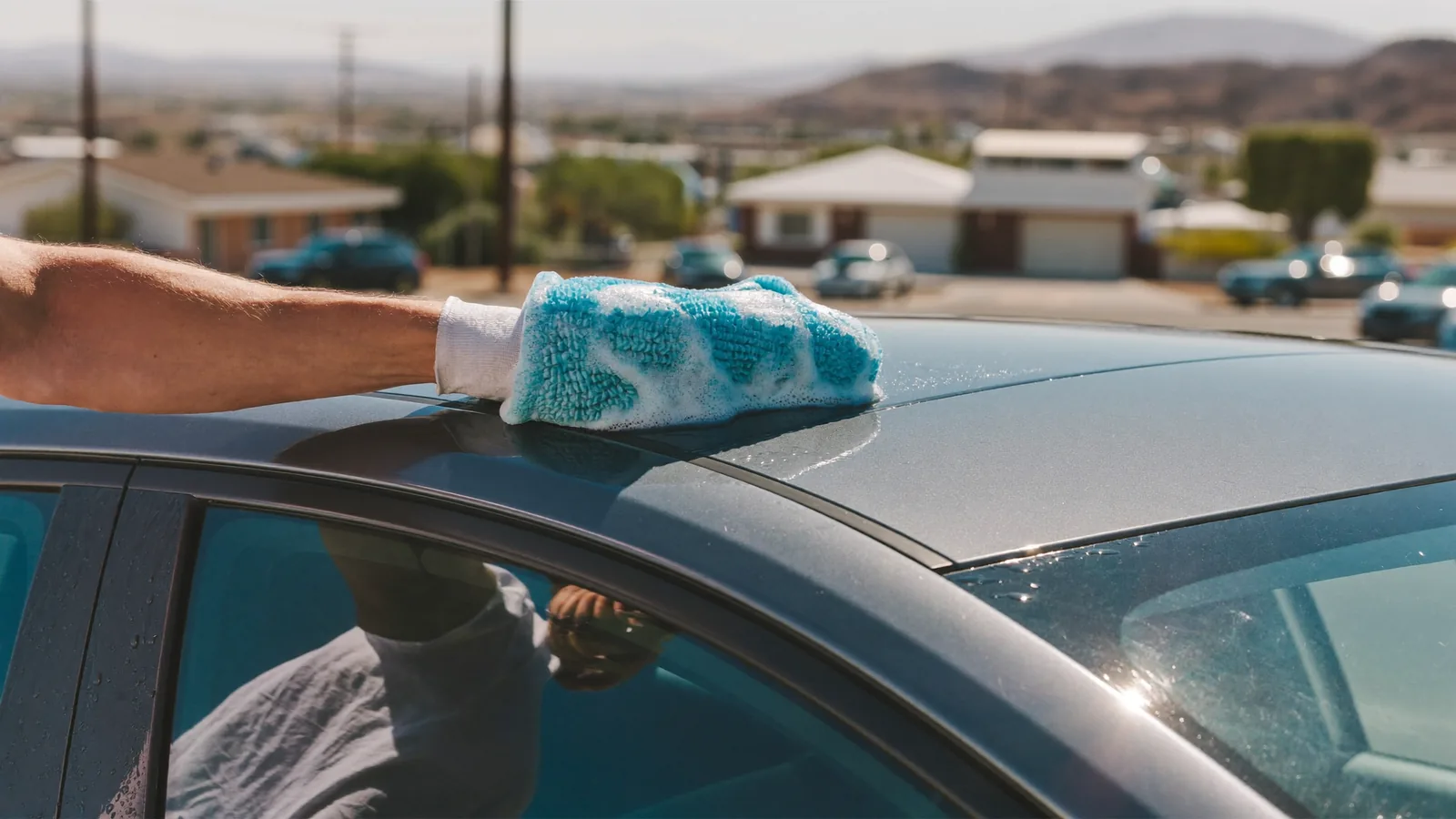
Cleaning and protection. A gentle wash keeps dirt from building up around the damaged area. Protection goes on paint that is intact.
What it will not do. Detailing will not reattach flakes, fill missing clear coat or hide a peeled patch for long. No wax, sealant or coating can bond loose clear coat to the panel.
You have three, and the right one depends on how much of the car is affected.
Leave it and protect the rest. For a small, stable spot, some owners choose to live with it. Know the trade-off: where the clear coat is gone, the color coat is exposed to the sun that the clear coat was there to block.
Have a body shop refinish the panel. This is the usual repair for a failed section. It means sanding the affected area and refinishing it, as PPG describes. Get a written quote, and ask how the shop will blend the new paint with the old.
Repaint more of the car. If several panels are failing, a larger repaint may make more sense than patching one panel at a time. A body shop can tell you how far the damage goes.
AOA Detailing is a mobile detailing service, and its services pages do not list repainting; that is an observation about the list, not a statement of what the team can or cannot do. For options two and three, ask a body shop. You can also ask AOA about the paint you want to keep.
What should you not do?
Some quick fixes make peeling clear coat worse. Avoid these:
Picking or peeling at the edges. It pulls more clear off and widens the patch.
Polishing or compounding the flaking area. It removes more of a thin layer and can take off clear coat that was still holding.
Spraying new clear coat over loose edges. New clear over lifting clear is not a repair. PPG's guidance is to sand the affected area first.
Aiming a pressure washer at the edges. Strong water may get under a lifted edge, so keep it away as a precaution. This is general guidance, not a manufacturer rule.
Expecting a coating to hold it down. Protection products are meant for sound paint, and a coating or sealant is not a repair for a failed finish.
How can you protect the paint that is still good?
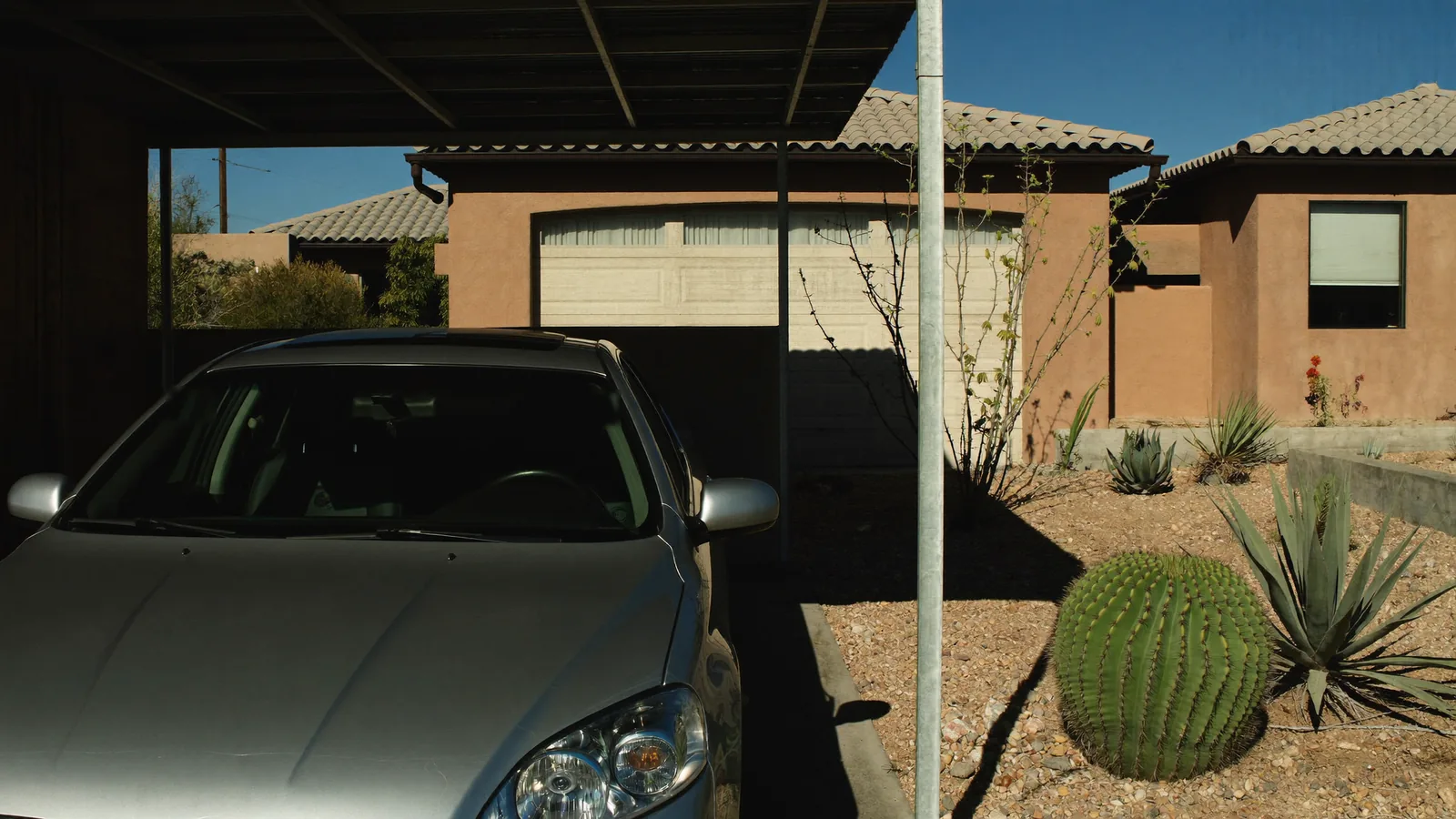
You cannot undo failed clear coat, but you may help slow wear on the panels that are still intact. Sherwin-Williams lists weekly washing and occasional polishing or waxing as prevention for chalky, oxidized paint. For Las Vegas drivers, that also means paying attention to where the car sits all day.
Wash regularly. Dust and grime scratch and dull the finish over time.
Deal with chips early. A chip that goes through the clear coat exposes the layers below. See our guide to rock chips and paint scratches.
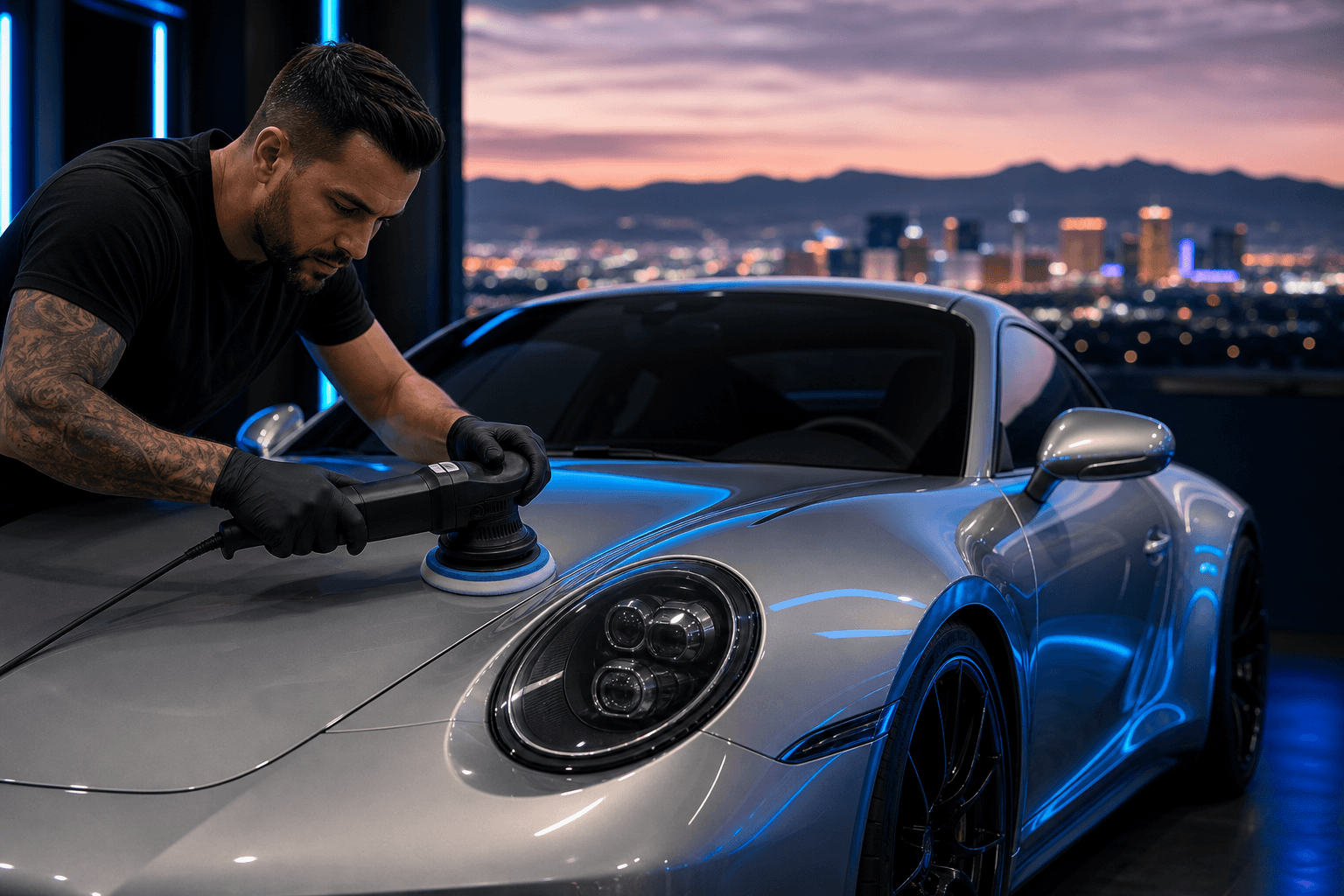
AI-generated illustration
FAQ
Can peeling clear coat be polished out?
No. Polishing removes a thin layer of clear coat, so it cannot restore clear coat that has lifted or is missing. Faded, chalky paint that is still sound can sometimes be improved with compounding and polishing, but peeling areas generally need sanding and refinishing.
Can I spray clear coat over the peeling area myself?
It is not a good idea. New clear coat sprayed over loose or lifting clear does not give a lasting bond. PPG's guidance for delamination is to sand the affected area and refinish it. Ask a body shop to look at it.
Will ceramic coating stop clear coat from peeling?
A ceramic coating or sealant goes on top of paint that is already sound, and it cannot reattach clear coat that has already come loose. It is a way to protect healthy paint, not a repair for a failed finish.
Can AOA Detailing look at my paint?
You can ask. The paint correction page says the team will assess your vehicle's paint and recommend a package, and AOA Detailing is a mobile service in Las Vegas. If your clear coat is peeling, ask which panels detailing can help and which need a body shop.
Ask AOA Detailing about your paint
Not sure whether your paint is fading or failing? Choose Book Now (Free Quote) or call (775) 244-5315 and describe what you see. You can also send a message. AOA Detailing is a mobile service in Las Vegas.