Why Aircraft Detailing Matters in the Las Vegas Desert
If you own or operate a private aircraft based out of Las Vegas, you already know the desert is tough on everything — and your plane is no exception. Between the intense UV radiation, abrasive sand carried on dry desert winds, and alkaline hard water that creeps into every crevice, the exterior and interior of an aircraft takes a constant beating out here.
I’m Kevin, founder of AOA Detailing, and over the years our team has detailed everything from sedans to RVs to private jets. Aircraft detailing is one of the most specialized services we offer, and it’s one I’m genuinely passionate about. The precision required, the scale of the surfaces, and the stakes involved make it a unique challenge — and the results are absolutely stunning when done right.
Whether your plane is hangared at Henderson Executive Airport, North Las Vegas Airport, or a private facility near Jean, this guide will walk you through why professional aircraft detailing matters, what the process involves, and how to keep your investment protected between services.
The Unique Challenges of Desert Aviation
The Mojave Desert creates a hostile environment for aircraft surfaces. Here’s what we’re up against:
UV Degradation — Las Vegas averages over 300 days of sunshine per year. That constant UV exposure oxidizes paint, fades gel coats, yellows windscreens, and degrades rubber seals at an accelerated rate compared to aircraft based in milder climates.
Abrasive Dust and Sand — Fine particulate from the surrounding desert settles on every surface. When wiped incorrectly or left to accumulate, these micro-particles act like sandpaper on your aircraft’s finish, creating fine scratches and dulling the paint over time.
Hard Water and Mineral Deposits — Southern Nevada’s notoriously hard water leaves calcium and mineral deposits on surfaces when it evaporates. On an aircraft, these spots can etch into the clear coat and become permanent without proper treatment.
Temperature Extremes — Surface temperatures on a parked aircraft can exceed 160°F during summer months. This heat accelerates chemical breakdown of protective coatings and makes contamination removal more difficult as substances bake into the surface.
What Professional Aircraft Detailing Includes
Aircraft detailing is not just a car wash on a bigger scale. It’s a methodical, multi-stage process that requires specialized products rated safe for aviation-grade paints, composites, acrylics, and metals. Our aircraft detailing service covers both exterior and interior, tailored to your specific aircraft type and condition.
A comprehensive detail typically includes:
- Full exterior wash and decontamination — aviation-safe cleaners only
- Paint correction for oxidation and swirl marks on painted surfaces
- Brightwork polishing — leading edges, exhaust stains, and bare metal surfaces
- Window and windscreen treatment — acrylic-safe polish and UV protectant
- Landing gear cleaning and protection
- Full interior deep clean — carpets, leather, plastics, and avionics panels
- Ceramic coating application for long-term exterior protection
Exterior Aircraft Detailing: Step by Step
The exterior is where the desert does its worst damage. Here’s how we approach it:
1. Pre-Rinse and Loose Contaminant Removal
We start with a thorough rinse to remove loose sand and debris. This is critical — skipping this step means dragging abrasive particles across the surface during the wash, which creates the very scratches we’re trying to prevent. We use filtered, low-mineral water whenever possible to avoid adding new water spots during the rinse.
2. Aviation-Safe Wash
We use pH-neutral, aviation-approved cleaning solutions that are safe for painted surfaces, composites, bare aluminum, and acrylic windows. Household or automotive soaps can damage aircraft finishes and are never used. The wash is performed by hand using ultra-soft microfiber mitts, working in sections from top to bottom.
3. Decontamination
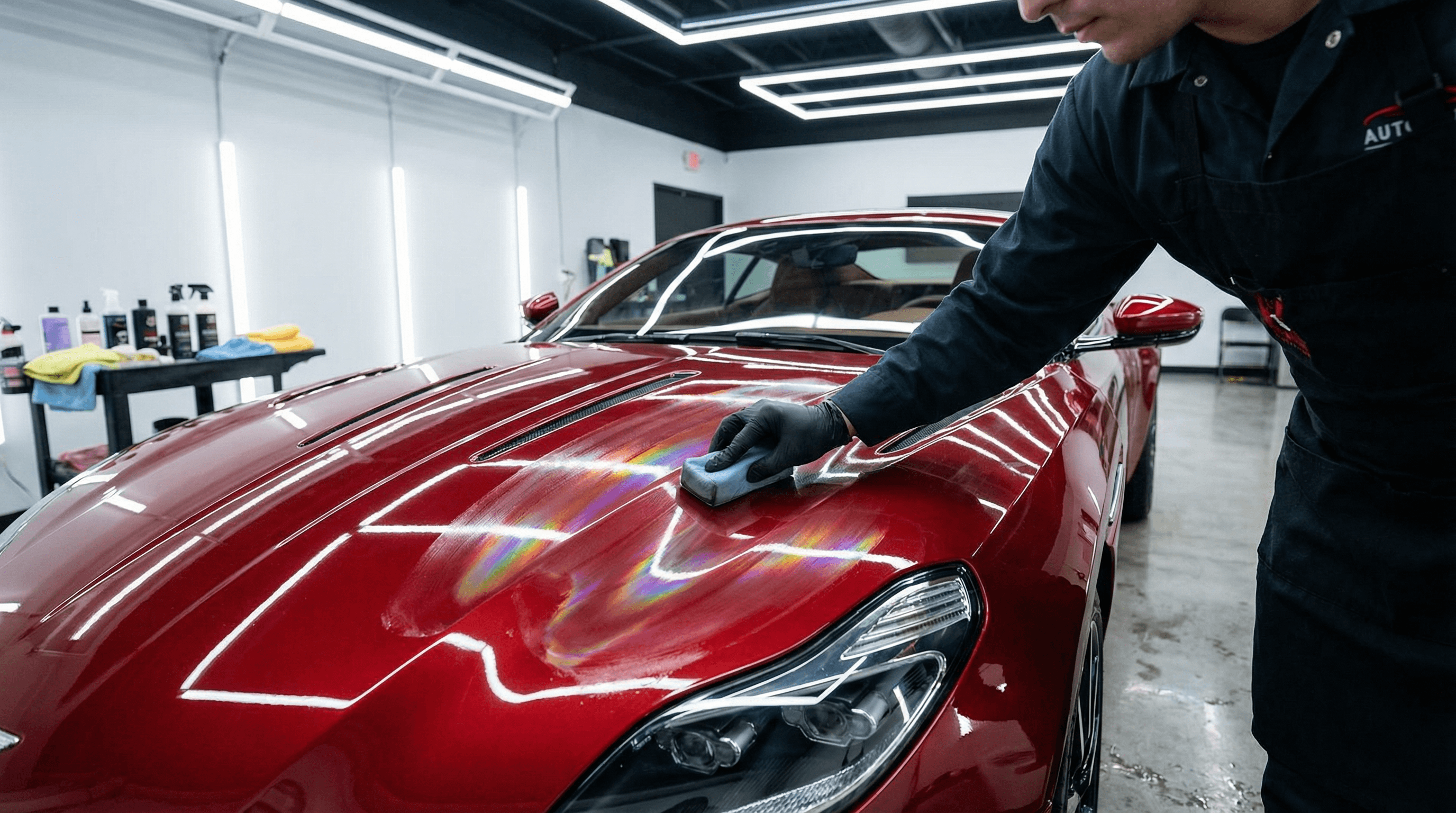
After washing, we treat the surface with an iron and fallout remover to dissolve embedded metallic particles and industrial contamination. For aircraft based near the Las Vegas Strip or McCarran area, runway fallout and jet exhaust residue can be significant. A clay bar treatment follows for any remaining bonded contaminants.
4. Paint Correction and Polishing
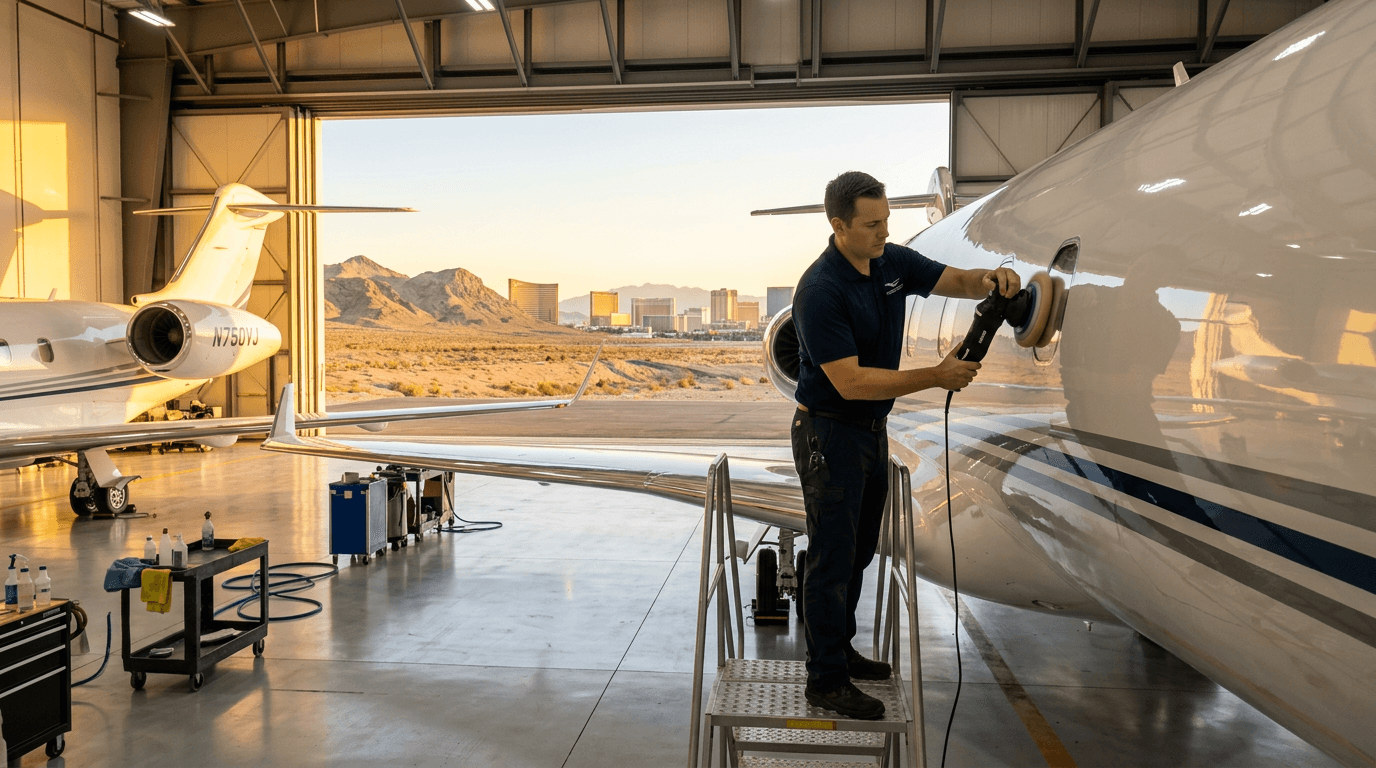
This is where transformation happens. Using a dual-action polisher with aviation-safe compounds, we remove oxidation, fine scratches, and swirl marks. For heavily oxidized surfaces — common on aircraft that sit outside near Henderson or North Las Vegas — a multi-stage paint correction may be necessary.
5. Brightwork and Metal Polishing
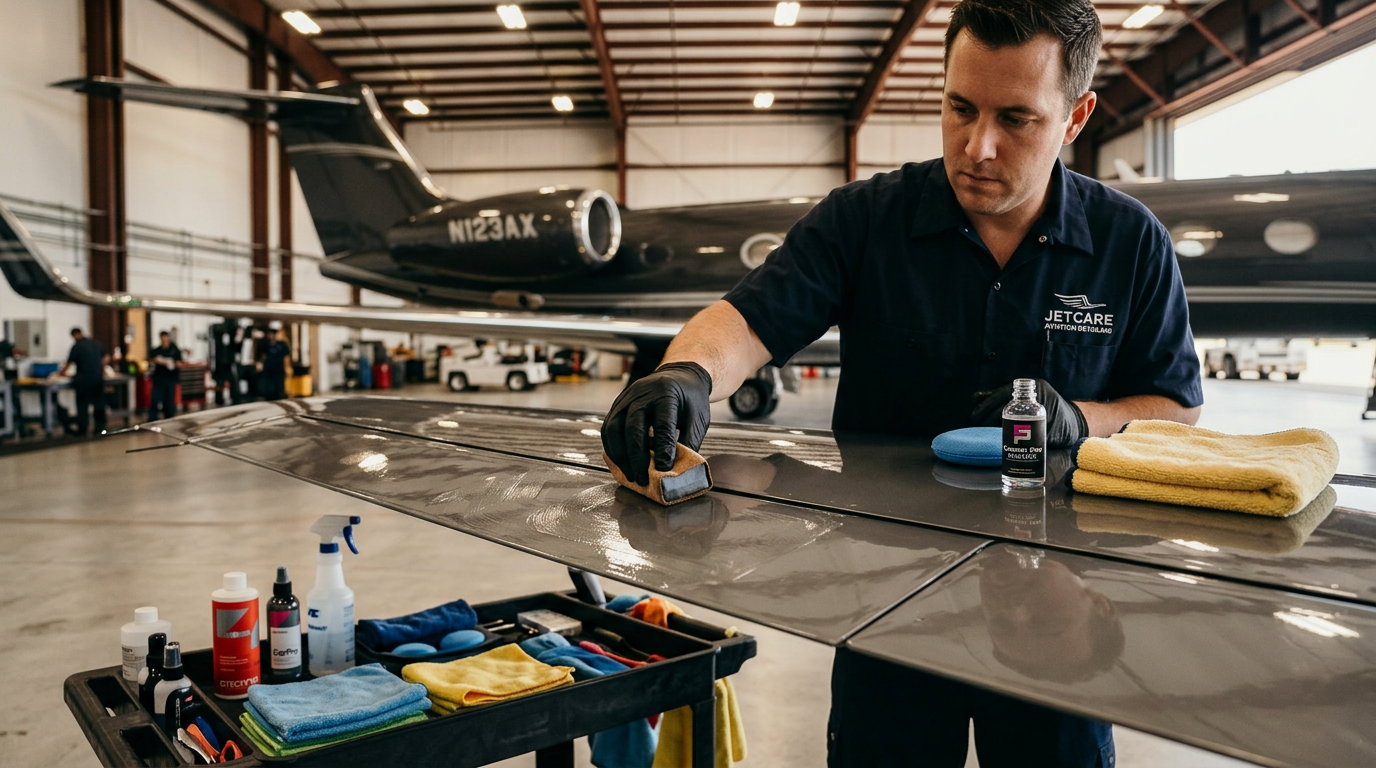
Bare aluminum leading edges, exhaust-stained areas, and metal trim require specialized metal polishes. We restore these surfaces to a mirror finish while applying a protective sealant that slows future oxidation.
6. Protection Application
The final step is applying a protective layer. For maximum durability in the desert, we recommend a professional-grade ceramic coating over the entire painted exterior. More on this below.
Interior Aircraft Detailing: Cabin and Cockpit
The cabin of a private aircraft is a premium environment, and the materials reflect that — fine leather, exotic wood veneers, polished metals, and sensitive avionics. Our interior process is meticulous:
Leather Care — We clean all leather surfaces with pH-balanced leather cleaners, then condition with a UV-blocking protectant to prevent cracking and fading. In the Las Vegas heat, untreated leather can crack and discolor within a single season.
Carpet and Upholstery — Deep extraction cleaning removes embedded dirt and allergens. For high-traffic areas, we use low-moisture methods that won’t create mildew risks in the enclosed cabin.
Plastics and Trim — All plastic surfaces, including instrument panel surrounds and side panels, are cleaned and dressed with a non-greasy UV protectant that prevents fading without creating distracting glare for the pilot.
Windows and Screens — Acrylic aircraft windows require special care. We never use ammonia-based products or abrasive pads. Instead, we use acrylic-safe cleaners and soft microfiber to restore optical clarity without micro-scratching.
Galley and Lavatory — For larger cabin aircraft, we deep-clean and sanitize these areas using aviation-approved disinfectants.
The result is a cabin that looks, feels, and smells like it just rolled out of the completion center. Our approach is similar to the thoroughness of our interior detailing for vehicles, scaled up to meet aviation standards.
Ceramic Coating for Aircraft: Long-Term Protection
This is where the real long-term value lies. A professional-grade ceramic coating creates a semi-permanent, hydrophobic barrier over your aircraft’s painted surfaces. Here’s why it’s especially valuable for Las Vegas-based aircraft:
UV Resistance — The SiO2-based coating blocks a significant portion of UV radiation, dramatically slowing oxidation and color fading.
Hydrophobic Surface — Water and contaminants bead up and roll off, reducing the accumulation of hard water spots and making routine cleaning far easier.
Chemical Resistance — The coating resists etching from bird droppings, insect residue, and de-icing chemicals.
Reduced Maintenance Costs — With a ceramic-coated aircraft, routine washes take less time and product, and the intervals between full details can be extended.
In our experience, a properly applied ceramic coating on an aircraft based in the Las Vegas area can last 2-3 years with proper maintenance — far outperforming traditional wax or sealant products that degrade within weeks under our desert sun.
From our hangar to yours: AOA Detailing provides mobile aircraft detailing services across the Las Vegas valley. We come to your hangar at Henderson Executive, North Las Vegas Airport, or private facilities throughout Summerlin and Boulder City. Call us at (775) 244-5315 for a consultation.
How Often Should You Detail Your Aircraft?
The frequency depends on usage and storage conditions, but here are our general recommendations for Las Vegas-based aircraft:
| Storage Condition |
Detail Frequency |
Notes |
| Hangared full-time |
Every 6 months |
Minimal exposure; focus on interior and light exterior maintenance |
| Shade structure / covered |
Every 3-4 months |
Dust accumulation still occurs; UV partially blocked |
| Outdoor / ramp-parked |
Every 2-3 months |
Full exposure; priority on exterior protection and decontamination |
Between full details, a monthly maintenance wash is recommended to remove surface dust and prevent contamination from bonding to the surface. If your aircraft has a ceramic coating, these maintenance washes are quick and straightforward.
Choosing the Right Aircraft Detailing Service in Las Vegas
Not every detailing operation is equipped to handle aircraft. Here’s what to look for:
-
Aviation-specific product knowledge — Standard automotive products can damage aircraft finishes. Your detailer should use aviation-approved cleaners, polishes, and coatings.
-
Insurance and credentials — Aircraft are high-value assets. Verify that your detailing provider carries appropriate insurance and has experience with aviation clients.
-
Mobile capability — Most aircraft can’t be driven to a detail shop. Look for a service that comes to your hangar with all necessary equipment, including generators, filtered water, and proper lighting.
-
Experience with various aircraft types — From single-engine piston aircraft to large-cabin jets, each type has different materials, surfaces, and requirements.
At AOA Detailing, we bring the same precision and quality to aircraft that we apply to our automotive clients. With years of experience serving the Las Vegas valley — from luxury vehicles in Spring Valley to private jets at Henderson Executive — we understand how the desert affects every type of surface.
Frequently Asked Questions
How long does a full aircraft detail take?
It depends on the aircraft size and condition. A light single-engine aircraft typically takes 4-6 hours for a full interior and exterior detail. A midsize jet can take 8-12 hours, and large-cabin aircraft may require a full day or more, especially if paint correction is involved.
Can you detail my aircraft at my hangar?
Absolutely. We’re a fully mobile operation. We bring everything needed — filtered water, power, lighting, and all products — directly to your hangar anywhere in the Las Vegas metro area.
Is ceramic coating safe for aircraft paint?
Yes, when using aviation-rated ceramic coatings applied by experienced professionals. The coating bonds to the surface without altering the paint’s properties and can be removed by polishing if needed in the future.
Do you work on helicopters too?
Yes. Helicopter detailing follows a similar process with additional attention to rotor assemblies, skid gear, and the unique contours of rotorcraft fuselages.
What’s the cost of aircraft detailing in Las Vegas?
Pricing varies significantly based on aircraft size, condition, and services requested. Contact us at (775) 244-5315 or email info@aoa-detailing.com for a personalized quote.
Kevin, Founder of AOA Detailing, has been providing professional detailing services across the Las Vegas valley for years. AOA Detailing serves Las Vegas, Henderson, Summerlin, North Las Vegas, Spring Valley, and Boulder City. Call (775) 244-5315 for a free consultation.