RV Detailing in Las Vegas: How to Remove Oxidation, Black Streaks, and Desert Grime
Share
The Las Vegas Desert Is Brutal on Your RV
If you own an RV in Las Vegas, you already know the desert doesn’t play fair. The combination of extreme UV radiation, 115°F summer temperatures, alkaline dust, and hard water creates conditions that destroy unprotected surfaces faster than almost anywhere else in the country. What might take three or four years of wear in a milder climate happens in one Las Vegas summer.
I’ve detailed hundreds of RVs across the Las Vegas Valley, and the damage pattern is always the same: oxidized gelcoat or fiberglass on the roof and upper panels, black streaks running down the sides, and a chalky, faded finish that makes a $150,000 motorhome look abandoned. The good news? Most of it is reversible with the right process.
This guide covers exactly what causes the most common RV damage in our desert climate, how professional detailing addresses each issue, and what you can do to protect your investment long-term.
The Three Biggest Problems for Las Vegas RVs
1. Oxidation: The Silent Paint Killer
Oxidation is the number one enemy of RV finishes in Las Vegas. It happens when UV radiation breaks down the molecular bonds in your gelcoat or clear coat, causing the surface to turn chalky, dull, and faded. On a white RV, oxidation shows up as a chalky residue that transfers to your hand when you touch the surface. On colored panels, it looks like the color has been bleached out.
The Las Vegas UV index regularly hits 11 or higher during summer months — classified as “extreme” by the EPA. Your RV’s roof absorbs the full force of that radiation every single day. Without proper protection, the oxidation process accelerates dramatically.
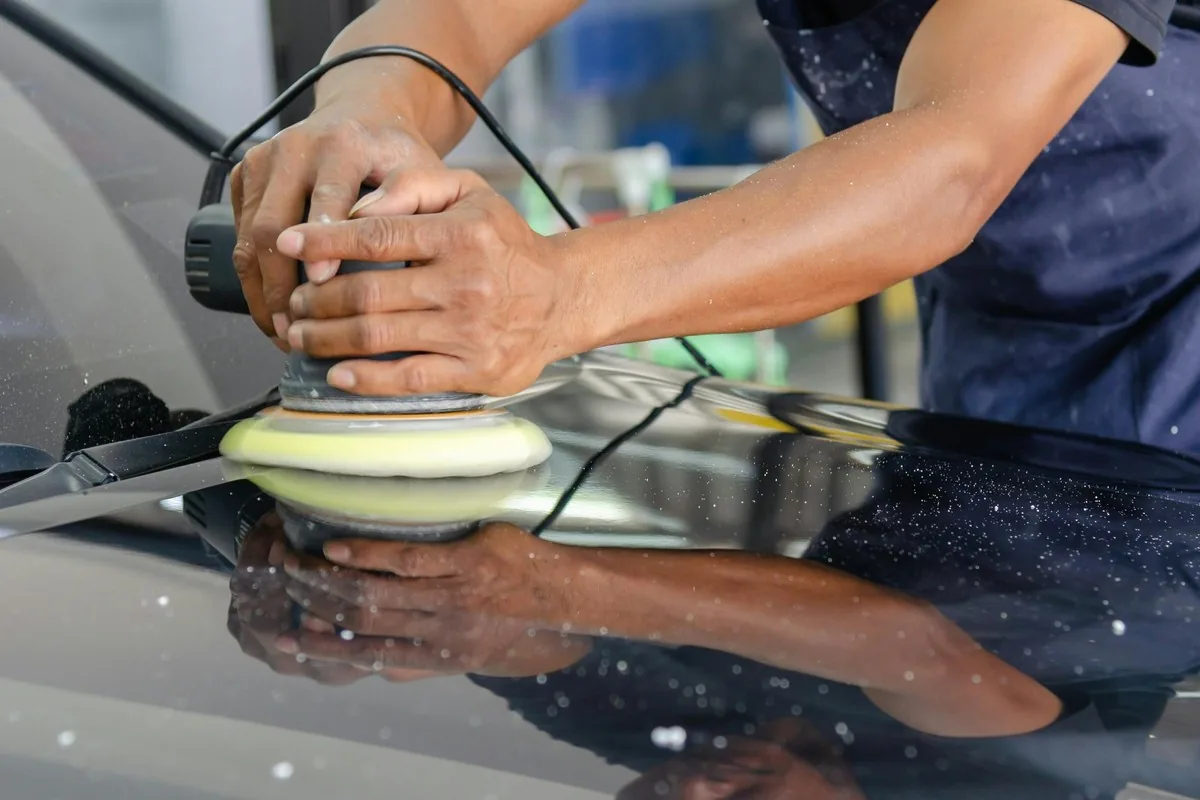
What professional detailing does: We use a multi-stage compound and polish process to mechanically remove the oxidized layer and restore the underlying gelcoat or paint. For severe oxidation, this involves a heavy-cut compound followed by a medium polish to refine the surface. The result is a dramatically improved finish that looks years younger.
2. Black Streaks: Where They Come From and How to Remove Them
Those dark vertical streaks running down the sides of your RV aren’t just dirt — they’re a combination of oxidized rubber from roof seals, road grime, and environmental fallout that has bonded to the surface. Standard washing won’t touch them. They require a specific chemical approach.
In Las Vegas, the problem is compounded by the alkaline dust that settles on every surface. When that dust mixes with moisture from morning dew or rain, it creates a mildly caustic solution that etches into the surface and makes the streaks even harder to remove.
What professional detailing does: We use a dedicated black streak remover — a pH-balanced chemical that breaks down the organic and mineral compounds without damaging the underlying surface. After chemical treatment, we follow with a clay bar decontamination to remove any remaining embedded particles. The result is a streak-free surface that’s properly prepared for protection.
3. Desert Dust and Hard Water Spots
Las Vegas Valley sits in a natural basin that traps fine alkaline dust. This dust is abrasive — every time it’s wiped off without proper lubrication, it creates micro-scratches in the surface. Over time, those micro-scratches accumulate into a dull, hazy finish.
Hard water is the other culprit. Las Vegas has some of the hardest water in the country, with high calcium and magnesium content. When water evaporates on your RV’s surface, it leaves behind mineral deposits that etch into unprotected gelcoat or paint. Left untreated, these spots become permanent.
What professional detailing does: We use a chemical decontamination process with an iron remover and clay bar to lift embedded particles and mineral deposits. For established hard water etching, a light polish removes the damaged surface layer and restores clarity.
5.0 Google Rating
Get a Free Quote Today
Premium mobile auto detailing delivered to your driveway. Same-week availability across Las Vegas Valley.
A proper RV detail isn’t a single step — it’s a systematic process that addresses each type of contamination in the right order. Here’s how we approach it at AOA Detailing:
Step 1: Pre-Wash and Inspection
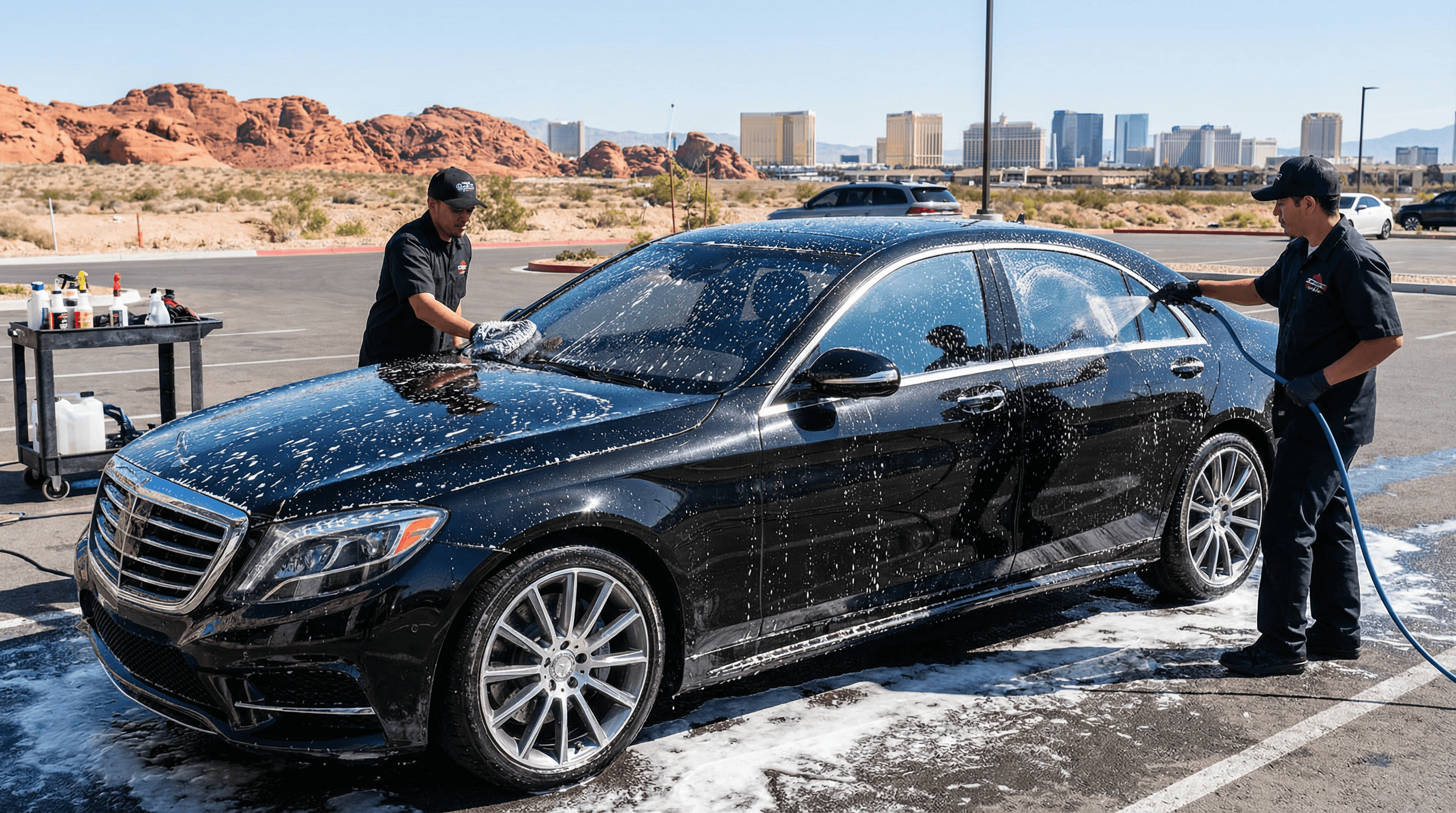
We start with a thorough rinse to remove loose dust and debris, followed by a visual inspection to identify areas of heavy oxidation, black streaks, and hard water etching. This lets us plan the chemical and mechanical approach for each section.
Step 2: Chemical Decontamination
We apply a pH-neutral wash, followed by an iron remover to dissolve embedded brake dust and industrial fallout. For black streaks, we apply a dedicated streak remover and allow it to dwell before agitation.
Step 3: Clay Bar Treatment
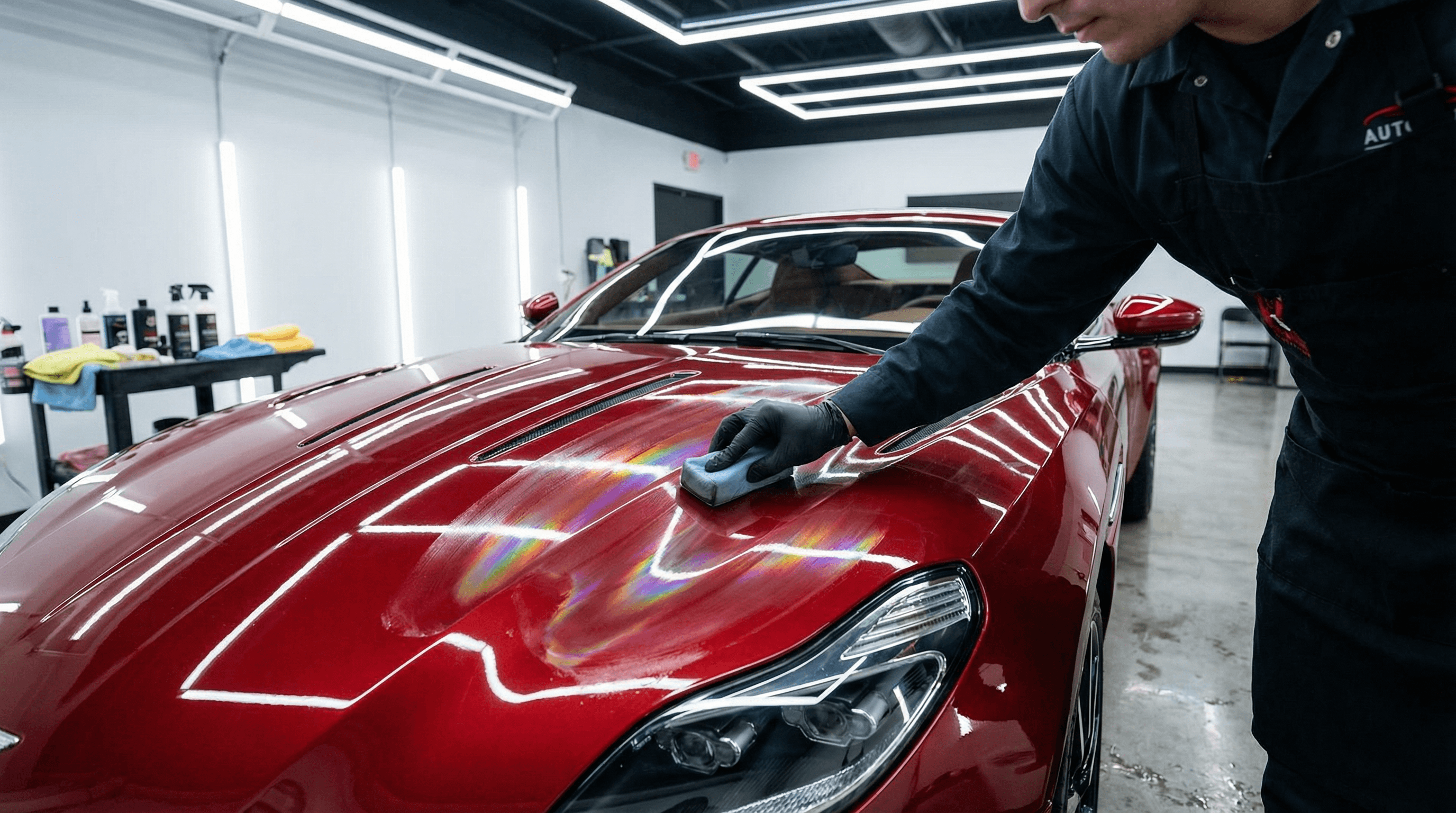
After chemical decontamination, we clay bar the entire surface to remove any remaining embedded contaminants. After this step, the surface should feel perfectly smooth to the touch.
Step 4: Oxidation Removal and Polishing
This is the most time-consuming step. We use a dual-action polisher with appropriate compounds and pads to remove the oxidized layer and restore gloss. For an average 35-foot motorhome, this step alone takes 4–6 hours.
Step 5: Protection Application
A freshly polished RV surface is vulnerable — without protection, it will begin oxidizing again immediately. We recommend a ceramic coating for long-term protection, or at minimum a high-quality sealant. For RVs, ceramic coating is particularly valuable because it creates a hydrophobic barrier that repels the alkaline dust and hard water that cause so much damage in our climate.
Why Ceramic Coating Makes Sense for Las Vegas RVs
If you’ve just invested in a full oxidation removal and polish, protecting that work with a ceramic coating is the logical next step. Here’s why it makes particular sense for RV owners in Las Vegas:
Dust repulsion: The hydrophobic surface created by ceramic coating means alkaline dust doesn’t bond to the surface the way it does to unprotected gelcoat. Maintenance washes become dramatically easier.
UV protection: A quality ceramic coating blocks a significant percentage of UV radiation, dramatically slowing the oxidation process. Instead of needing a full correction every 1–2 years, a coated RV can go 5+ years before needing significant paint work.
Black streak prevention: The non-porous, slick surface of a ceramic coating makes it much harder for black streak compounds to bond. When they do appear, they wipe off easily instead of requiring chemical treatment.
Resale value: A well-maintained, ceramic-coated RV commands a premium on the resale market. Buyers can see the difference in the finish quality.
“Kevin did an incredible job on our 38-foot Class A. The oxidation on the roof was severe and it came out looking brand new. Highly recommend AOA for any RV owner in Las Vegas.”
D
Dave R.
Henderson, NV
“The black streaks on the sides of our motorhome had been there for years. One session with AOA and they were completely gone. The ceramic coating they applied has kept it clean ever since.”
L
Linda M.
Summerlin, NV
How Often Should You Detail Your RV in Las Vegas?
Given the harsh desert environment, we recommend:
Full detail with oxidation removal: Every 12–18 months for unprotected RVs; every 2–3 years for ceramic-coated RVs
Maintenance wash: Every 4–6 weeks to prevent dust and streak buildup
Roof inspection and seal treatment: Every 6 months to prevent water intrusion and rubber seal degradation
Book Your RV Detail
AOA Detailing is fully mobile — we come to your home, storage facility, or campsite anywhere in the Las Vegas Valley, including Henderson, Summerlin, North Las Vegas, and surrounding areas. We work on all RV types: Class A motorhomes, Class B campervans, Class C motorhomes, fifth wheels, and travel trailers.
Get a free quote for your RV detail and we’ll assess the condition of your rig and recommend the right service package. Your RV represents a significant investment — protect it like one.