Winter Car Care in Las Vegas: Why It’s Different From Other Climates
Most winter car care advice online is written for drivers dealing with snow, road salt, and freezing rain every day. That is not the Las Vegas experience, and following those guides too literally can lead valley drivers to either ignore winter care entirely or spend money on the wrong protection.
What we actually deal with here is different but not gentler. Overnight lows regularly dip into the high 30s and low 40s from December through February, sometimes lower in outlying areas like North Las Vegas and Spring Valley, while daytime highs can still climb into the 60s. That 25- to 30-degree daily swing puts real stress on paint, seals, and plastics through repeated expansion and contraction. Add in relative humidity that frequently sits below 20 percent, and you have a climate that dries out rubber and interior materials just as aggressively in January as it does in July — just without the visible heat damage drivers already know to watch for.
Kevin founded AOA Detailing to give Las Vegas vehicles mobile, appointment-based care at home or work, and winter is when he sees the most avoidable damage from owners who assume their car is “fine” because it is not baking in July anymore. AOA serves Las Vegas, Henderson, Summerlin, North Las Vegas, Spring Valley, and Boulder City, all within a 25-mile service radius.
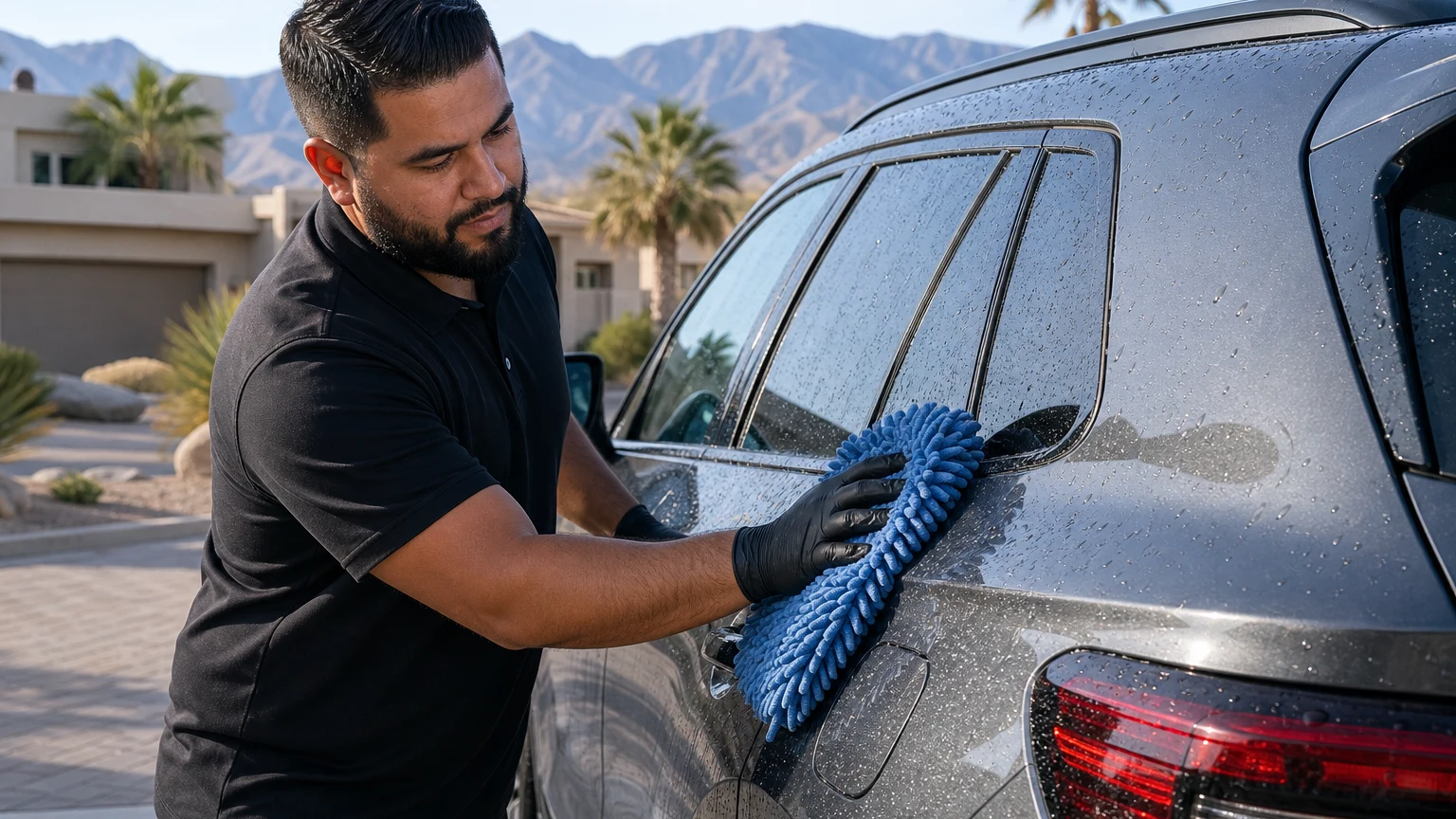
What Cold Mornings Do to Your Paint
Clear coat and any protective layer over it — wax, sealant, or ceramic coating — is a thin polymer film that expands and contracts with temperature. In a climate with a wide daily swing, that film goes through more expansion cycles per week than it would somewhere with a stable winter climate, and each cycle creates a small amount of stress at the microscopic level.
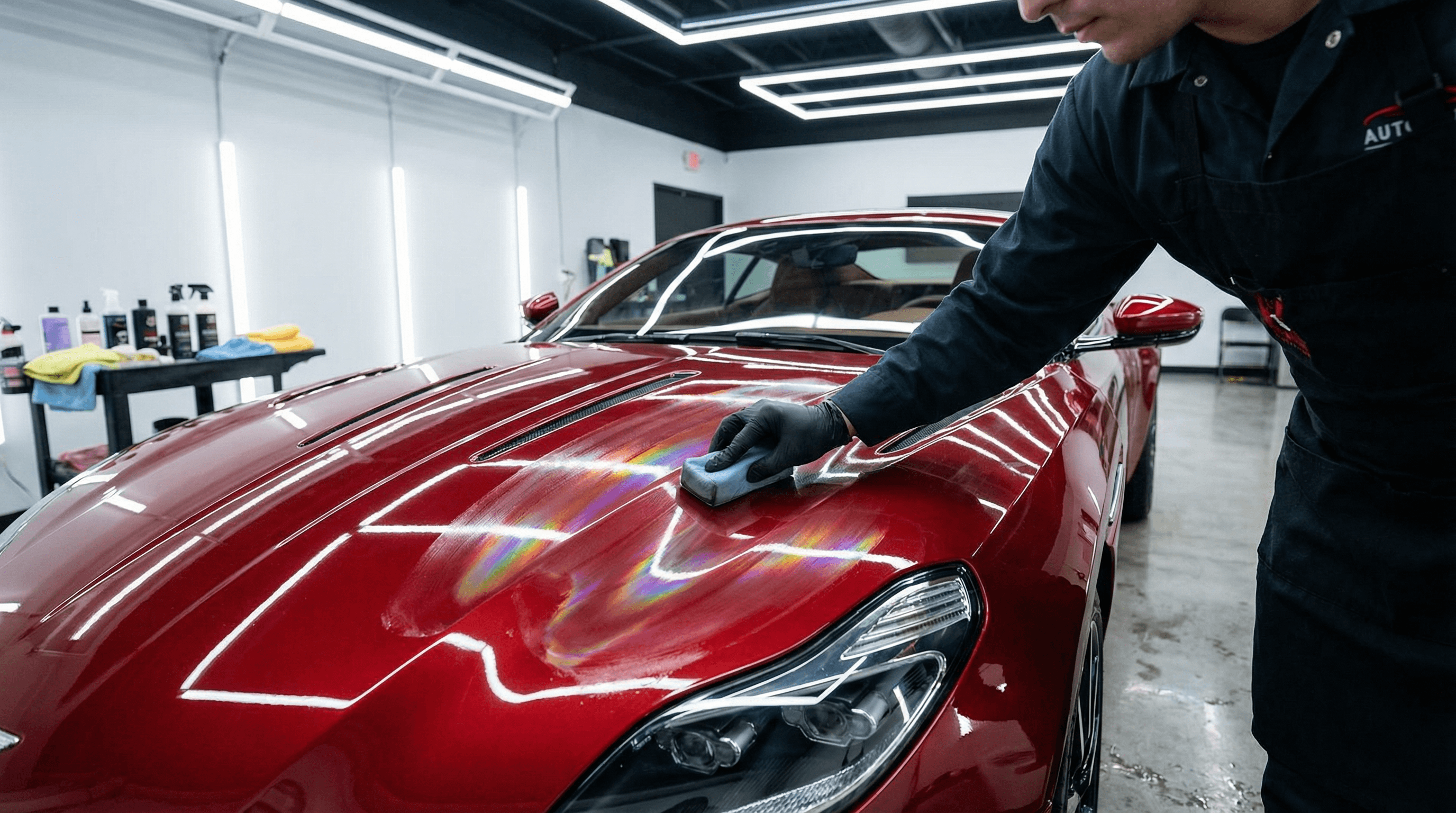
On its own, that is manageable. The problem is what is usually still sitting on the paint underneath: bonded brake dust, mineral deposits from irrigation overspray, bird droppings, and the fine construction and desert dust that never fully stops in the valley. Cold mornings slow down the natural process that would otherwise let a fresh wax or sealant layer cure and bond properly, so protection applied in a rush during a cold snap often does not hold up as well as the same product applied on a mild day.
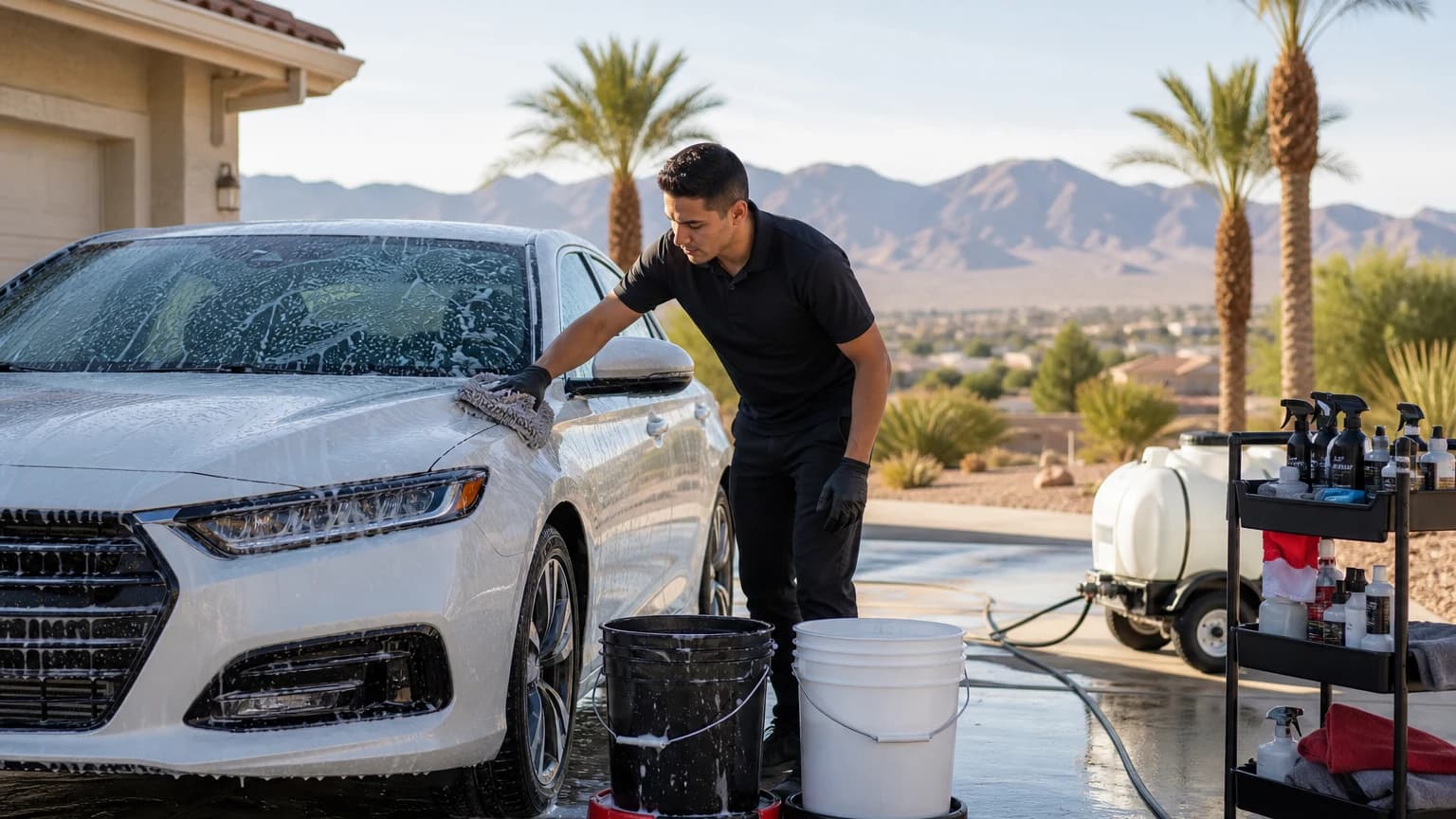
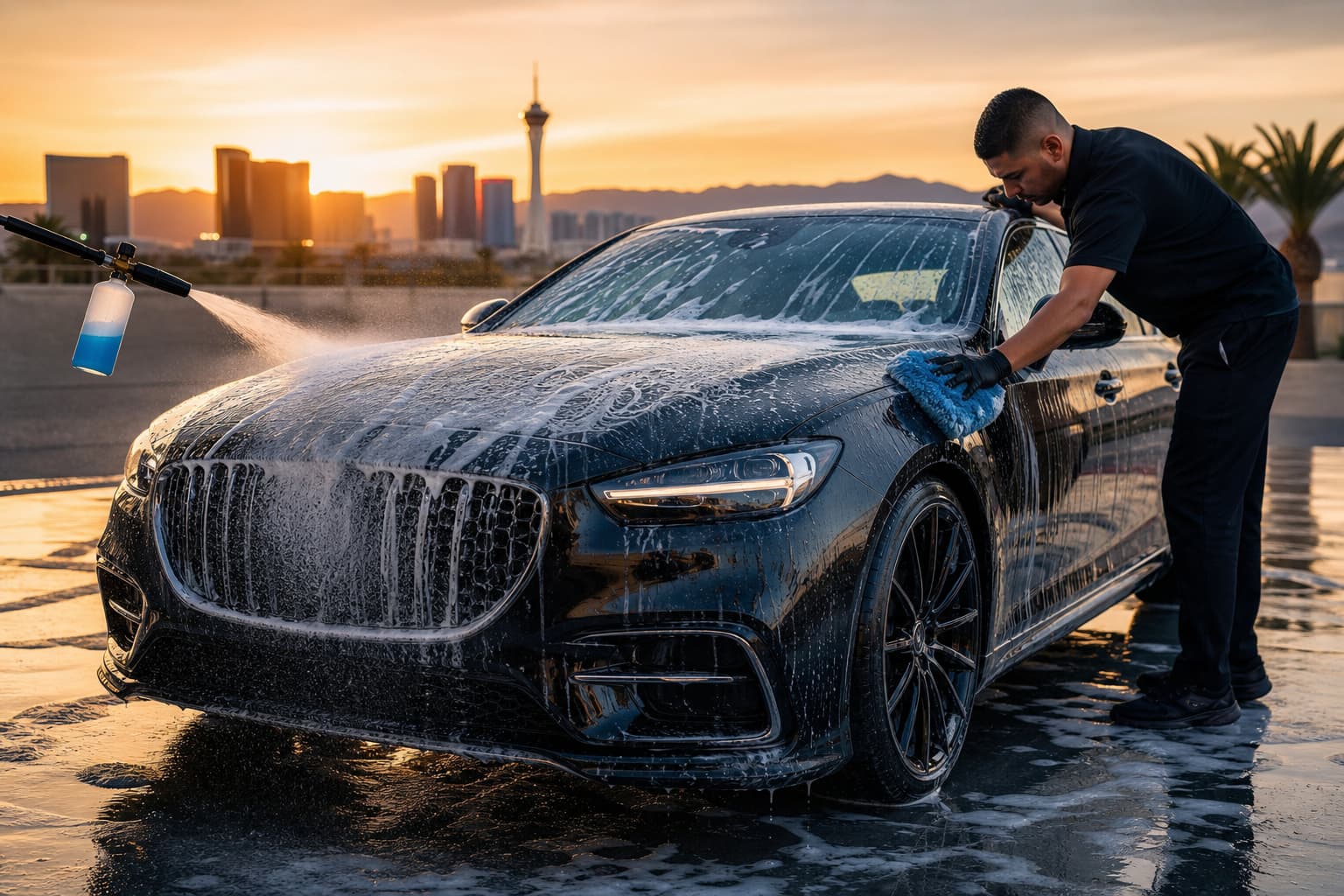
The most common mistake Kevin sees is drivers who stop washing their car as often once temperatures drop, assuming winter grime is less aggressive than summer grime. It usually is not — irrigation runoff and hard water spotting are just as common in December as in July, and left untreated they etch into clear coat over weeks. A guide to hard water spot damage in Las Vegas covers exactly how that etching happens and why it is easier to prevent than correct.
Dry Desert Air Is Hard on Rubber and Trim
Every seal, gasket, and piece of exterior trim on your car is rubber or a rubber-like compound, and rubber needs a small amount of moisture to stay flexible. Las Vegas humidity rarely offers that moisture, and winter is often the driest stretch of the year here.
Door and trunk seals are usually the first casualty. Once they dry out, they lose their ability to compress evenly, which is why owners of older vehicles sometimes notice a new wind noise or a faint musty smell inside the cabin for the first time in winter — the seal is no longer sealing. Wiper blades dry out the same way, which is inconvenient given that winter is also when the valley sees most of its rain.
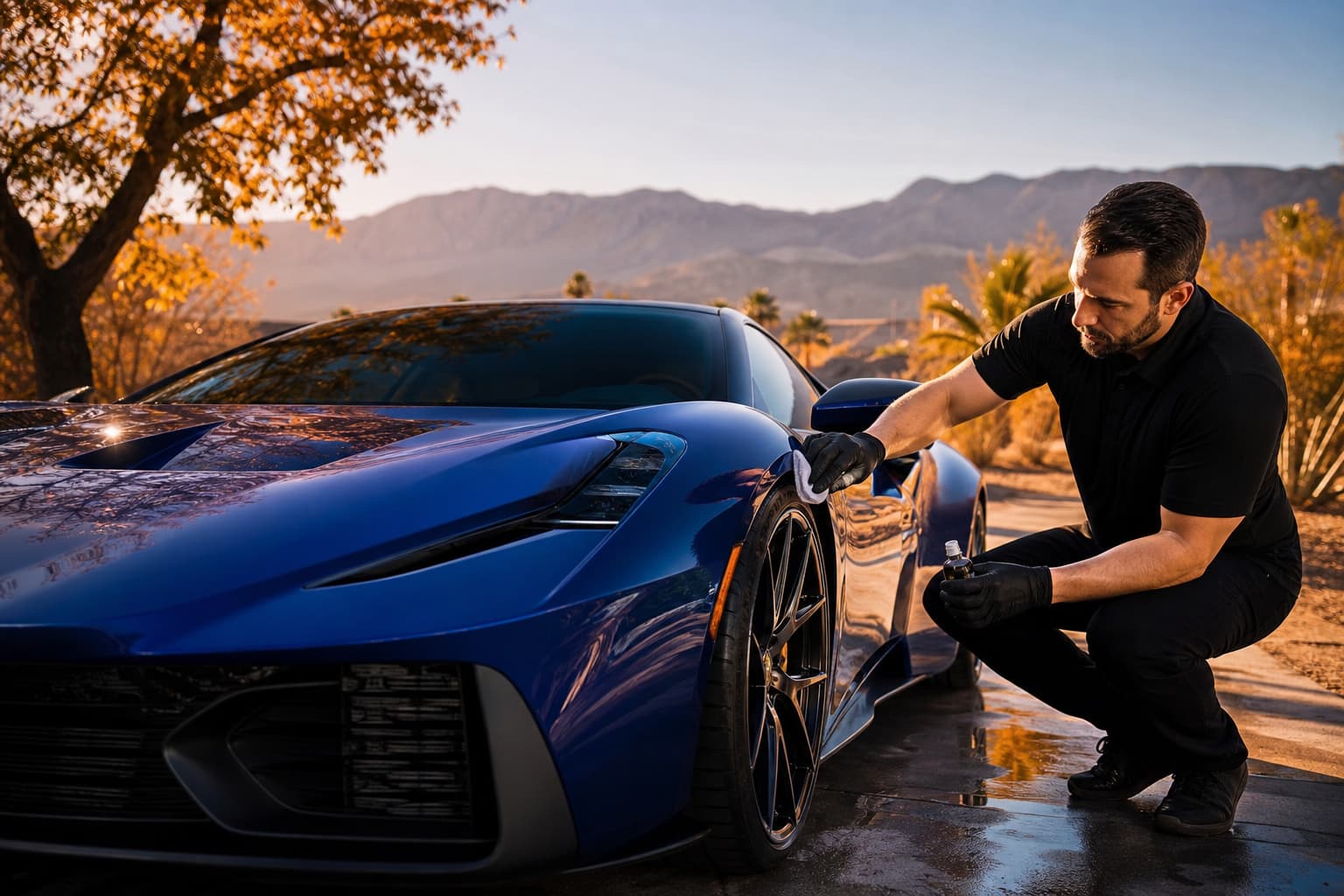
A proper winter detail addresses this directly with a UV- and dry-air-rated protectant applied to door seals, trunk seals, and exterior trim — not a heavy silicone dressing that looks glossy for a week and then attracts dust, but a product designed to actually restore flexibility. This is standard practice in a mobile exterior detailing appointment and takes only a few extra minutes once the vehicle is already clean.
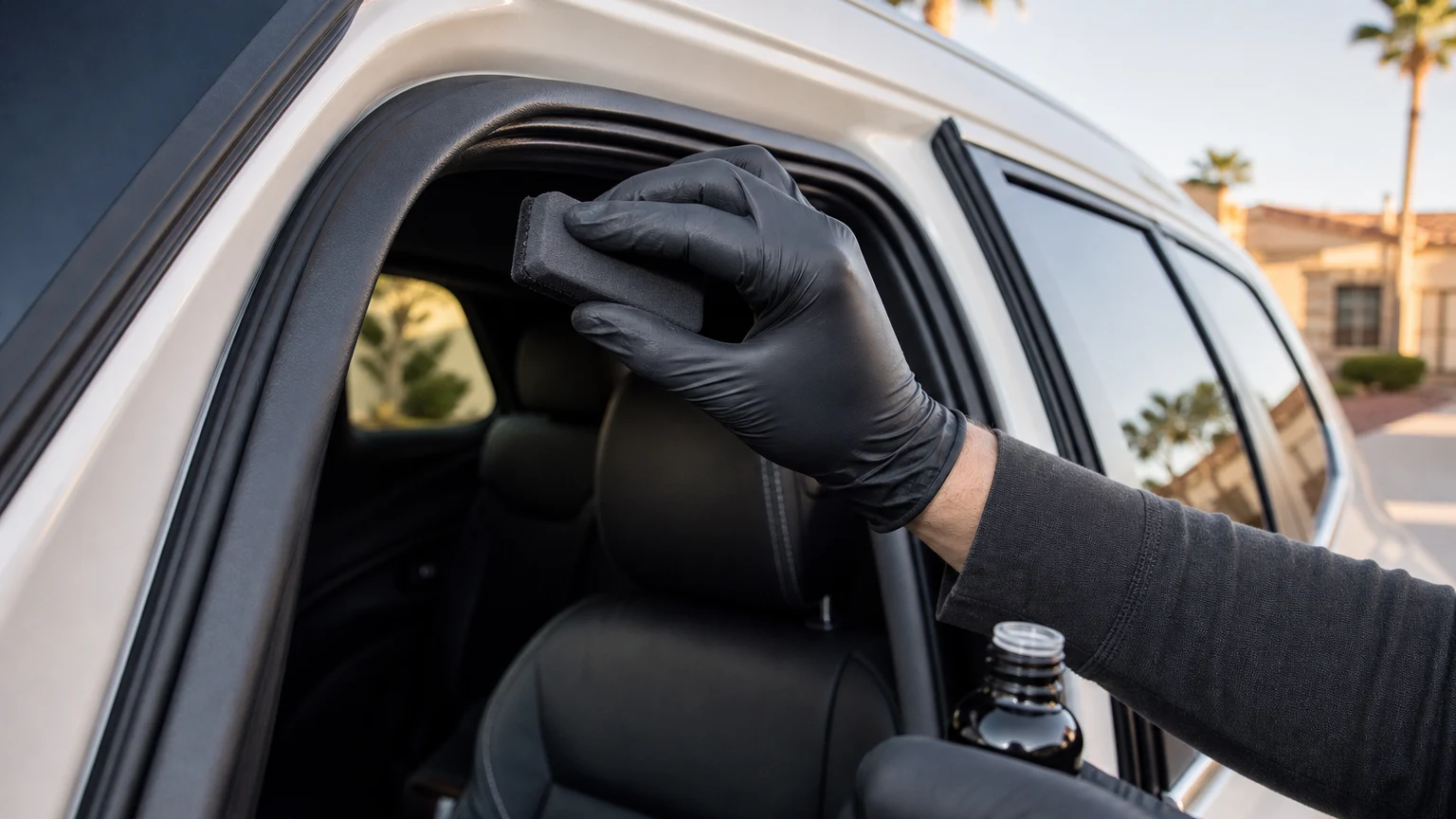
Interior Damage You Cannot See Happening
Drivers associate interior heat damage with July, but low humidity does its own quiet damage in January. Leather and vinyl both rely on moisture to stay supple, and a cabin running a dehumidifying HVAC system through a dry winter can dry those materials out almost as fast as direct summer sun does. The difference is that summer damage is obvious — cracked, sun-faded dashboards get noticed. Winter drying happens gradually and gets blamed on “just getting old” instead.
Static electricity is the other underrated winter interior problem in a desert climate. Dry air holds a static charge far longer than humid air, and that charge attracts and holds airborne dust to dashboards, screens, and door panels. A vehicle that looked clean a week after a wash can look dusty again faster in winter than in any other season, simply because of static buildup rather than actual new dirt.
A winter interior detailing appointment should include leather and vinyl conditioning with a UV-inclusive product, an anti-static wipe-down of hard surfaces and screens, and attention to the carpet and floor mats, which trap the fine grit that dry winter wind kicks up across the valley. Drivers who keep up with routine care between full details can follow the maintenance habits in Kevin’s guide to car care between details in Las Vegas to stretch results further.
Mountain Trips: Mt. Charleston, Ski Runs, and Road Salt
One thing that genuinely surprises transplants: Las Vegas drivers deal with real snow and road salt every winter, just not at home. Mt. Charleston sits less than an hour from the Strip and regularly gets several feet of snow, and plenty of valley residents make weekend trips up Kyle Canyon Road or head further out toward Utah ski resorts.
That means a lot of Las Vegas vehicles pick up genuine road salt and magnesium chloride de-icer exposure a few times each winter, even though the car spends the rest of its life in a desert climate. Salt and de-icer are corrosive to wheels, wheel wells, and the underside of a vehicle, and they do their worst damage when left to sit rather than being rinsed off promptly. A car that made one trip to the snow and then sat in a garage for two weeks before its next wash has had far more time for that corrosion to set in than a car that gets rinsed within a day or two of the trip.
If you are headed to the mountains this winter, plan on a wheel-and-undercarriage-focused wash within a day or two of returning, not whenever the next regular wash happens to fall. It is a small step that prevents the kind of corrosion that is expensive to reverse later.
Kevin’s Winter Prep Checklist
A few habits make the biggest difference through a Las Vegas winter:
- Keep washing on a normal schedule. Irrigation overspray and hard water spotting do not slow down in winter — skipping washes just lets deposits sit longer.
- Condition rubber seals and trim before they dry out, not after you notice a new noise or smell.
- Rinse the wheels and undercarriage promptly after any trip into snow or de-icer, ideally within a day or two.
- Add leather and vinyl conditioning to your normal interior routine — dry winter air pulls moisture out just as effectively as summer heat.
- Wipe down hard interior surfaces more often to stay ahead of static-driven dust buildup.
- Consider a ceramic coating before winter fully sets in; a coated vehicle sheds hard water and de-icer residue far more easily than bare paint, which matters most during the exact season when washing habits tend to slip.
When to Schedule a Winter Detail
Winter is actually one of the more convenient times to book a mobile detail in Las Vegas — the heat that limits outdoor working time in July is gone, and appointments run efficiently in the cooler air. Kevin recommends one full detail early in the season, around late November or early December, to get seals, trim, and interior surfaces conditioned before the driest stretch of the year sets in, with a lighter wheel-and-undercarriage rinse after any snow trips in between.
Because AOA is fully mobile, this happens at your home or workplace within 25 miles of Las Vegas — no dropping the car off and rearranging your day around a shop’s schedule. To book, use AOA Detailing’s online booking or call Kevin directly at (775) 244-5315. You can also reach out through the contact page with questions specific to your vehicle before you book.
Frequently Asked Questions
1. Does Las Vegas really need winter car care if it doesn’t snow here?
Yes. The valley does not get regular snow, but the wide daily temperature swings and very low winter humidity stress paint, rubber seals, and interior materials in ways that are easy to miss because they lack an obvious trigger like summer heat.
2. How often should I wash my car in the winter in Las Vegas?
On the same schedule you would use any other season — roughly every one to two weeks for most drivers, plus a prompt rinse after any trip into snow, rain, or de-icer.
3. Should I wax or ceramic coat my car before winter?
Either helps, but a ceramic coating holds up better through the season because it makes hard water spots, de-icer residue, and road grime far easier to rinse away without regular hand washing.
4. Can dry winter air really damage my car’s interior?
Yes. Low humidity pulls moisture out of leather, vinyl, and rubber trim, which is why conditioning these surfaces matters in winter even though there is no direct sun exposure to blame.
5. Do I need to do anything special after a trip to Mt. Charleston in the snow?
Rinse the wheels, wheel wells, and undercarriage within a day or two of the trip. Road salt and de-icer left sitting on those surfaces is what causes corrosion, not brief exposure on its own.
Kevin is the founder and owner-operator of AOA Detailing and personally completes every appointment. With more than a decade of hands-on detailing experience in Las Vegas conditions, he provides mobile interior, exterior, paint-correction, ceramic-coating, and full-detail services. Call (775) 244-5315, contact AOA Detailing, or book online.