Why Window Tinting Matters More in Las Vegas
Las Vegas receives an average of 294 sunny days per year with annual rainfall under 4.2 inches. That combination creates the most intense sustained UV and heat exposure of any major metro area in the United States. For your vehicle, untinted windows provide zero protection against the two forces that cause the most interior damage: ultraviolet radiation and infrared heat.
UV Radiation. Standard automotive glass blocks most UVB rays but allows roughly 60–70% of UVA rays to pass through. UVA is the wavelength responsible for long-term skin damage, leather degradation, dashboard cracking, and fabric fading. In Las Vegas, you accumulate UV exposure during your commute that matches what many cities receive in an entire day. Dermatologists consistently note that left-arm and left-hand skin cancers are more common among frequent drivers — a risk that quality window tinting directly mitigates.
Infrared Heat. The sun’s infrared spectrum is what heats your cabin to unbearable temperatures. A parked vehicle in direct Las Vegas sun reaches 170–180°F interior temperature within 30 minutes. Even while driving with the AC on full blast, untinted windows allow infrared energy to heat surfaces and occupants directly. Your air conditioning fights a losing battle against solar heat gain through unprotected glass.
Glare. The combination of desert landscape, wide boulevards, and intense sunlight creates extreme glare conditions in Las Vegas. Driving west on Sahara Avenue at 5 PM or east on Flamingo Road in the morning puts dangerous glare directly in your line of sight. Window tinting reduces glare by 35–65% depending on the film selected, improving both comfort and safety.
Types of Window Tint Film
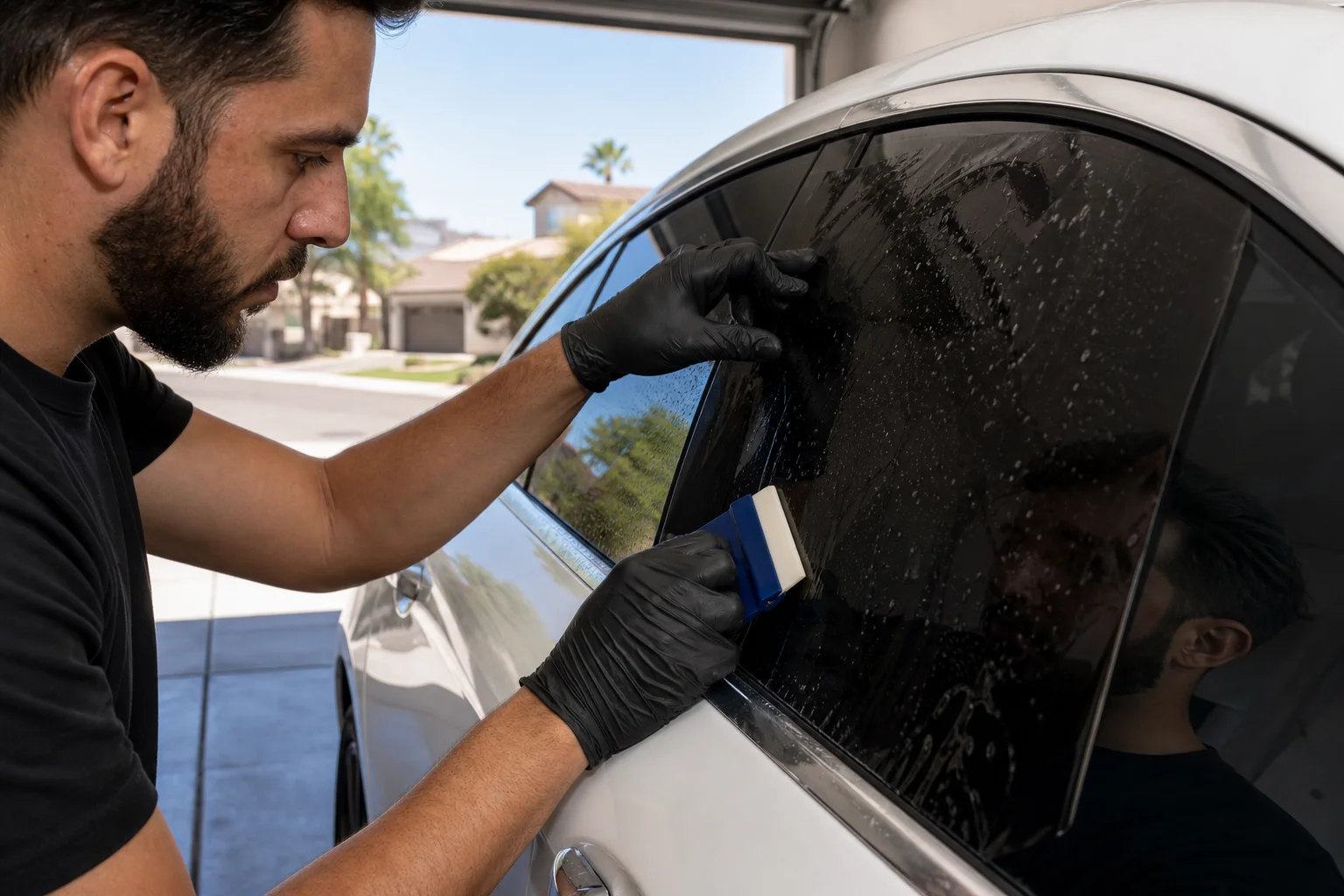
Not all window tint films are created equal, and choosing the right type for Las Vegas conditions makes a significant difference in performance and longevity. Here is what you need to know about each option:
Dyed Film. The most basic and affordable option. Dyed film uses a layer of dye between an adhesive layer and a protective outer coating. It provides good privacy and glare reduction but offers minimal heat rejection — typically 15–25%. In Las Vegas heat, dyed film is the first to fade, turn purple, and bubble. Most dyed films degrade noticeably within two to three years under our conditions. We generally recommend against dyed film for Las Vegas vehicles.
Metalized Film. Contains microscopic metallic particles embedded in the film that reflect heat and UV away from the glass. Metalized film offers better heat rejection (25–40%) and is more durable than dyed film. However, the metallic content can interfere with cell phone signals, GPS, radio reception, and toll-road transponders. For modern vehicles with multiple wireless systems, this interference is increasingly problematic.
Carbon Film. Uses carbon particles instead of metals or dyes. Carbon film provides 35–50% infrared heat rejection without any signal interference. It maintains a matte finish that resists fading and does not shift to purple over time. Carbon film is a solid mid-tier choice for Las Vegas drivers who want reliable performance without the premium price of ceramic.
Ceramic Film. The top-tier option and what we recommend for every Las Vegas vehicle. Ceramic window film uses nano-ceramic technology that rejects 50–80% of infrared heat and blocks 99% of UV radiation without any metallic content. It does not interfere with electronics, maintains optical clarity, and is virtually fade-proof. Ceramic film costs more upfront but lasts 10–15 years or more — making it the most cost-effective choice over the life of a vehicle in our climate.
Ceramic IR Film. The highest-performing category available. Ceramic IR films push infrared rejection to 85–97% by targeting the specific wavelengths that carry the most thermal energy. These films keep your cabin noticeably cooler than standard ceramic film, reduce AC load significantly, and provide the same electronics compatibility and UV protection.
Heat Rejection and Cabin Temperature Reduction
The practical impact of window tinting in Las Vegas is measurable and dramatic. We have monitored cabin temperatures in tinted versus untinted vehicles during Las Vegas summers, and the results are consistent:
Untinted vehicle parked in direct sun at 2 PM in July:
- Dashboard surface: 190–200°F
- Steering wheel: 150–160°F
- Seat surface: 140–150°F
- Cabin air temperature: 170–180°F
Same vehicle with quality ceramic tint (all windows including windshield):
- Dashboard surface: 120–130°F
- Steering wheel: 100–110°F
- Seat surface: 95–105°F
- Cabin air temperature: 125–135°F
That is a 40–60°F reduction across every surface. The practical difference is enormous — the tinted vehicle is still hot but tolerable within seconds of starting the AC, while the untinted vehicle requires five to ten minutes of cooling before the steering wheel is even safe to grip.
Beyond comfort, this heat reduction directly extends the life of your interior surfaces. Leather that repeatedly reaches 150°F dries, cracks, and hardens within two to three years. The same leather held below 110°F by quality tint maintains its flexibility and appearance for seven to ten years or longer. Dashboard plastics, rubber seals, electronic displays, and adhesives in your trim all benefit from the reduced thermal cycling.
Your air conditioning system benefits as well. With quality window tinting, your AC compressor runs less aggressively, reducing fuel consumption by an estimated 3–5% during summer months. For vehicles driven daily in Las Vegas, that translates to meaningful savings over a year.
UV Protection and Interior Preservation
Ultraviolet radiation is the silent destroyer of vehicle interiors, and in Las Vegas it operates at a level that most vehicle manufacturers never designed for. Factory automotive glass blocks UVB but allows the majority of UVA to pass through — and UVA is what causes the long-term damage.
Leather and Vinyl. UV radiation breaks down the molecular bonds in leather and vinyl, causing them to dry out, crack, and discolor. In Las Vegas, untinted vehicles show visible leather damage within 18–24 months of daily use. The driver’s side is always worse — your left arm and left leg position those surfaces closer to the window and direct UV exposure. Professional window tinting blocks 99% of UV across all wavelengths, giving your leather the same protection as parking in a covered garage.
Dashboard and Trim. Plastic and composite dashboard materials contain UV stabilizers from the factory, but those stabilizers deplete over time under constant UV bombardment. Once depleted, the plastic begins to fade, crack, and develop a chalky texture. Dashboard replacement costs $1,000–$3,000 depending on the vehicle. Tinting the windshield and side windows prevents this degradation entirely.
Electronics and Displays. Modern vehicles have LCD and touchscreen displays in the dashboard, center console, and rear entertainment systems. Sustained UV exposure and heat damage LCD panels, cause screen discoloration, and accelerate adhesive failure that leads to delamination. Replacing an infotainment screen on a modern vehicle can cost $2,000–$5,000 at the dealer. Window tinting protects these components at a fraction of the replacement cost.
Your Skin. The Skin Cancer Foundation recognizes window tinting as an effective UV protection measure. Drivers spend significant time exposed to UVA through the side window — radiation that contributes to premature aging and skin cancer risk. In Las Vegas, where UV intensity is among the highest in the country, automotive window tinting is a practical health measure for anyone who commutes daily.
Nevada Window Tinting Laws
Nevada law regulates window tinting by vehicle type and window position. Understanding these regulations before choosing your tint level prevents citations and the cost of removal and replacement:
Sedans:
- Windshield: Non-reflective tint allowed on the top of the windshield above the AS-1 line (typically the top 5–6 inches)
- Front side windows: Must allow more than 35% of light through (35% VLT minimum)
- Rear side windows: Any darkness permitted
- Rear window: Any darkness permitted
SUVs and Vans:
- Windshield: Same as sedans — non-reflective tint above the AS-1 line
- Front side windows: Must allow more than 35% of light through
- Rear side windows: Any darkness permitted
- Rear window: Any darkness permitted
Additional Nevada Rules:
- Red, amber, and blue tint colors are prohibited
- Reflectivity must not exceed 35% on any window
- Dual side mirrors are required if the rear window is tinted below 35% VLT
- No medical exemptions exist in Nevada for darker-than-legal front window tint
We install tint at or above the legal 35% VLT on front windows and help customers choose the appropriate darkness for rear windows based on their privacy and heat rejection preferences. Most Las Vegas customers choose 15–20% VLT on rear windows and the legal 35% on fronts, which provides excellent heat rejection while maintaining compliance.
Why Choose Mobile Window Tinting
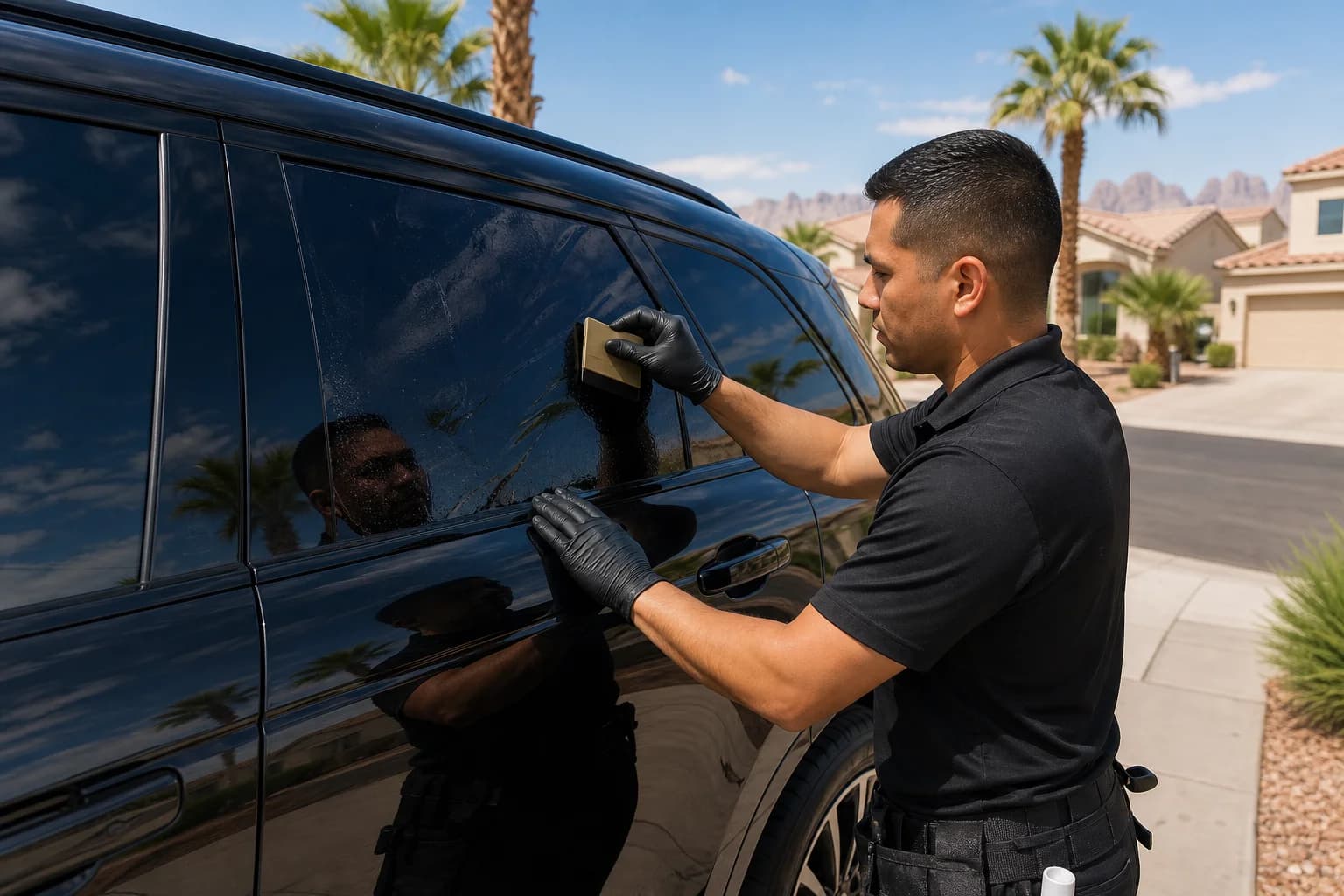
Traditional tint shops require you to drop off your vehicle, wait two to four hours, and drive it home with windows that cannot be rolled down for several days while the film cures. Mobile window tinting brings the entire process to your location — home, office, or any covered area — with several advantages specific to Las Vegas:
Controlled Environment. We work in shaded conditions — your garage, carport, or covered parking structure — which is essential for proper film application. Tint installed in direct sunlight cures too quickly, leading to bubbles, creases, and premature failure. A controlled environment ensures the adhesive bonds properly and the film lays perfectly flat.
No Driving with Fresh Tint. After installation, the film needs 24–48 hours to fully cure without the windows being rolled down. With mobile service, your vehicle stays parked at your home where it can sit undisturbed. Driving to and from a tint shop with fresh film risks contamination from road vibration and the temptation to roll windows down in Las Vegas heat.
Convenience. Las Vegas traffic and parking make shop visits time-consuming. Mobile service eliminates the drive, the wait, and the return trip. We bring all equipment, film inventory, and clean-room tools to your location.
Inspection Before You Commit. With mobile service, we inspect your vehicle’s existing glass condition at your location before beginning work. We can identify chips, cracks, seal damage, or prior tint removal residue that needs attention before new film is applied — avoiding the surprise of discovering issues after dropping your vehicle at a shop.
Our mobile tinting service covers the entire Las Vegas valley including Henderson, Summerlin, North Las Vegas, Spring Valley, Centennial Hills, Boulder City, and surrounding areas within 25 miles of central Las Vegas.
Window Tinting and Vehicle Value
Window tinting contributes to vehicle resale value in two direct ways. First, it preserves the condition of interior surfaces that buyers inspect closely — leather, dashboard, trim, and electronics. A vehicle with intact, unfaded interior commands $1,000–$3,000 more at resale than an identical vehicle with UV-damaged surfaces.
Second, quality tint is a desirable feature in the Las Vegas used vehicle market. Buyers shopping in southern Nevada actively look for vehicles with existing professional tint because they understand the local conditions. A vehicle without tint in Las Vegas signals either recent purchase from out of state or deferred maintenance — neither of which is positive for resale perception.
When paired with other protective services like ceramic coating and regular interior detailing, window tinting forms part of a comprehensive preservation strategy that protects your vehicle’s value throughout its life in the desert.
FAQs
How much does window tinting cost in Las Vegas?
Professional ceramic window tinting for a sedan typically ranges from $350 to $600 depending on the number of windows and film quality selected. SUVs and trucks run $400 to $750 due to larger glass area. Budget dyed films cost less but need replacement every two to three years in Las Vegas heat — making ceramic the better long-term value.
How long does window tint last in Las Vegas?
Ceramic and ceramic IR films last 10–15 years or more with proper care. Carbon films last 7–10 years. Dyed films last 2–3 years before fading, bubbling, or turning purple. The Las Vegas climate is the most demanding environment for window film in the country, which is why we recommend ceramic for all installations.
Can you tint a windshield in Nevada?
Nevada allows non-reflective tint on the windshield above the manufacturer’s AS-1 line — typically the top 5–6 inches. Full windshield tinting below the AS-1 line with visible tint is not permitted. However, clear ceramic UV-blocking film that does not reduce light transmission below factory levels can be applied to the full windshield for heat and UV protection without violating the law.
Does window tinting affect visibility at night?
Front windows tinted at the legal 35% VLT maintain good nighttime visibility. Darker rear windows (15–20% VLT) reduce rearview mirror visibility slightly, which is why dual side mirrors are required by Nevada law when the rear window is heavily tinted. Quality ceramic film maintains better optical clarity at night compared to dyed or metalized films.
How long do I wait to roll windows down after tinting?
Allow 48–72 hours before rolling windows down after tint installation. In Las Vegas summer heat, the curing process is faster — some films fully cure within 24 hours when parked in a hot garage. We provide specific curing instructions based on the film type and installation conditions for each vehicle.
Will window tinting void my vehicle warranty?
No. Window tinting does not void vehicle warranties. The Magnuson-Moss Warranty Act prevents manufacturers from voiding a warranty unless they can prove the aftermarket modification directly caused the failure. Quality window tint installed by a professional does not damage glass or electrical systems and will not affect your warranty coverage.
AOA Detailing provides professional mobile window tinting throughout Las Vegas, Henderson, Summerlin, North Las Vegas, Boulder City, Spring Valley, Centennial Hills, and surrounding areas within 25 miles. Protect your vehicle from the desert sun — call Kevin at (775) 244-5315 or book your appointment online today.