Mold in Car: Why It Happens in Dry Las Vegas and What to Do
Share
Mold in car interiors can grow when spills, leaks or wet mats leave materials damp, even in Las Vegas. Find the moisture source first; don’t cover up the smell. A professional interior detail starts with an assessment, but hidden growth or a leak may need a repair shop or a specialist experienced with vehicle mold.
This is general information, not medical advice. EPA and CDC guidance below addresses buildings, not vehicle cleanup standards. For your car, follow its owner’s manual and compatible product labels, and ask a qualified shop about damage you cannot assess safely.
Quick Summary
Mold needs moisture, even in a dry climate.
Dry spills promptly; the EPA’s 24-to-48-hour prevention window for buildings is not a car guarantee.
A musty smell with nothing visible can mean hidden mold under carpet, mats or seat covers.
Follow vehicle cleaning instructions for small hard-surface spots. Moldy carpet or padding may need replacing.
Don’t mask the smell, and don’t mix bleach with other cleaners. Stop and get help for heavy growth, a leak you can’t find or any health concern.
What causes mold in car interiors, even in Las Vegas?
Mold can grow where moisture remains trapped. Check these common sources:
Spills that soaked into carpet. Coffee, soda and sports drinks sink into the carpet and the padding underneath.
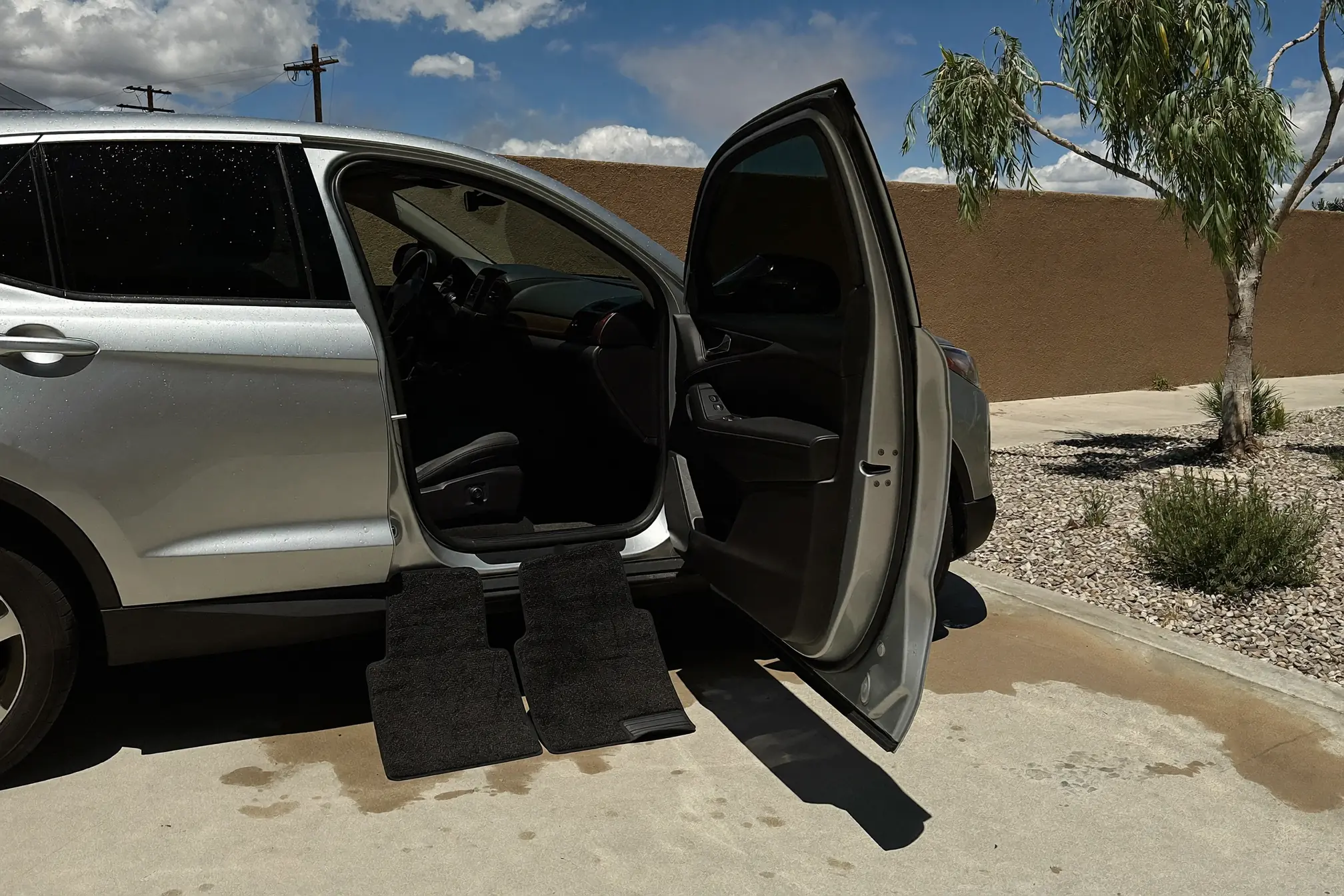
Wet floor mats. Damp mats hold water against the carpet below, especially after a monsoon storm or a trip to the pool or gym.
Leaks around door, window or sunroof seals. A slow leak keeps one area damp for days.
Wet gear left in the car. Towels, swimsuits, umbrellas and sports bags hold water.
After rain in Las Vegas or Henderson, check for water intrusion rather than assuming desert air has dried the cabin. A musty smell can also come from the ventilation system; smell alone does not identify mold or a leak.
How can you tell mold from mildew, dirt or a stain?
Color or smell alone cannot confirm what is on a surface. The CDC says identifying the type of mold is unnecessary for cleanup; address the growth and its moisture source rather than trying to name it.
Use this table as a starting point, not a diagnosis:
Swipe or scroll horizontally to read all columns. →
What you notice
What it may be
What to do
Dark or fuzzy spots on plastic or vinyl that wipe off
Surface mold, mildew or ordinary grime
Use a manual-approved cleaner on a small compatible hard surface; dry fully
Spots on carpet, seat fabric or a seat belt
Mold in a porous material, or a stain
Have suspected mold in fabric or belts assessed; find and repair the moisture source
A musty smell and nothing you can see
Hidden moisture or mold, or another odor source
Look for moisture without disturbing suspected growth; ask a shop if the source is hidden
A water ring or stain on a dry surface, no smell
An old spill or stain
Check for moisture before treating it as an ordinary stain
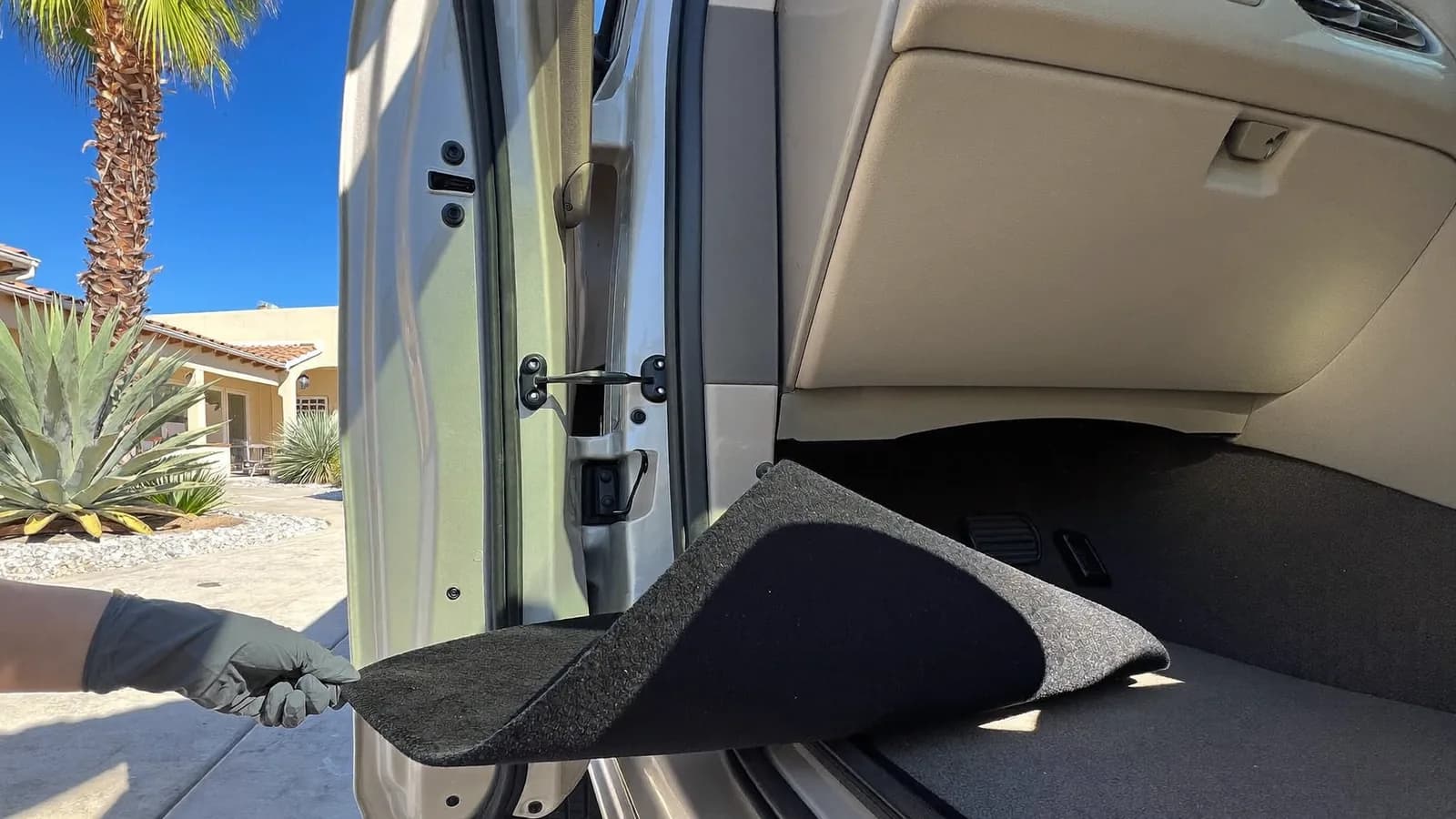
The EPA warns that disturbing hidden mold can release spores. Look around mats, seats and door sills without pulling up suspect carpet or padding; leave disassembly to a qualified shop.
How do you get rid of mold in a car?
Keep any DIY work limited to a small, accessible spot on a hard surface that your manual allows you to clean. If growth involves carpet, padding, belts or ventilation, get a professional assessment first.
Size it up. Do not use the EPA’s building-area threshold as a safe DIY limit for a car. If you cannot tell how far the growth extends or what materials it affects, stop and ask a qualified shop.
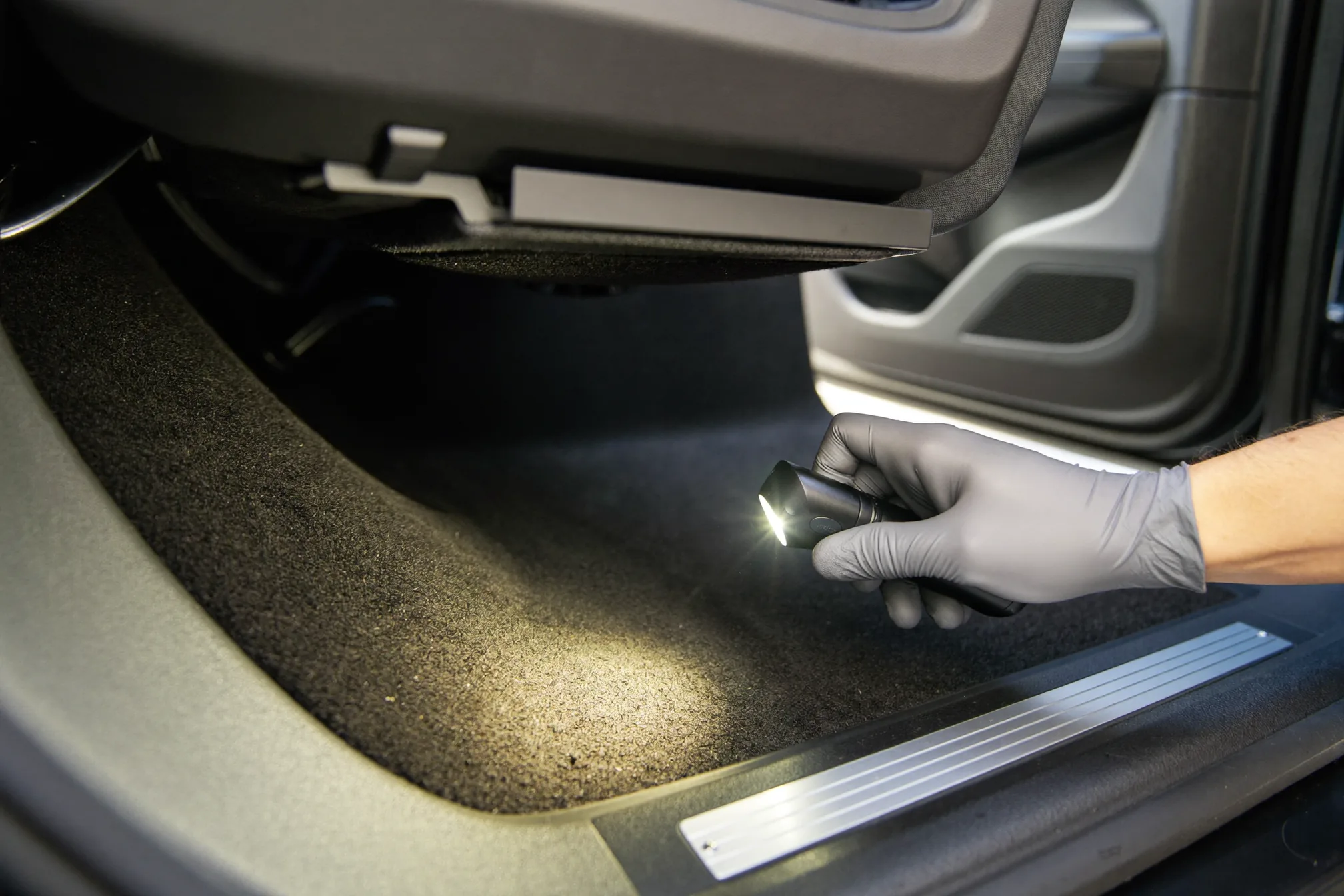
Protect yourself. The EPA suggests gloves, goggles without ventilation holes and, to limit exposure to airborne mold, an N-95 respirator that fits properly. Avoid touching mold with bare hands.
Fix the moisture first. Address leaks and dry wet materials promptly. For a fresh spill without suspected growth, remove mats and dry accessible areas with doors open where safe. Airing out the cabin may leave wet padding underneath.
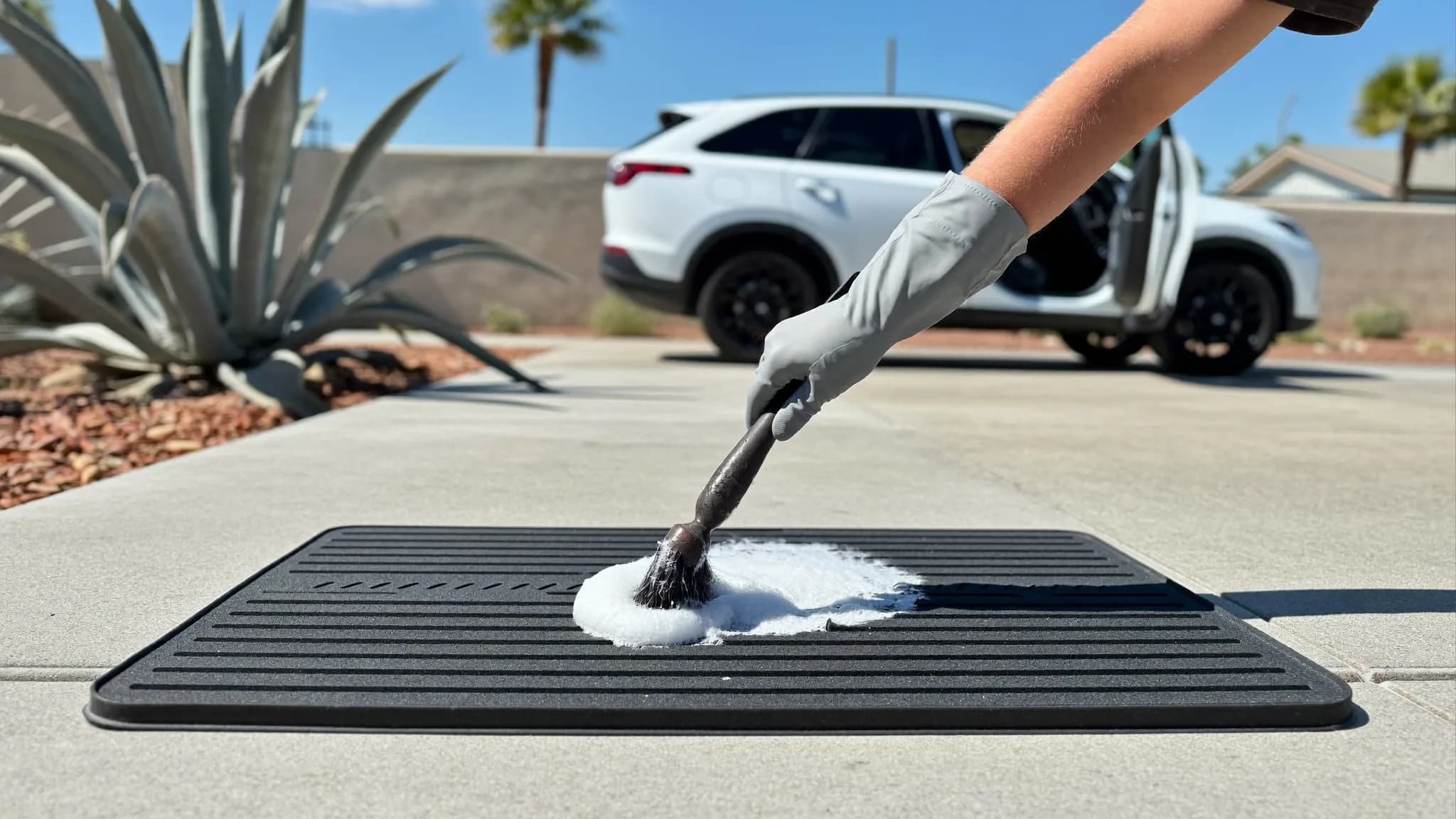
Clean hard surfaces. The EPA says to scrub mold off hard surfaces with detergent and water, then dry them completely. Use only a cleaner and method permitted by your vehicle’s manual; do not soak trim, switches or other electrical components.
Be realistic about carpet and fabric. Mold can penetrate porous materials. The EPA says moldy carpet may need removal; cleaning may not remove all growth or staining.
Check again. The EPA says visible mold and moldy odors should be gone when cleanup is finished. A returning smell needs inspection for moisture, contamination or another source. No smell does not prove hidden materials are clean and dry.
What should you avoid?
Covering the smell. An air freshener hides an odor without removing the cause.
Bleach as a routine fix. The EPA does not recommend chlorine bleach or other biocides as a routine part of mold cleanup, because killing mold does not remove it. Use a vehicle-compatible method, and never mix bleach with ammonia or other cleaners.
Using ozone as a mold fix. The EPA says ozone at concentrations within public-health limits does not effectively remove mold; it can also harm lungs. Do not run a DIY ozone treatment or treat odor removal as proof of mold removal.
Treating a vent smell as a diagnosis. A smell from the A/C or heater does not prove mold. Ask an auto shop to inspect the system rather than spraying cleaners into vents. If you suspect contamination, ask the shop about safe use before running it.
What about mold on a seat belt?
Ask your dealer or a qualified shop to assess suspected mold on a seat belt before treating it as ordinary dirt. One Kia owner’s manual says seat belts should be kept clean and dry, that dirty belts can be cleaned with a mild soap solution and warm water, and that bleach, dye, strong detergents or abrasives should not be used because they may damage and weaken the fabric. Have damaged or frayed webbing inspected promptly; cleaning cannot establish that a belt is safe.
When should you stop and get help?
Stop DIY and get an inspection or a professional cleaning when any of these apply:
The growth covers more than a small spot, or it has spread under the mats into the carpet.
You can’t find the water source, or the carpet keeps getting wet.
The musty smell returns after you have cleaned and dried the area.
The smell is strongest when the A/C or heater runs.
The water came from sewage or other contaminated water. The EPA says to call a professional in that case.
Someone who rides in the car has asthma, a mold allergy or a weakened immune system, or anyone is having symptoms.
Mold exposure affects people differently. CDC lists nasal, throat, eye, skin and breathing symptoms; people with asthma or mold allergies may react severely. Consult a health care provider about symptoms or health concerns before cleanup.
A leak needs repair as well as cleanup. Toyota’s dealer bulletin on water-intrusion odors, revised January 7, 2026, requires the leak source to be identified and repaired. It also calls for replacing affected absorbent parts, including carpet and padding, in the vehicles it covers. This is dealer guidance for listed Toyota models, not a universal DIY procedure; it excludes severe flooding and general ventilation-system odors.
What can a mobile detailer do about mold in a car?
Interior detailing is not a substitute for leak repair or mold remediation. AOA’s service pages list ordinary cleaning services.
AOA’s interior detailing page lists deep cleaning of seats and upholstery, air vent cleaning, floor mat cleaning and an odor elimination treatment, and describes an initial inspection and assessment of the interior as the first step of its process. The Prestige Interior Experience adds deep carpet and seat shampoo and steam cleaning of high-touch areas. The full detailing page lists hot water extraction for seats or carpets and an odor treatment among its add-ons. Neither page lists mold remediation as a service, so describe what you found when you ask for a quote and expect AOA to assess it before recommending anything.
Have leaks and suspected mold assessed before ordinary interior cleaning. A mild smell alone cannot establish that a detail is enough.
For ordinary interior care after moisture problems are resolved, Book Now (Free Quote). Disclose any suspected mold first and ask whether AOA can assess the job or whether you need a specialist.
How do you prevent mold in your car?
Prevention is mostly about not letting water sit:
Dry fresh spills promptly. Do not wait for an odor. The 24-to-48-hour window in building guidance is a reason to act quickly, not to delay.
Take wet mats out after storms. Dry them outside and check the carpet underneath. See our guide to cleaning car floor mats.
Keep wet gear out of the car. Pool towels, swimsuits and umbrellas go indoors.
Check under the mats now and then. Look for dampness near door sills and seats. Avoid bare-hand contact with suspect material; if growth is visible or the source is hidden, get help.
Deal with damp upholstery fast. AOA’s upholstery cleaning guide covers fabric, leather and steam cleaning.
FAQ
Is mold in a car dangerous?
It can be, especially for people with asthma or mold allergies. CDC notes that some people have no effects while others react severely. Talk to a health care provider about symptoms or health concerns.
Can mold grow in a car in a dry climate like Las Vegas?
Yes. A wet carpet, mat or seat can support growth even when the air outside is dry. Fix the moisture source rather than relying on desert heat to dry hidden padding.
Can I use bleach to kill mold in my car?
Do not make bleach your default car cleaner. Follow your vehicle’s manual and compatible product labels; never mix bleach with other cleaners or use it on seat belts. Suspected mold in belts, carpet or padding needs an assessment.
Smelling something musty in your car?
If the carpet stays wet, growth is visible or a musty smell returns, arrange an inspection before booking routine cleaning. AOA offers mobile interior detailing in Las Vegas and Henderson, but its service pages do not list mold remediation. Book Now (Free Quote) or call (775) 244-5315, describe the condition, and ask whether the job is within AOA’s scope.