How to Keep Your Car's Interior Odor-Free in Las Vegas (And Why Heat Makes It Worse)
Share
Why Las Vegas Heat Turns Car Odors Into Permanent Problems
You leave a fast food bag in your car for one afternoon in July and come back to something that smells like a dumpster — that’s the Las Vegas effect.
In most cities, a strong odor might linger for a day or two. In Las Vegas, where summer temperatures regularly push 110°F and interiors can reach 160°F or more, odors get chemically cooked into your car’s surfaces. The heat breaks down organic compounds — food residue, sweat, spilled drinks, pet dander — and forces them deeper into fabric, foam, carpet fibers, and even the HVAC system.
This is why a simple air freshener doesn’t solve anything. It masks the odor temporarily while the source stays baked into the seat cushion or dashboard gap. Kevin, Founder of AOA Detailing, puts it plainly: “The heat accelerates everything. What would be a mild smell in a cooler climate becomes a permanent fixture in a Las Vegas car. You have to treat the source — not the air.”
Understanding what’s actually causing the odor is the first step to eliminating it for good.
The 5 Most Common Car Odor Sources in Las Vegas
1. Food and Beverage Spills
Spilled sodas, coffee, drive-through food, and protein shakes are the most frequent culprits. In Las Vegas heat, sugars ferment and proteins decompose at an accelerated rate. Even a small spill that looks dry on the surface can soak into seat foam and begin growing mold or bacteria within 24–48 hours.
2. Pet Odor and Dander
Las Vegas dog and cat owners deal with a compounded problem: pets naturally shed oils and dander that absorb into upholstery, but the heat causes those oils to oxidize and amplify the smell. A dog that rides in the back seat twice a week can saturate the fabric lining in a matter of months.
3. Cigarette and Smoke Residue
Smoke odor (tobacco, cannabis, vaping) is notoriously stubborn because the particulates penetrate into every porous surface: headliner fabric, HVAC vents, foam cushioning, and door panel fabric. Heat causes these particles to off-gas continuously.
4. Mildew and Moisture
Wet umbrellas, wet shoes, gym bags, and even condensation from an overworked AC unit can introduce moisture. In a sealed car in summer heat, that moisture creates the ideal conditions for mildew growth — especially under floor mats and in the carpet padding beneath.
5. HVAC System Contamination
The cabin air filter and evaporator coil inside your AC system are common sources of musty, stale, or sour smells that seem impossible to locate. Mold and bacteria grow on the evaporator coil during the cooling cycle, and when you turn on the AC, you’re blowing those particles directly into the cabin.
5.0 Google Rating
Get a Free Quote Today
Premium mobile auto detailing delivered to your driveway. Same-week availability across Las Vegas Valley.
How Professional Interior Detailing Eliminates Odors
Unlike an air freshener or a box of baking soda, professional interior detailing treats the actual source of the odor at a physical and chemical level. Here’s what the process looks like when Kevin and the AOA Detailing team service a vehicle:
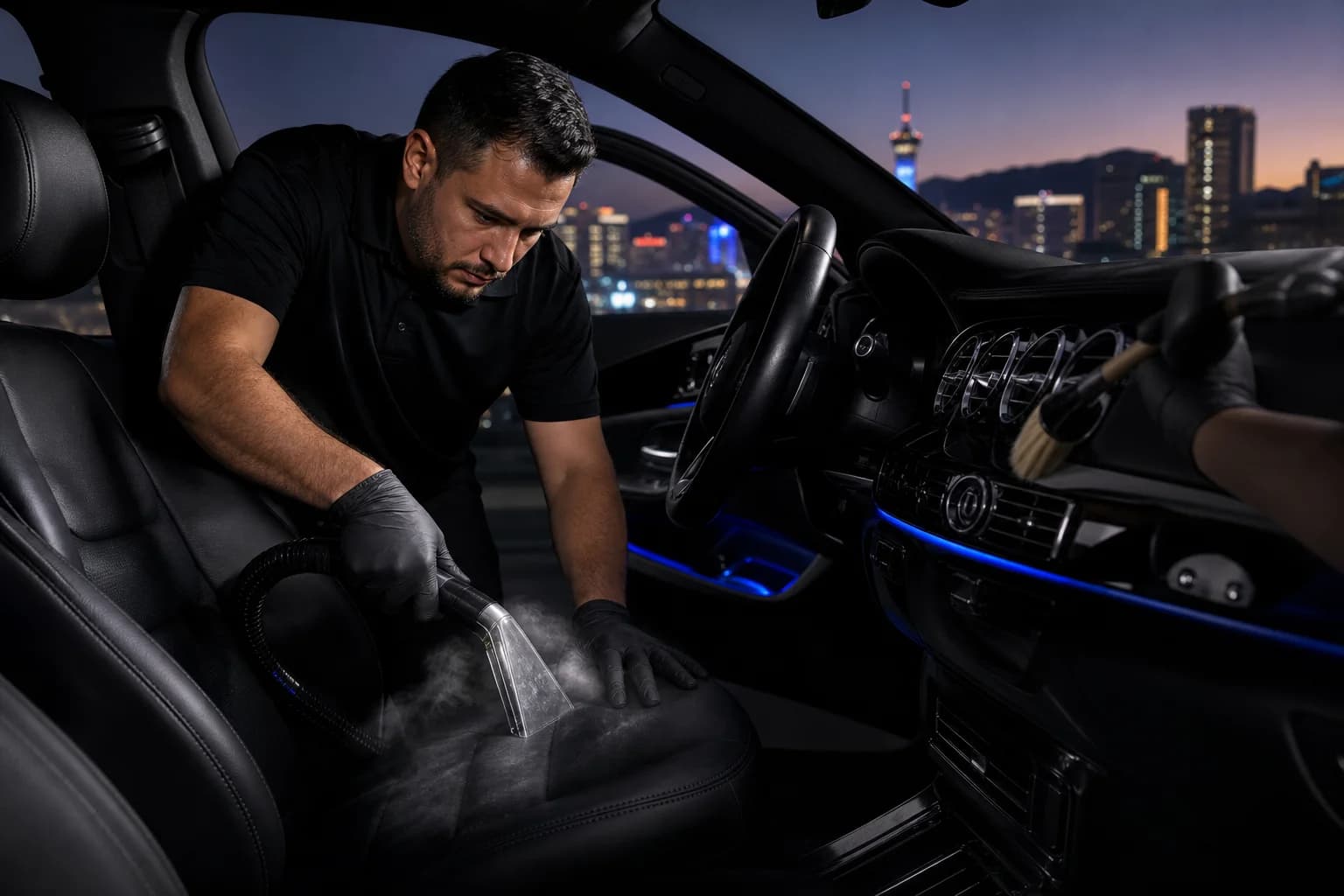
Step 1: Full Interior Extraction
A powerful wet/dry extractor pulls deep-seated contaminants out of carpet fibers and seat fabric — things a standard vacuum would never reach. This removes the bulk of mold spores, food particles, and pet dander before any treatment begins.
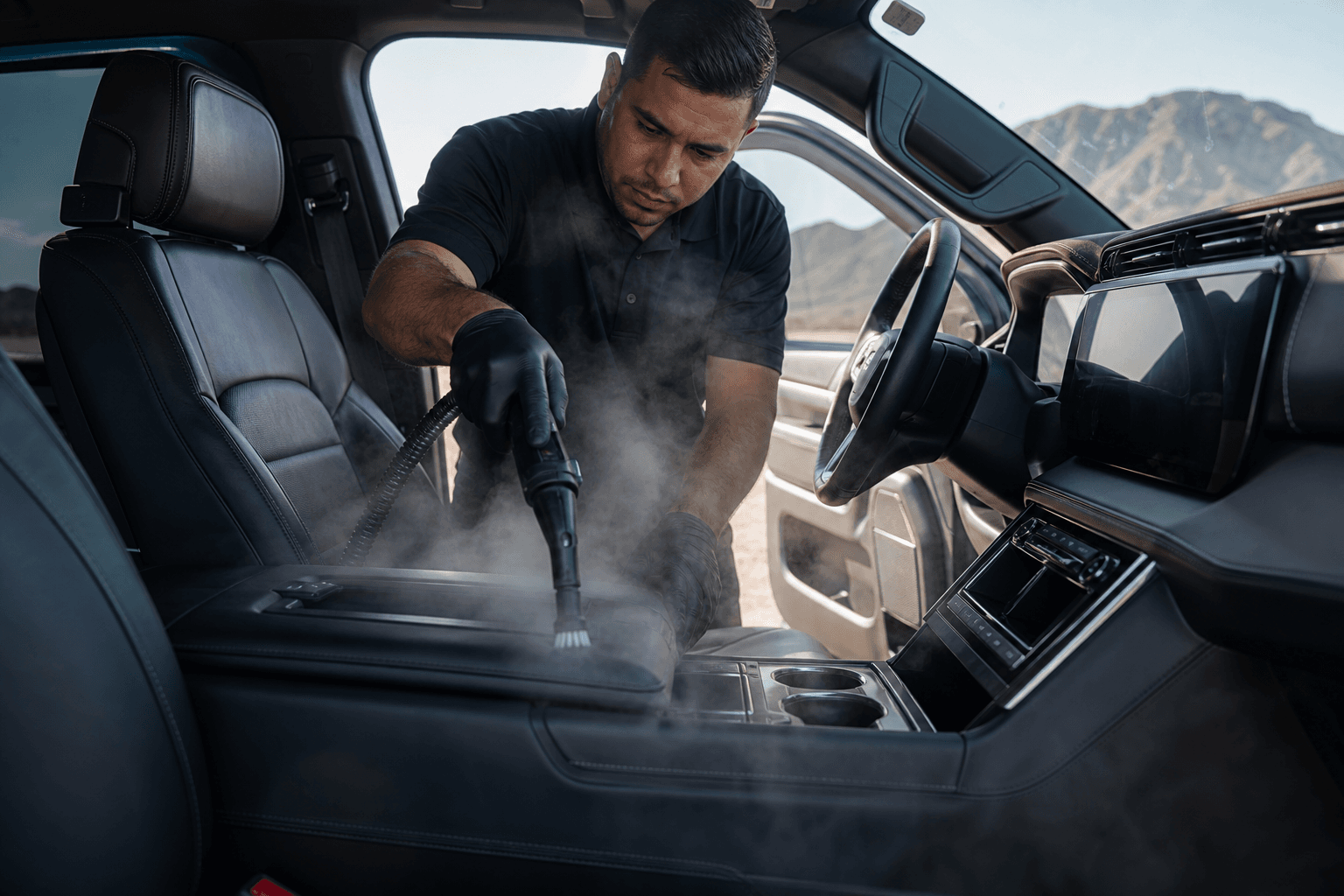
Step 2: Steam Treatment
Steam cleaning uses high-temperature vapor (up to 250°F) to sanitize surfaces without the use of harsh chemicals. The steam penetrates fabric and foam, killing bacteria and mold at the source. It’s particularly effective on seats, carpets, and door panels. Explore our interior detailing service to see what’s included in each package.
Step 3: Enzyme-Based Odor Treatment
For organic odors (food, pet, biological), enzyme cleaners are applied to the affected surfaces. Unlike odor maskers, enzymes literally consume the organic molecules causing the smell. The process takes 15–30 minutes of dwell time, and the result is permanent — the source is gone.
Step 4: HVAC Odor Bomb / Ozone Treatment
For smoke odor and HVAC contamination, an odor bomb (or ozone treatment) is introduced to the cabin while the AC is running on recirculate. This fills every cavity — ductwork, headliner, seat gaps — with deodorizing agents that neutralize airborne and surface particles. This is the step that eliminates smoke smells that nothing else seems to touch.
Step 5: Cabin Air Filter Replacement
If the cabin air filter is clogged or contaminated, we recommend replacing it at the same time. A dirty filter is often the source of persistent musty smells — especially in Las Vegas where dust, pollen, and particulates are year-round issues.
After the full treatment, most vehicles smell neutral or genuinely fresh — not perfumed, just clean. That’s the goal. Visit our Las Vegas service area page to confirm we serve your neighborhood, or book a service directly.
How to Keep Your Car Smelling Fresh Between Details
Professional odor elimination is highly effective — but Las Vegas heat means you need a maintenance plan to prevent odors from returning quickly. Here’s what Kevin recommends:
1. Never leave food or drinks in a parked car.
Even a sealed coffee cup left in a 160°F car for 3 hours will contribute to odor buildup. Take everything out every time you park.
2. Let your AC run on fresh air for 5 minutes before shutdown.
Switching to fresh air mode (non-recirculate) in the last 5 minutes of driving helps dry out the evaporator coil and reduces mold growth dramatically.
3. Use sunshades every time you park.
Sunshades don’t just protect your dashboard — they keep interior temperatures 40–50°F lower, which dramatically slows the chemical processes that turn organic residue into permanent odors.
4. Vacuum weekly, extract monthly.
Regular vacuuming removes loose debris before it can be compressed and embedded by foot traffic and heat. A monthly extraction (or at least every 2–3 months) keeps deeper layers clean.
5. Keep a small microfiber towel in the car.
Spills are inevitable. The faster you blot (not rub) a spill, the less likely it is to soak into seat foam and carpet padding.
6. Use baking soda on carpets occasionally.
Sprinkle a light layer of baking soda on floor mats, let it sit for 20 minutes, and vacuum. It’s an effective passive odor absorber for surface-level smells between details.
“My car smelled like fast food and dog for months. Kevin's team came out and completely eliminated it. I couldn't believe the difference.”
M
Marcus T.
Henderson, NV
“Steam cleaned the seats and odor treated everything. My SUV smells brand new again. Highly recommend AOA Detailing.”
P
Priya S.
Summerlin, NV
What You Should NOT Do (Common Mistakes)
Don’t Spray Air Fresheners and Call It Done
Commercial air fresheners work by masking odor with a stronger smell or by temporarily numbing your sense of smell. The odor source is untouched. Within 2–3 days, the original smell returns — often mixed with the air freshener smell, which is worse.
Don’t Leave Windows Cracked in Las Vegas Summer
The instinct is to ventilate. The reality is that Las Vegas summer air (with temps above 105°F) is so hot that cracking windows just brings in more hot air, bakes the interior faster, and can introduce more dust and pollen that contribute to smell.
Don’t Scrub Upholstery Without Proper Products
Rubbing a stained seat with a household cleaner or water can push the contaminant deeper into the foam, spread the affected area, and leave soap residue that attracts more dirt. Use an automotive-rated fabric cleaner and blot — don’t scrub.
Don’t Ignore the Headliner
The headliner is a fabric surface stretched across the entire ceiling of your car. It absorbs smoke and odors and is rarely treated in a basic detail. If you’ve ever had a smoker in your vehicle or experienced strong cabin odor, the headliner is almost certainly part of the problem.
When to Call a Professional
Some odor situations are manageable with good habits. Others require professional intervention:
Pet odor that persists after vacuuming — Pet dander and oils in seat foam require enzyme treatment and extraction.
Smoke odor from any source — Ozone treatment or an odor bomb is the only reliable fix for embedded smoke.
Musty or mildew smell — Source must be identified (often under mats or in the HVAC) before any surface treatment helps.
Mystery smell you can’t locate — Professionals know where to look: seat tracks, seat foam, the trunk liner, and the spare tire well.
Odor that came back after you treated it — The source wasn’t fully eliminated. Extraction + enzyme treatment will solve what surface-level cleaning missed.
How long does professional odor elimination take?
A full interior odor treatment typically takes 2–3 hours depending on the severity of the odor and the size of the vehicle. Ozone treatments require additional dwell time after the detail is complete.
Will the smell come back?
If the source is fully eliminated with enzyme treatment and extraction, the smell won’t return. Enzyme-based treatments are permanent because they eliminate the organic molecules causing the odor — not just mask them.
Can you eliminate smoke smell from a car smoked in for years?
Yes, but it may require multiple treatments. A single session with steam cleaning, enzyme treatment, and an ozone odor bomb will significantly reduce smoke odor in most vehicles. Heavy cases may benefit from a second session.
Do you treat the HVAC system?
Yes. Our interior detailing packages include treatment for the cabin air system. We recommend replacing the cabin air filter at the same time if it hasn’t been changed recently.
What’s the best way to keep my car smelling fresh in Las Vegas summer?
Use a sunshade every time you park, don’t leave food or drinks in the car, and get a professional interior detail every 3–6 months. Las Vegas heat means your car needs more frequent attention than in cooler climates.