Why Classic Car Detailing in Las Vegas Is a Different Job
Classic car detailing in Las Vegas is not a scaled-up version of a normal wash and wax. A 1960s muscle car, a pre-war roadster, and a 1980s survivor all share the same enemy in this valley: relentless sun, single-digit humidity, and fine alkali dust that finds its way into every seam. The paint is often single-stage or thin original lacquer, the chrome is prone to pitting, and the leather and vinyl were never designed for a cabin that hits well over 130°F in July.
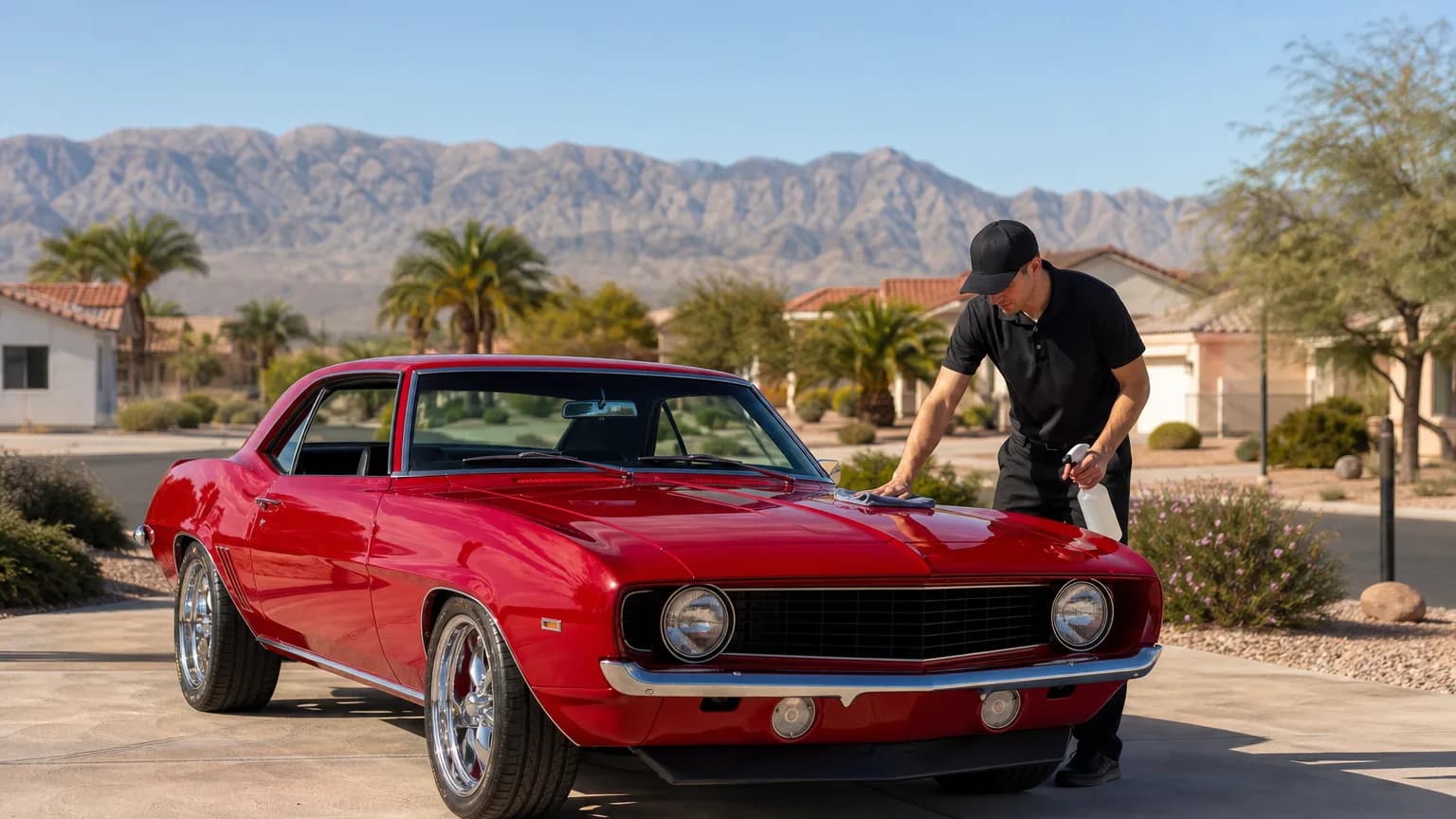
Kevin, founder and owner-operator of AOA Detailing, personally handles every appointment, and that matters most on older vehicles. Classic cars punish shortcuts. A machine polisher run too aggressively can burn through thin paint, and the wrong cleaner can stain aged chrome or dry out original upholstery. This guide covers how we approach vintage vehicles across the Las Vegas Valley, and what you should expect when you book.
Quick Summary: Classic car detailing in Las Vegas starts with a paint-thickness check, a gentle wash, and clay decontamination, followed by a conservative paint correction only where the paint can safely handle it. Chrome and trim get hand polishing, leather and vinyl get conditioned with UV protection, and the finish is sealed with wax, sealant, or ceramic coating. Everything happens at your driveway or garage, so the car never has to be trailered or driven. Call AOA Detailing at (775) 244-5315 to schedule.
Table of Contents
- Start with the Paint: Original vs. Repainted
- Chrome, Brightwork, and Trim
- Interior: Leather, Vinyl, Wood, and Vintage Gauges
- Protecting a Classic from the Desert
- Why Mobile Service Suits Classic Cars
- FAQs
Start with the Paint: Original vs. Repainted
Before any product touches a classic, the first question is what kind of paint is on it. Original single-stage lacquer or enamel, a decades-old respray, and a modern base-coat/clear-coat repaint each react differently to polish and heat.
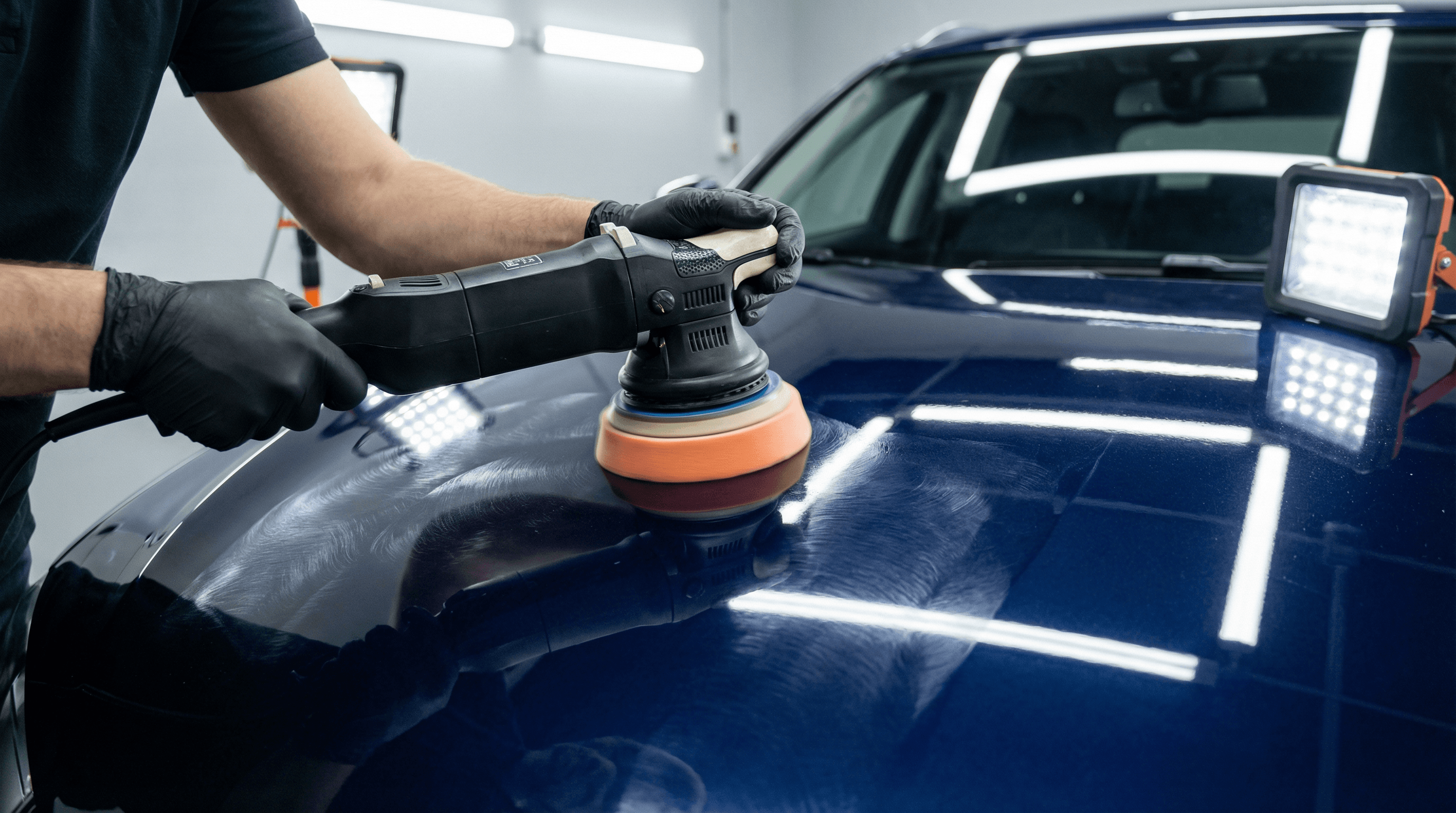
- Paint-thickness readings. Kevin measures film build on several panels first. Thin original paint or a panel that has been sanded and repainted more than once has far less margin than a factory modern finish.
- Test spot before commitment. A small section is polished with the mildest pad and polish combination that works. If a light polish restores the gloss, we stop there.
- Single-stage paint care. On single-stage finishes, color transfers onto the pad during polishing. That is normal for these paints, and it also tells us exactly how much material is being removed.
- Know when not to correct. Some cars are better served by a deep clean and sealant than by aggressive correction, especially survivors where original paint is part of the car’s value.
When the paint can take it, a careful paint correction brings back depth that decades of sun exposure have dulled. If you want to understand what correction actually removes and what it cannot fix, our guide to paint correction explained walks through the process step by step.
Chrome, Brightwork, and Trim
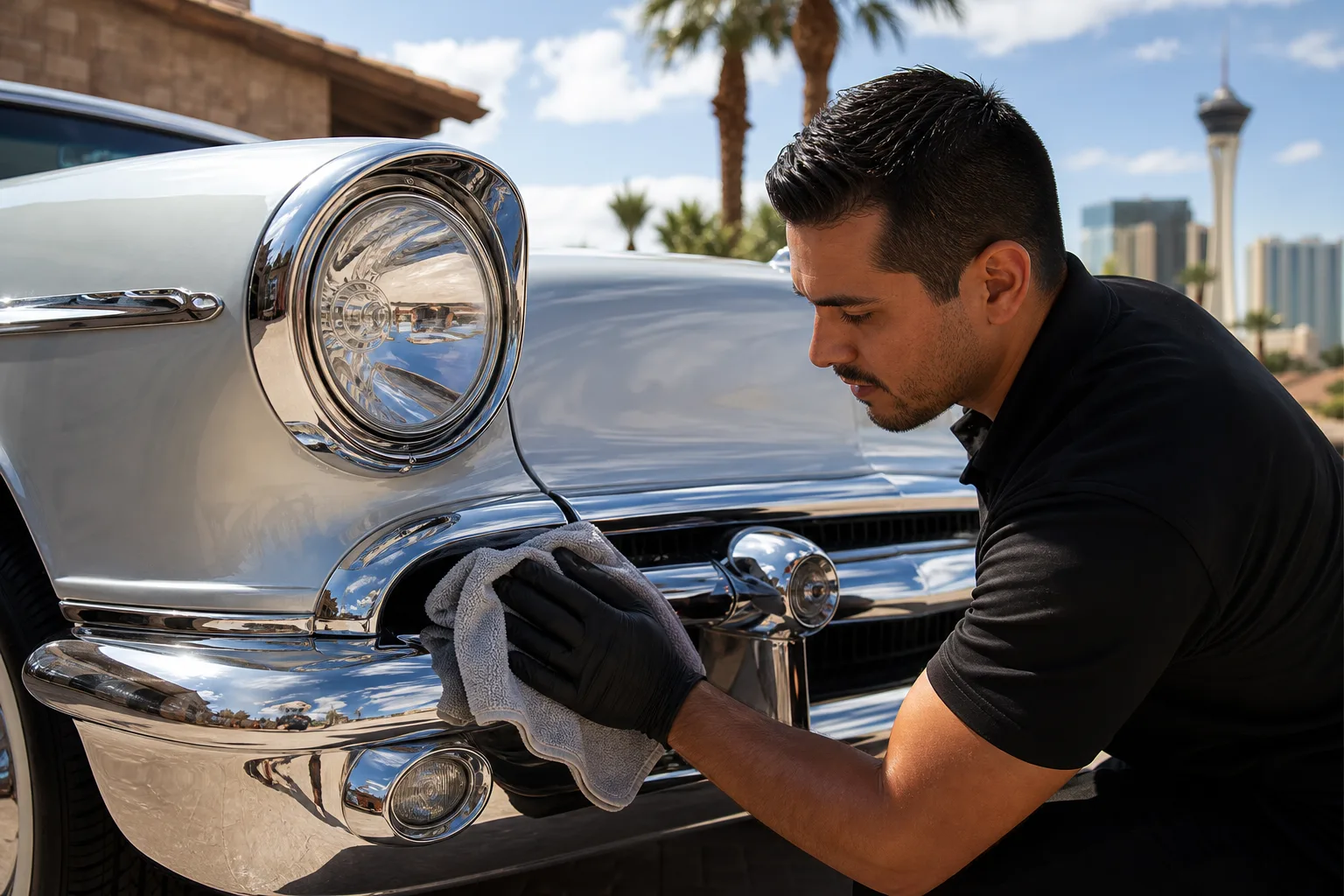
Chrome on older cars is heavier and more prominent than on modern vehicles, and it is also more fragile. Bumpers, grilles, headlight bezels, door handles, and window trim collect brake dust, road film, and oxidation, and desert sun bakes it all on.
We work on brightwork by hand, using a soft microfiber and a metal polish matched to the surface. Machine polishing chrome-plated steel is rarely worth the risk on pitted or thin plating. Important details for classic trim work:
- Mask before polishing. Rubber seals, painted edges, and vintage emblems get taped or shielded so polish does not stain them.
- Stainless versus chrome. They behave differently. Stainless trim can usually be polished more assertively, while chrome plating needs a lighter touch.
- Seal the shine. After polishing, a protective wax or sealant slows the return of oxidation and water spotting, which matters in a valley with notoriously hard water.
Interior: Leather, Vinyl, Wood, and Vintage Gauges
Classic interiors are where Las Vegas heat does the most quiet damage. Dashboards crack, vinyl shrinks, leather loses its oils, and vintage gauge lenses fog. An interior pass on a classic looks very different from a modern interior clean:
- Gentle vacuum and dry-brush pass. Carpets and seat seams get cleaned first with soft brushes so trapped grit does not scratch aged surfaces.
- pH-appropriate cleaners. Aggressive all-purpose cleaners can strip dye from old leather or dull vintage vinyl. We use gentler products and test in an inconspicuous spot first.
- Conditioning with UV protection. Leather and vinyl get a conditioner that restores flexibility without leaving a greasy finish. UV protection is not optional here; it is what keeps the dash from splitting in the next summer.
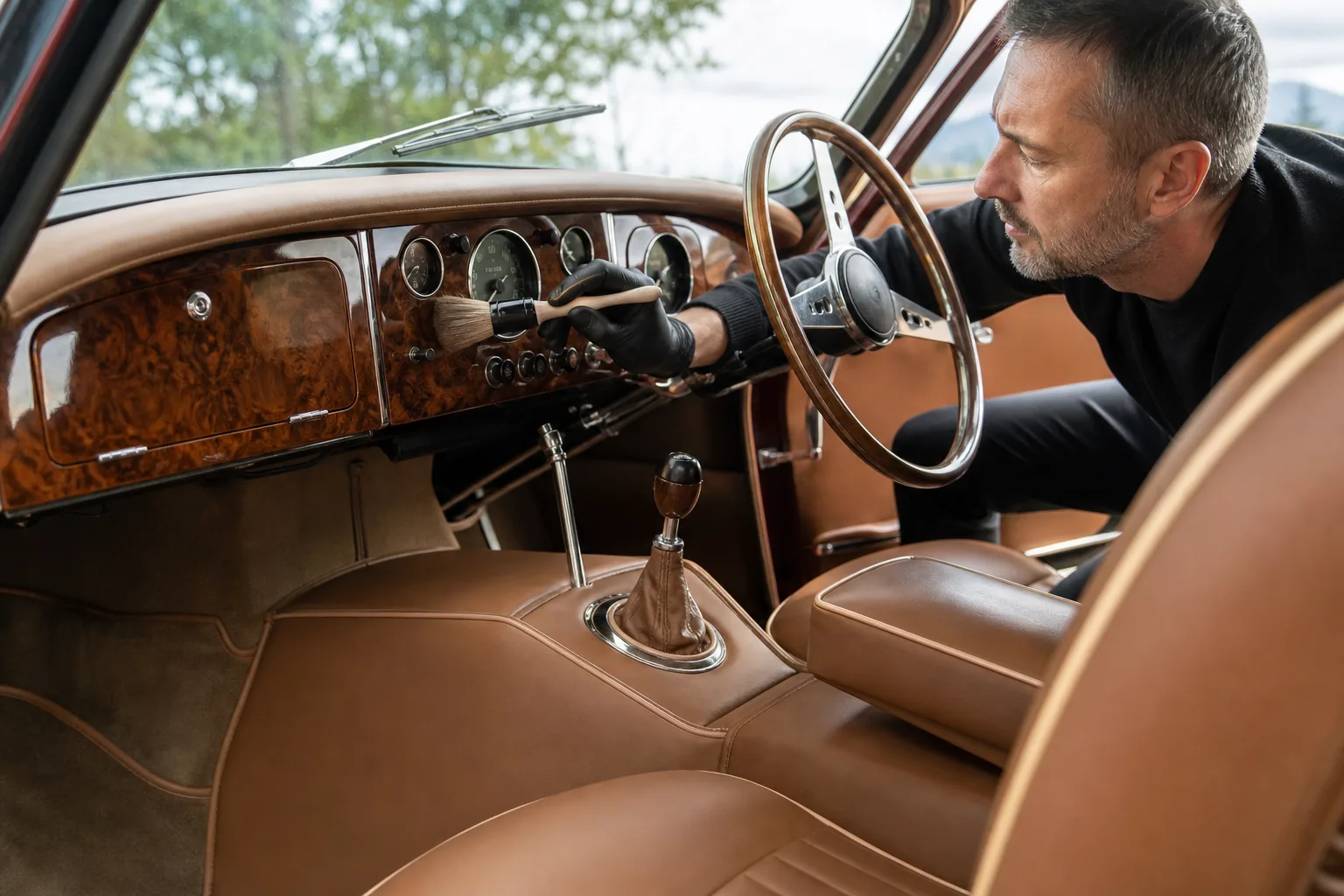
- Wood grain and gauge care. Wood veneer dashboards and steering wheels get a light, non-abrasive clean, and gauge lenses are wiped with a soft brush and microfiber rather than sprayed directly.
For a vehicle where the interior and exterior both need work, a full detail keeps everything on one schedule, and our interior detailing service covers the cabin on its own if paint is already in good shape.
Protecting a Classic from the Desert
Getting a classic looking right is one job. Keeping it that way through a Las Vegas summer is another. What works depends on how the car is used and stored:
- Garaged show cars. A quality carnauba wax or synthetic sealant is often enough, and it is easy to reapply for each season.
- Cars that see regular driving. A ceramic coating adds hardness and easier washing, though coating a classic calls for thorough correction and prep first, and it should only go onto paint that is stable enough to support it.
- Covered outdoor parking. A breathable car cover, not plastic, keeps dust off without trapping moisture. Sun exposure through a windshield still cooks a dashboard, so a windshield shade helps.
- Between-detail care. Waterless wash and a soft microfiber for light dust between full details keeps small grit from turning into scratches. Our guide to car care between detailing appointments has a practical routine.
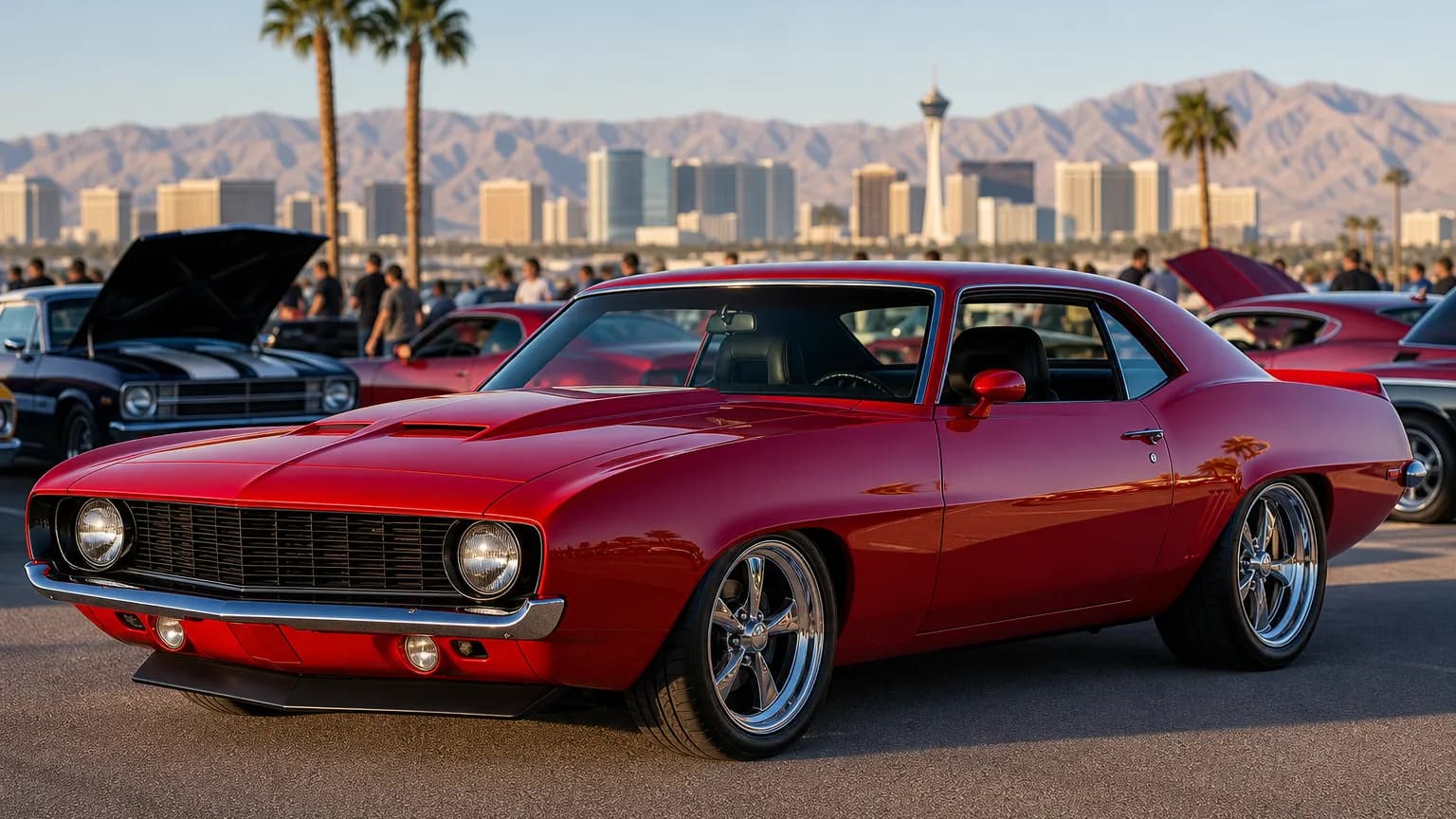
If your classic is headed to an event, our car show detailing guide explains how to time the work around show day.
Why Mobile Service Suits Classic Cars
Moving a classic is a risk by itself. Every drive to a shop adds road dust, potential rock chips, and exposure. A mobile visit keeps the car in its normal spot, whether that is a Summerlin garage, a Henderson driveway, or a covered storage bay. We bring water, power, and the tools needed for the whole appointment, and the work is done to your schedule. AOA Detailing serves the Las Vegas valley and surrounding communities within 25 miles.
Ready to bring your classic back to life? Call Kevin at (775) 244-5315 or book online to schedule your appointment.
FAQs
1. Can you polish original single-stage paint on a classic car?
Yes, with care. Kevin measures the paint first, starts with the lightest polish that works, and stops as soon as the finish is right. Very thin or fragile paint may be better served by cleaning and protection than by heavy correction.
2. Is ceramic coating a good idea on a classic?
It can be, when the paint is stable and properly prepared. Coating locks in whatever is underneath, so paint issues need to be addressed first. For many garaged classics, a quality wax or sealant is the simpler choice.
3. How often should a classic car be detailed in Las Vegas?
For a garaged car that rarely sees the road, a full detail once or twice a year plus light maintenance washes is common. Cars driven regularly or parked outdoors benefit from more frequent protection because of the sun and dust.
4. Will you work on my classic if it is not running?
Often, yes. Because everything is done on-site, a non-running car can still receive paint, trim, and interior work. Let us know about the car’s condition when you book so we can plan accordingly.
5. Do you detail engine bays on older cars?
Engine bay cleaning on a classic needs extra caution around old wiring, carburetors, and unsealed components. Discuss what you want during booking so the approach fits your specific car.
Kevin is the founder and owner-operator of AOA Detailing, personally handling every mobile detailing appointment across the Las Vegas Valley, from Summerlin and Henderson to North Las Vegas. AOA Detailing provides mobile interior, exterior, paint-correction, and ceramic-coating services within a 25-mile service area. Call (775) 244-5315, contact AOA Detailing, or book online to schedule.