Quick Summary
Bug splatter is easy to ignore after a drive, but Las Vegas heat gives it very little grace period. Residue on the bumper, hood, mirrors, windshield, and grille dries quickly, sticks to the surface, and becomes harder to remove with each hot day. The safest approach is simple: soften it first, rinse away loose contamination, and only then use clean wash media with gentle pressure. This guide explains what to do after a summer drive, which shortcuts can scratch paint, and when a professional exterior detail is the better call.
Why Bug Splatter Is Tougher to Remove in Las Vegas
A late drive on I-15, US-95, or the Beltway can leave a surprising amount of insect residue across the leading edge of your vehicle. In a milder climate, that residue may stay damp long enough to remove at the next wash. In Las Vegas, direct sun and hot panels can dry it quickly.
The issue is not just how it looks. Dried residue is stubborn, and rubbing at it before it has been softened can drag grit across the clear coat. That is how a quick parking-lot wipe turns into fine scratches, haze, or a dull-looking patch on dark paint.
The front bumper, lower hood, mirror caps, grille, and windshield usually need the most attention. If you have driven through desert dust or recent road construction too, there may be abrasive contamination sitting beside the bug residue. Treat the area as a wash job, not as a spot-cleaning emergency.
The Safe Way to Remove Bug Splatter
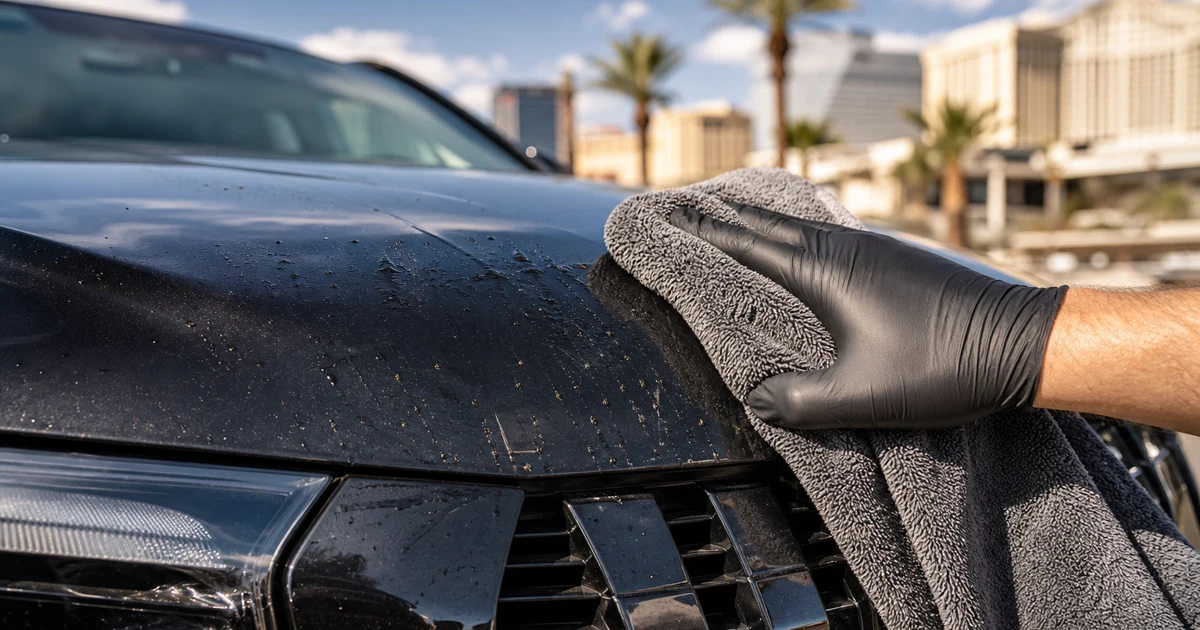
1. Let the Vehicle Cool Down
Do not work on a hot hood or bumper immediately after parking. Move the vehicle into shade when you can and let the panels cool. Cleaning products dry much faster on a hot surface, which makes them less effective and can leave behind residue of their own.
2. Soften the Residue Before You Touch It
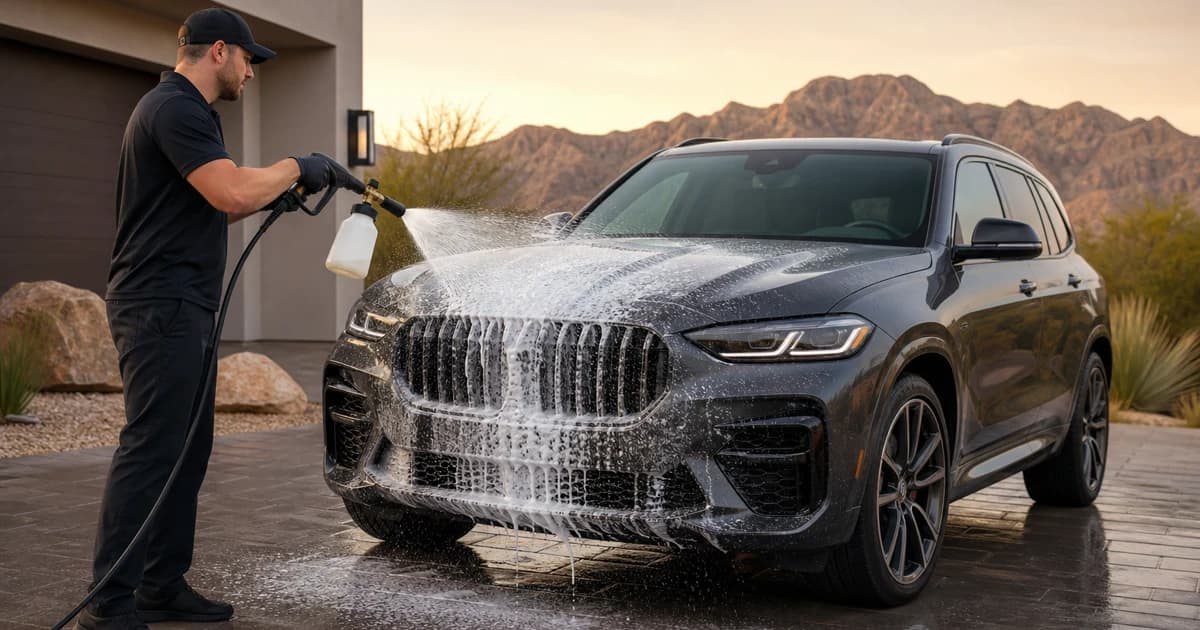
Use a purpose-made bug remover or a pH-balanced pre-wash product that is safe for automotive finishes. Apply it according to the product directions and give it time to loosen the residue. The goal is to reduce the force needed later, not to attack the paint with a harsh cleaner.
Avoid household degreasers, abrasive pads, and rough paper towels. They can strip protection, leave marring, or create a bigger correction job than the original bug splatter.
3. Rinse Thoroughly First
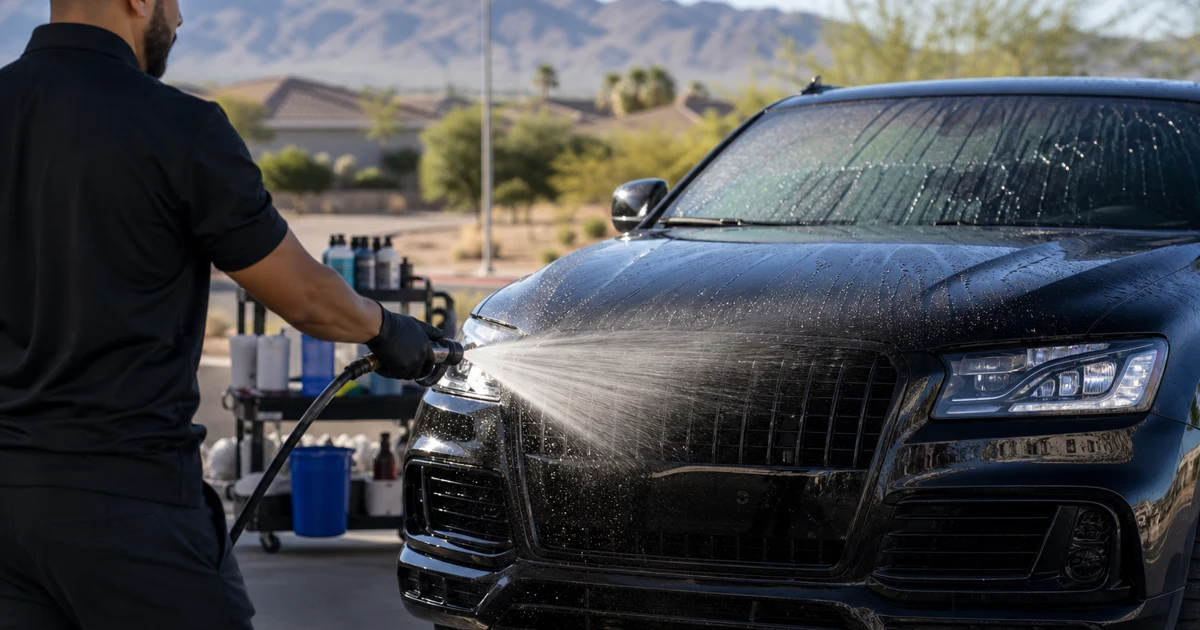
Rinse the treated area with a gentle, wide fan of water before bringing a mitt or microfiber towel near it. This carries away loosened residue and dust that could otherwise be trapped under your wash media.
For stubborn spots, repeat the soak-and-rinse step rather than pressing harder. Patience is cheaper than repairing avoidable wash scratches.
4. Use Clean, Lubricated Wash Media
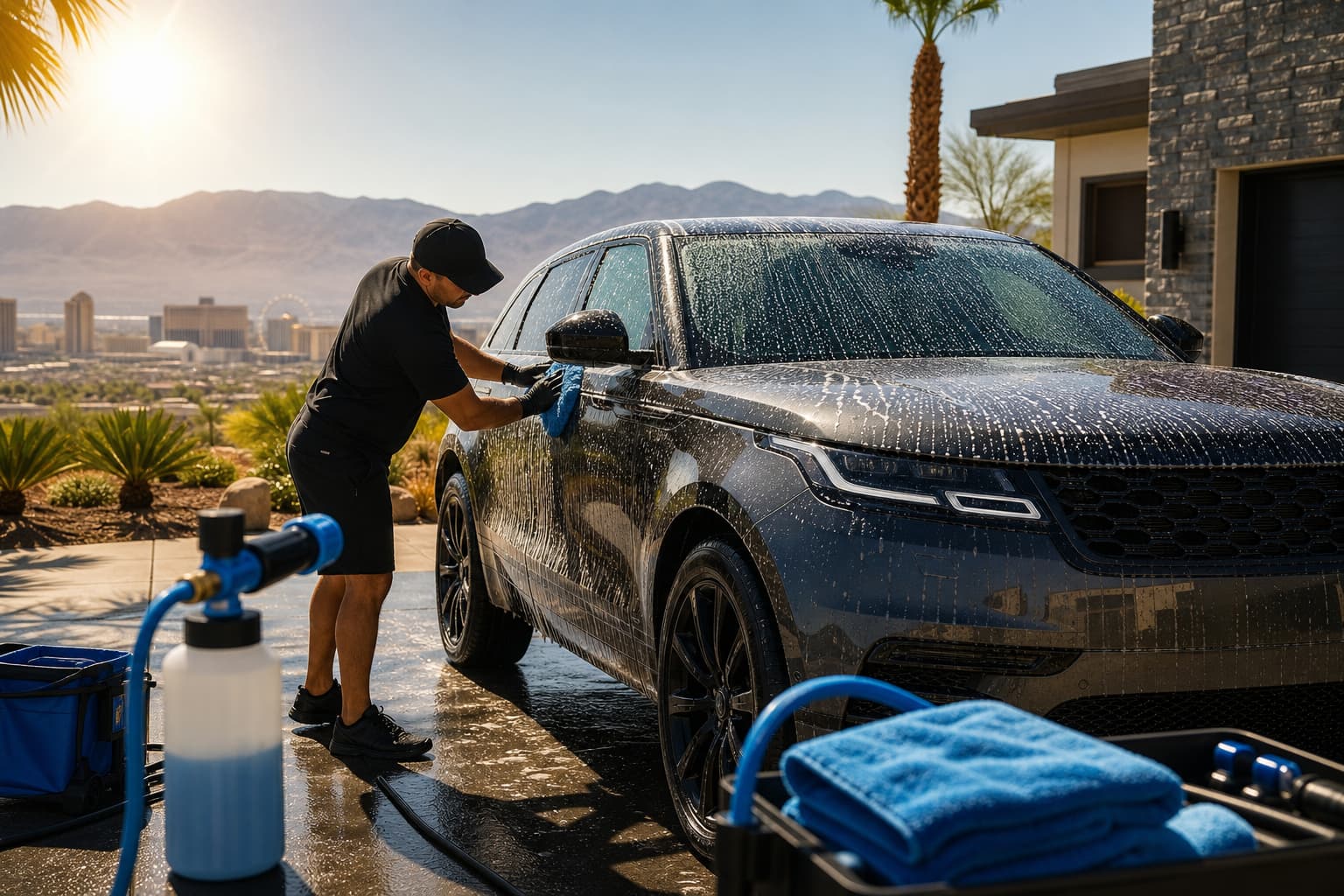
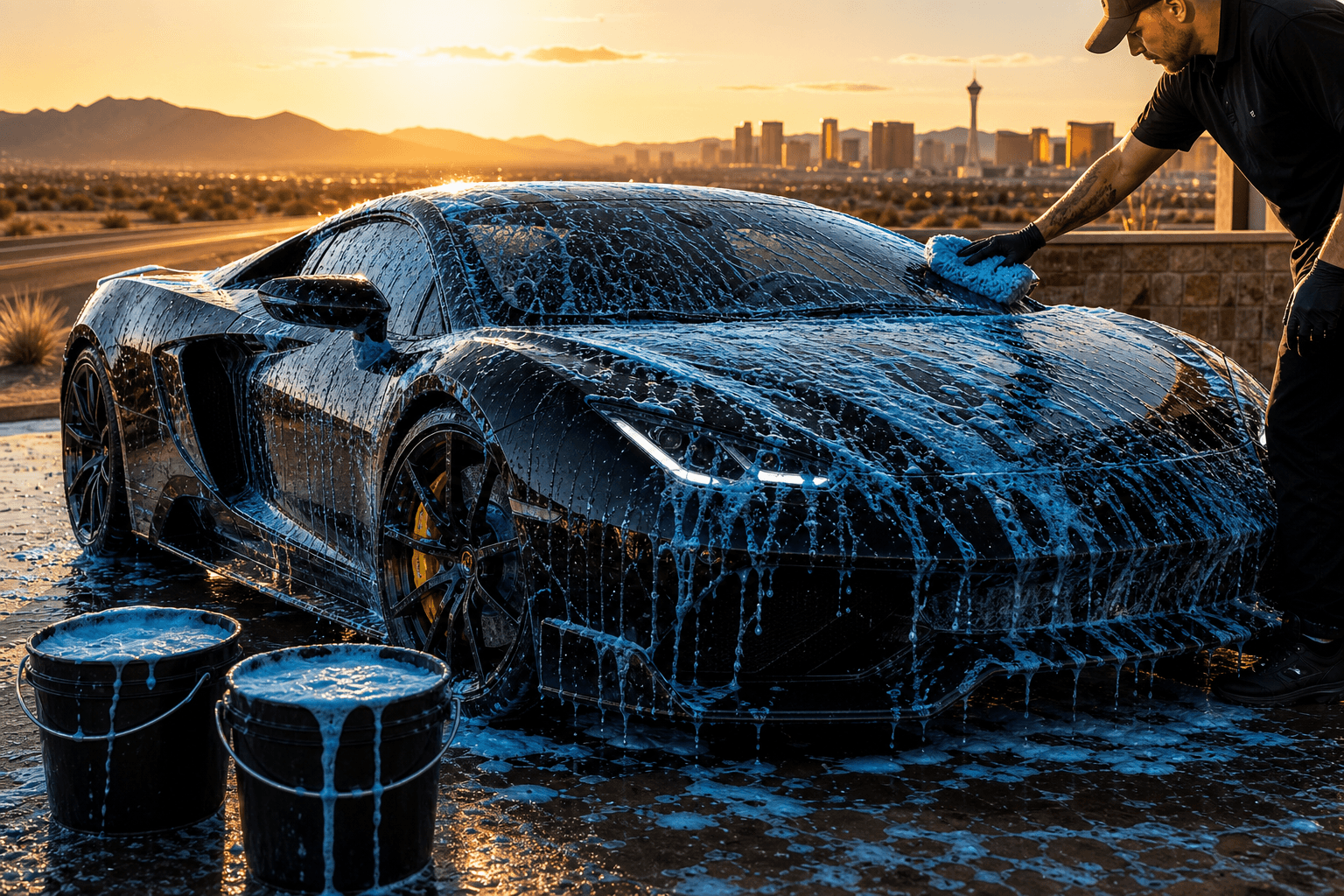
After the initial rinse, wash the area with a clean microfiber mitt, quality car shampoo, and plenty of lubrication. Work in small sections without aggressive circular scrubbing. Rinse your mitt frequently so it does not carry grit from the grille or bumper across the hood.
The same principle applies to the windshield: use automotive glass cleaner and a dedicated glass towel. Do not use the same towel that cleaned the lower bumper on your glass.
5. Reapply Protection After Cleaning
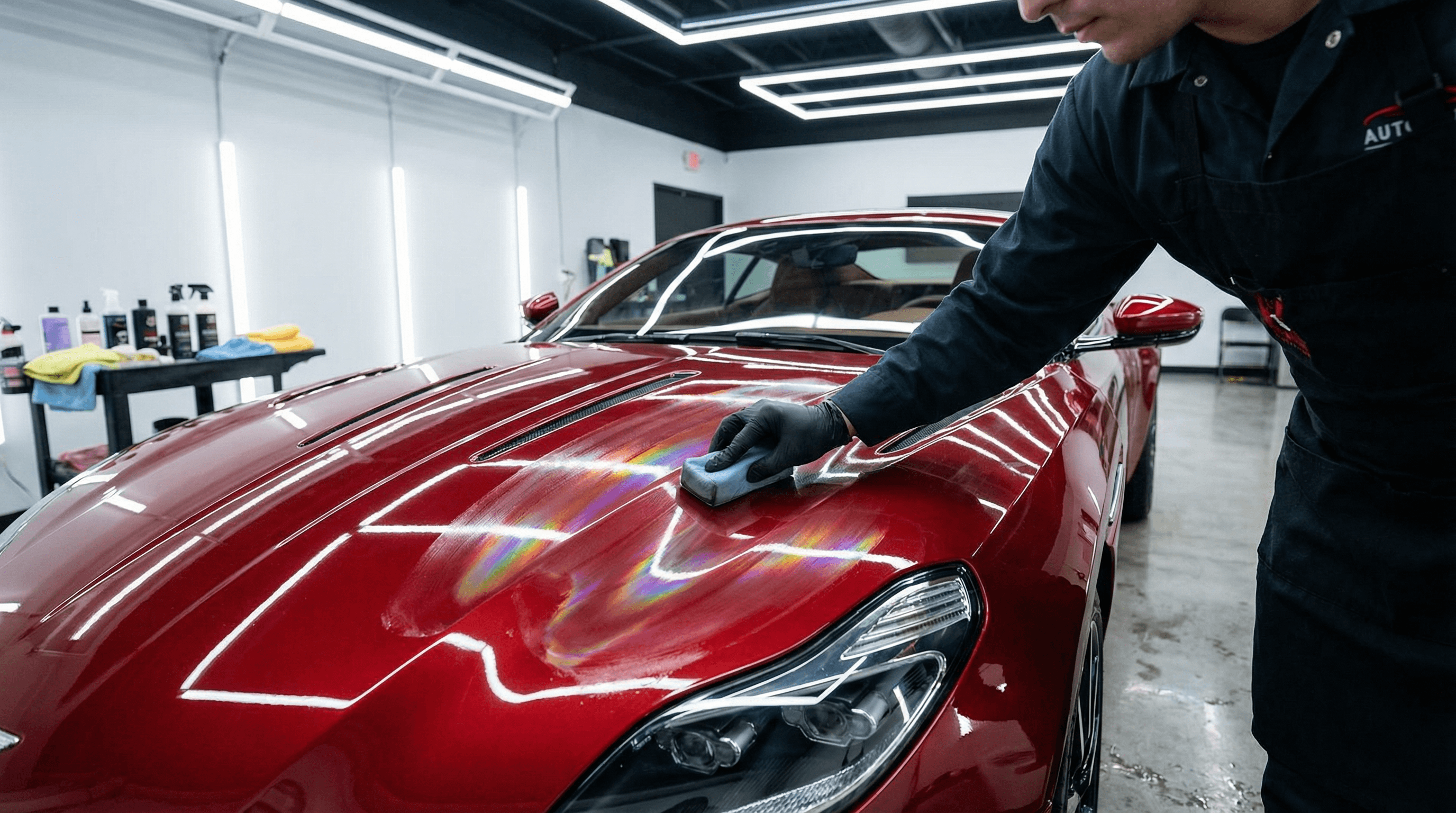
A clean, protected surface releases fresh bug residue more easily. A maintenance sealant or wax can improve cleanup between professional visits. For drivers who spend a lot of time on desert highways, ceramic coating can make routine washing more manageable, but it still needs proper maintenance.
Shortcuts That Can Damage Your Paint
The fastest-looking solution is often the riskiest one. Skip these common mistakes:
- Dry wiping at a gas station. A dry towel can grind residue and fine dust into the paint.
- Using a bug sponge on a dirty panel. Even a product marketed for bugs can cause marring if it is used aggressively or without lubrication.
- Scraping with a card, fingernail, or hard plastic edge. These tools can mark paint and trim.
- Using harsh household cleaners. Strong degreasers or cleaners not intended for automotive surfaces can compromise existing waxes, sealants, and trim finishes.
- Leaving the residue through multiple heat cycles. The longer it remains, the more time and care removal may require.
If you are unsure what is safe for your paint, stop before experimenting. A professional detailer can assess whether the surface needs a standard wash, decontamination, or paint correction.
When a Professional Detail Is Worth It
A normal wash can handle fresh, light splatter. Consider booking AOA Detailing when the front end has heavy buildup, the residue has been sitting for days, or you see dullness and fine marks after a DIY attempt.
A mobile full detail is also a practical reset after a road trip. Kevin can clean the exterior at your home or office, address the bumper, grille, glass, wheels, and lower panels, then apply appropriate protection for the conditions your vehicle faces next.
AOA Detailing serves Las Vegas, Henderson, Summerlin, North Las Vegas, Spring Valley, Centennial Hills, Boulder City, and nearby communities within the service area. Book an appointment or contact AOA Detailing to discuss your vehicle’s condition.
Keep the Front End Easier to Clean Between Details
A few practical habits make summer maintenance less stressful:
- Rinse the front end after long highway drives when you have access to shade and a proper wash setup.
- Keep a clean microfiber towel and detail spray in the vehicle for light, fresh contamination only — never use them on a dusty, dry panel.
- Park under cover or in shade when practical after a drive so residue is not immediately baked by direct sun.
- Schedule routine exterior maintenance before buildup becomes a correction project.
For more desert-specific washing guidance, see our guide to the best car wash method for Las Vegas drivers and our summer road trip car prep checklist.
Frequently Asked Questions
1. Can bug splatter permanently damage car paint?
Fresh bug splatter is usually removable with a safe wash process. When residue sits on a hot vehicle for an extended period, it can become more difficult to remove and may contribute to visible dullness or marks on vulnerable finishes. Prompt, gentle cleaning is the best prevention.
2. What should I use to remove dried bugs from my car?
Start with an automotive-safe bug remover or pH-balanced pre-wash, let it dwell as directed, and rinse thoroughly before contact washing with clean microfiber and car shampoo. Avoid abrasive pads, household cleaners, and dry rubbing.
3. Can I use a pressure washer on bug splatter?
A wide-fan rinse can help remove loosened residue, but do not use an extremely close or concentrated stream on paint, trim, emblems, or aging seals. Follow with a safe hand-wash process rather than relying on pressure alone.
4. Does ceramic coating prevent bug splatter?
No protection eliminates bug splatter, but a well-maintained coated surface can make routine cleanup easier. You still need to wash the vehicle with safe products and techniques.
5. How often should Las Vegas drivers wash bug residue off?
After a long highway drive, clean the front end as soon as conditions allow. If the vehicle is parked in direct sun, wait until the panels are cool and work in shade rather than scrubbing a hot surface.
AOA Detailing is a mobile auto detailing service for Las Vegas Valley drivers. For safe exterior cleaning, paint protection, and full-detail service at your home or office, call (775) 244-5315 or book online.